A1c Anticipation

Feb 26, 3:45 pm:

I started this blog almost 3 months ago to the day. It was the day of my last appointment with my endocrinologist. When my endo told me my A1c number (8.0), I was angry. I was tired of it being too high and not where I wanted it to be. I was scared, I don’t want to be putting myself at a higher risk for complications. This blog was in part started as a way to hold myself accountable, to keep myself focused and on task to reduce that number.

So how have those 3 months gone? I’ve been trying! I honestly have! I keep close tabs on my CGM, trying to catch my blood sugar before it rises or correcting as soon as I see that it’s high. I’ve been trying really hard to change a habit and have started bolusing before my meals instead of after. And although I didn’t think it was possible, my diabetes has been on my mind now more than ever. Is there more I could have been doing? Of course, there always is. But I’m hoping that what I have done will have a positive result.

With my appointment with my endo tomorrow, I’m nervous. I feel like I’ve been studying for an exam, but despite all my efforts, I still won’t get that A. I want something to show for all the effort I put in. I want that A1c number to go down, I need it to. I need to believe that all the time, work and trouble is worth it and that it makes a difference.

Feb 26, 9:45 pm:

I decided that I would upload my CGM data to the computer and print out a few graphs to take with me to my appointment. My doctor brings printouts with her, but she doesn’t typically look at the CGM graphs (which honestly makes no sense to me) so I wanted to have some with me that I could refer to. I uploaded the data and clicked through the different graphs and charts, however I did not like what I saw. Somewhere it said my average blood sugar over the past 3 months, 182. I looked it up online, an average bg of 182 corresponds with an A1c of about 8.0. I couldn’t believe it. That’s what I was at my last visit, how was it possible that with all my hard work, it didn’t go down at all?! I went to bed discouraged, fighting back tears of frustration.

Feb 27, 11:00 am:

I sat in the exam room, waiting for my doctor to come in. The anticipation building, all I wanted to know was what my A1c number is. The doctor sat down. She pulled out a piece of paper, showing trends in my blood sugar. “These numbers are looking really good, much better than our last visit. How do you feel?” I told her how hard I’ve been trying, the few trends that I’ve noticed (using the printout from my CGM that I brought with me) and how I felt that my blood sugars have been improving. “Hmm, it looks like you’re A1c isn’t showing up in the system yet.” Of course it wasn’t. We talked a little more and eventually she left the room to go check what it was. Finally! Here was the moment of truth.

She walked back in, a smile on her face. 7.2! Are you serious?! I was so happy! My doctor congratulated me. We’ve been aiming for 7.0 and this is by far the closest it’s been in years! YEARS!! And it’s the biggest drop I’ve had between appointments. Yes I know 7.2 is not ideal, I still have a ways to go to bring it closer to 6.0, but this is huge for me! I’ve been struggling for so long to get it below 7.5. One of my New Year’s resolutions was to lower my A1c by .5 in 6 months and here I have just lowered it by .8 in 3 months!

Every single day living with diabetes takes work. It’s the best feeling knowing that all the extra effort and attention that I’ve been paying to my diabetes paid off. Now I just need to continue this trend. Hopefully next time I can get it below 7.0. 🙂

CGM vs Meter, can’t we just all get along?

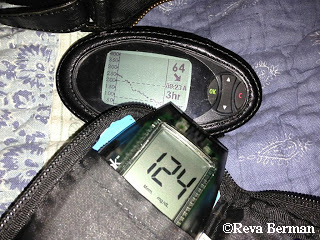
I woke up this morning to the sound of my continuous glucose monitor (CGM) vibrating on my nightstand. This means one of two things, either it is telling me that my blood sugar is too high or that it is too low. Sure enough, it showed that my blood sugar had dropped during the night and was now in the 60’s. However, I found this to be a little odd since I was feeling pretty normal. I took my glucose monitor (the one that uses a finger prick) and tested my blood sugar. 124. A perfectly fine number.

The issue here is not just that a reading of 64 and 124 are 60 points apart, although that is not ideal. It’s the fact that the 64 reading would normally require me to treat the low with some sugar while the other reading of 124 is right within range. So here I was staring at two medical devices, telling me conflicting information, not sure which to believe.

So let’s complicate this even further. If I were to listen to the medical advice that I had been given for the management of my diabetes, it would be to go off of my meter reading of 124, which would mean that I would neither eat sugar nor give insulin. At this point, however, I started to pay attention to how my body was actually feeling. I didn’t feel how I normally feel when my blood sugar is at 60, but I was feeling a bit “off”. Sometimes I feel this way from drinking coffee on an empty stomach or if I’m hungry. Since neither was the case, I started to think that maybe it was related to my blood sugar after all. My intuition was telling me that it might be a good idea to eat something.

Let’s recap:

  • device 1 says I’m low
  • device 2 says I’m normal
  • typical medical advice would be to do nothing
  • body feels like it could possibly be low
So what do you do in a situation like this??
Intuition is a powerful thing. I’ve learned to trust it in most cases, but usually they are non-medical. I get a gut feeling about things like people and situations. But how much of a role should intuition play in the management of a chronic condition? Like I’ve said before, I can usually feel when my blood sugar is high or low, but then this suspicion is confirmed by my medical devices. So here I was sitting in my bed, thinking to myself, “should I trust my body and my intuition or the medical devices and technology?”
 It was only when all the numbers and feelings didn’t match up that I realized just how many of my daily decisions are based on a number coming from a medical device. Should I eat? How much? When? Should I give insulin? How much? Over how long? All these questions answered by a single number. It’s all so calculated, with my carb to insulin ratios, blood glucose targets and sensitivity, and hours of active insulin. So robotic. However, while the forumla might be calculated, the results are certainly not. Blood sugar rises and falls from so many different things besides food and insulin: stress, adrenaline, exercise, colds, menstrual cycles, the list goes on. Although my glucose monitors might tell me one thing, I’m the only one that knows what my body is feeling. Intuition definitely has a place in diabetes management, but in combination with other forms of glucose monitoring.
So back to this morning. What did I end up doing? Sometimes diabetes management is your personal experiment. Try something, see what happens, and make adjustments. Too much insulin? Lower it the next time. Not enough carbs? Eat more. I decided to eat half of what I normally have to treat a low and to see what happens. It was a compromise between all the information that I was given. I also knew that I would be exercising in the morning, which usually makes my blood sugar drop naturally. Sure enough, when I tested after my workout, my blood sugar was within range and I was feeling fine. Although there are many devices and formulas for the management of type 1 diabetes, it isn’t always an exact science. I’ve found that sometimes you have to trust your instincts, stay vigilant, and make adjustments when necessary.

Anyone else have a similar experience?

Low is More Than a Number

My mouth is numb.
My blood sugar climbs steadily, but the tingle in my lips and tongue remains.
I can still taste the orange juice, the citrus stirring uneasily in my stomach. 
This is my second severe low today, my body recovering, shaken to the core.
Dizzy and unstable.
Foggy and forlorn. 
Lying in the dark waiting for the storm to pass.
My head throbs.
Refusing to budge, my limbs betray me.
Heavy with unwanted food, eaten in desperation.
Why isn’t it over?
100 and rising.
But I’m continuing to fall.
Clouded in darkness, I remain.
A normal number, but a feeling of anything but.
Why isn’t it over?
There is no end.

Bad Habits and Loss of Control

Bad habits. We all have them. While sometimes annoying or counterproductive, many bad habits are relatively harmless. Biting your nails, procrastinating, snapping your gum, sleeping with your makeup on, the list goes on. Over the years, I have developed habits with my diabetes that aren’t always constructive. For instance, I leave used test strips in my case and wait until there is a pile of them before I throw them away, often losing a few inside my purse or on the ground before this happens. I also have a habit of leaving half eaten packets of fruit snacks all over the place where they eventually get stale or lost at the bottom of my purse or pockets. I admit that none of these are good behaviors, but they are all pretty harmless.
But I have one habit that I am now discovering is actually quite detrimental to my health. I got in the habit of blousing, or giving insulin, after I finish eating as opposed to before. Remembering to bolus right after I eat was even one of my New Year’s resolutions. What I’m now learning is that by the time I do give insulin for the food I eat, my blood sugar has already started to rise before the insulin has begun to work, resulting in large spikes in my blood sugar levels. While in retrospect it seems quite obvious that this mismatched timing would be responsible for the spikes in blood sugar, I have to thank the wonderful people at TuDiabetes for bringing it to my attention. They responded to my inquiry and pointed to this habit as the likely cause of the spikes and then provided different ways to prevent it from happening, primarily giving insulin before I eat rather than after. (You can read all the great advice and recommendations that I was given here)
So you’re probably thinking, “Just start blousing before your meals and problem solved.” Well I know myself pretty well and for me, nothing is ever that simple. Giving insulin before a meal is a concept I’ve known about for years, so the question is, why don’t I?
When you give insulin before you eat, you have to know how many carbohydrates you will be eating so that you know how much insulin to give. The problem that I have with giving insulin before you eat is, what if you start your meal and then end up not eating as much as you anticipated because maybe you got full? While you can always give more insulin if you eat more, you can’t take it away. Too much insulin means that your blood sugar drops. So essentially if you give insulin for 30 carbs, you better eat 30 carbs.
While pondering all this, I had a flashback to when I was in the hospital after I was first diagnosed. It was a memory that I haven’t thought about in years, buried deep in my subconscious. I’m sitting in my hospital bed and it is dinner time. The hospital staff had just dropped off my tray of food. I looked at the label on the tray, it was a “diabetic meal”. I remember glancing at my roommate’s dinner and asking my parents why I couldn’t have what she was eating, I wanted mac and cheese and a chocolate pudding cup, instead of the bland meal in front of me. I picked at my food, but I didn’t have much of an appetite. I remember telling the nurse that I was all finished, but she told me I had to eat more. Why? I’m not hungry. I don’t want it. But the thing is, I had to, she explained. I had already been given the insulin for the food in front of me, I needed to eat a certain amount of it. Here I was, sitting in the hospital, at the mercy of a disease that would soon control and consume so much of my life, and I couldn’t even control how much food I could eat.
That’s what it comes down to for me. Control. I try so hard every day to control my blood sugar levels and to essentially control my diabetes. When it comes to food, my diabetes often dictates when I need to eat, what I should and shouldn’t eat, and when I’m low, how much I should eat to feel normal again.  How much food I eat, being able to stop when I’m full, and eat more when I’m hungry is such a basic freedom, but a freedom nonetheless. I don’t want to be “forced” to eat more food, consume more calories, and put food that I don’t want into my body. When I give insulin before a meal, it feels like I am giving up control to my diabetes. I’m letting it dictate how much I have to eat, even if I don’t want to. When I give my insulin after, it means that I decide how much I want to eat and then I give the appropriate insulin. I am in control. 
I know plenty of other diabetics give insulin before meals without sharing this feeling of loss of control. But even though we all share the same disease, our experiences and thought processes are so different. While this issue of bolusing before a meal may be a non-issue and no-brainer for some people, I know it’s going to be a struggle for me.
So how do I maintain my sense of control while still being able to address the spikes in my blood sugar that are most likely resulting from the delayed insulin? I’ve given this a lot of thought over the past few days, and I know I need to make some changes. Luckily I have a meeting with my endocrinologist in a week and can talk it over with her. I’m thinking I will either try to give a half to three fourths of my insulin before the meal and the rest after, or do the rest as a square bolus over time. That way, if I do eat less than I think, I can either not give the remaining half or one fourth or stop the square bolus. Ideally I would work to give it all before, but I know it’s going to take me some time and some getting used to first.
Maybe this arrangement is not ideal, but right now it’s the best I can do and I know that it is a step in the right direction. It is important to me to feel in control of my health and my diabetes, I can’t let my diabetes take away that feeling, even if it is just how much food I eat.

Valentine’s Day Diabetes Pick-Up Lines

This Valentine’s Day, I thought it would be fun to post some diabetes pick-up lines! They’re pretty clean…well most of them at least. If you have any more to contribute, please leave them in the comments, I’d love to hear them!


With you around Sweetie, who needs glucose tabs?”


“I’m sorry I didn’t get you a box of chocolates for Valentine’s Day, but if you want something sweet I’m right here.”


“Baby, I just followed my CGM arrows and they pointed me straight to you.”


“How about a kiss? I’m the only sugar you’ll need”


“Oh baby, your name should be Sugar because with you I’m always high!”


Is that a tube of glucose tabs in your pocket, or are you just really happy to see me?”


“I wish I was your insulin pump so that I could be next to you all day.”


“Is your blood sugar low? “No, why?” “Cause you’ve been running through my mind all night.” 


Your meter or mine?”


“Strip for me? Test strip that is, I’m all out.”


“What do you say you and I get tangled in my pump tubing tonight?”


I don’t need to check your blood sugar to know you’re a 10.”


“Baby, I’d never destroy your heart, the way your body destroyed your beta cells.”


“Hey girl, I bet you’re my type.” 


“Without you sweet thang, I’ll have a reaction!”


“Do you mind if I sit next to you? I just want to feel close to a working pancreas.”


“Did it hurt?” “What, my shot?” “No, when you fell from heaven.”


“My low blood sugar isn’t the only thing that’s making me sweat, you are HOT!”


“You’re a lot like my insulin syringes, super fine!”


“Hey girl, my blood sugar isn’t the only thing on the rise right now.”


“With you around, I never feel low”


“You’re like my insulin, I can’t live without you.”


“You must be diabetic, you are just too sweet.”

“How about we go back to my place, I know a way to make your blood sugar drop.”

“Hey girl, that blood sugar number is almost as pretty as you are.”

“Enough carb counting. The only thing I want to count are the minutes until I see you again.”

“Just like your fingers, my heart bleeds when we are apart.”

“Hey, I lost my (glucose) number, can I have yours?”

“You give me your heart, and I’ll give you my pancreas. Together we are complete.”

“That high blood sugar may be temporary, but baby, our love is forever.”


Happy Valentine’s Day everyone!! ❤


(although I made up most of these, I can’t take credit for them all. A few come from the Internet/pinterest and a friend contributed one)

The Support of the DOC

For many people, living with a chronic condition can be very isolating. It is difficult for those who do not have the disease to understand what it is like to live with it every day. Although diabetes is becoming increasingly prevalent, many people may not have close contact with another person that has diabetes (especially type 1), a person with whom they can share their experiences. People end up feeling alone in their struggles, their health suffers, and many people may become depressed. 

That’s why social support is so important.

I know how incredibly lucky I am. From the minute I was diagnosed, I’ve never felt unsupported or isolated with having diabetes. Even though there is no one else in my family with type 1 diabetes, my family and friends have always been incredibly supportive and helpful. I’ve even been fortunate enough to have a very close friend who also has type 1 diabetes, as well as a handful of other friends over the years. While our friendship is so much deeper than just our shared medical condition, I know that I can always talk to her about the ups and downs of my diabetes and know that she completely understands. 
My social support network consists of those people that are close to me, people I interact with regularly in person and some through the phone, email, or text messages. And for the past 12 years, I’ve been very content with this arrangement. It wasn’t until the past couple of months when I began my blog that I was introduced to a whole new world of social support, the diabetes online community (or the DOC as they call themselves). I truly had no idea how much I was missing out on. 

Let me tell you a little about the DOC. Being new to it myself, I am constantly learning and discovering new things about it every day. The DOC is composed of bloggers, twitterers (tweeters?), facebook pages, forums, discussion boards, communities such as TuDiabetes and Diabetes Daily, websites like DiabetesMine and dLife filled with all different kinds of resources, youtube channels, diabetes advocacy, grassroot projects and initiatives, diabetes research, associations, and news sources, and even Pharma and medical companies. And this is only the tip of the iceberg!

The DOC is overwhelming in the amount of information and support that is available, but overwhelming in an amazing way. The DOC is welcoming. They are empathetic, understanding, and want to be helpful however they can. They communicate in forums and discussions, they tweet each other, they write supportive and encouraging comments on blogs, they reach out to those who are struggling, and they provide valuable insight and information from their own experiences. Whether you are an active participant or prefer reading from the sidelines, they are accepting and are there for you no matter what. They are strangers, yet they are instant friends. They understand you and what you’re going through, they’ve been there. They share an unbreakable bond. They are in the same city and they are across the world, but they are always ready and eager to talk. They share laughs and accomplishments, as well as tears, frustrations and struggles. 

Intuitively, the benefits of the DOC are clear. It’s instant access to hundreds of thousands of other diabetics. But it’s about more than just access; it’s about support. There are four common functions of social support: emotional, instrumental, informational, and appraisal support. Emotional support includes expressions of empathy, caring, and reassurance. Instrumental support includes provisions of material aid such as financial assistance that directly benefits a person. Informational support includes the provision of relevant information and advice or guidance to help the individual cope. And finally, appraisal support involves information that is useful for self-evaluation purposes, such as constructive feedback, affirmation and social comparison. 

In the DOC, you can find countless examples of all of these types of social support.

Emotional: The DOC is full of people expressing empathy, compassion, and reassurance to others about what they are going through.  Here are some direct quotes taken from forums, discussion, and comments:

I am so, so sorry to hear you are struggling so much, but of course you have a chance at regaining your happiness.”

“Hang in there! I have had some of those days and they indeed suck! Keep going at it!!”

“So many days, I laugh with you, and I cry with you. But even though some days are tough, thank you for sharing your story and reminding me that I’m not alone.”

“trust me. i feel like this sometimes, too!…diabetes does suck, but i am thankful we have (the) tools we have to control it! vent all you want, we are always here to listen =)”

“I can only say how sorry I am and send you warm thoughts across the miles.”

“I am so sorry for you pain. Please know we are with you and will be always.”

Instrumental: In the DOC, instrumental support is often in the form of money raised for diabetes research or for diabetes related initiatives and projects as well as volunteer hours.

Informational: In the DOC,  there is information on just about any topic you can think of. When I had a question about exercise and blood sugars, I posted a question in a forum and within minutes, I already had informative responses. Here are some other examples of PWD (people with diabetes) providing answers to questions based on their knowledge and experiences:

The intensity of exercise certainly does vary the background level of glucose secreted. The advice I was given which works wonderfully was to have carbs + matching insulin 30 minutes prior to exercise. That way the glucose rise has some active insulin around to counter it, and when I finish exercise my BGL is perfect. Still have to watch out for hypos 2-3 hours later.”

“It could be that the cannula size doesn’t suit you. You could try using a different depth. It can have a big influence over the effectiveness of the infusion set.”

“When you try to figure out which factor is playing a role and therefore which one to adjust, it can be confusing and daunting. Keep a detailed log. Write everything down, at least for a week or two. It is a powerful tool that will make your efforts much more effective.”

“Do you keep your insulin in the refrigerator? If so that is one reason why you are getting air bubbles. Before you load the cartridge take the insulin out of the frig and let it warm up. Basically cold insulin leads to Champagne bubbles which after they regroup many hours later form several large bubbles that will affect your BG.”

Appraisal: Many of the comments that I’ve seen in the DOC include some sort of affirmation that the person has had a similar experience and that what happened is normal and they are not alone. People also recognize and acknowledge the accomplishments of others, no matter how big or small.

I hope you know, we are all really proud of the progress you have made.”

“Wow, that’s a lot of stuff. I’m no longer feeling bad because I have to carry around a lot of crap in my pockets. You win.”


“You’ve made so much progress… focus on the positives. You are not a failure.”

“I relate to this so much… Thanks for posting this, it helps me feel less alone”

“Congratulations, that is such great news! You must be feeling very proud.”
So what does having all that support really mean? Having perceived social support can help people with diabetes (or any other condition) better cope with the demands placed on us. And as we know, managing diabetes can be quite demanding at times. The social support that people gain from the DOC is a coping strategy, it provides us with appropriate resources that we can use to meet the many challenges that arise while managing our type 1 diabetes. Whether it’s the reassurance that we are not alone in our experiences, or advice about new tapes, meters, or infusion sets, the DOC has so much to offer PWD. These coping strategies and social support can help to reduce the effects of stressful experiences. While I know that the DOC is not a substitute for professional medical advice, I am less stressed knowing that when I need guidance, someone to vent to, or just confirmation that what I am experiencing is not atypical, I can turn to the DOC. 

There are very few aspects of having type 1 diabetes that I would ever wish on another person. However, having the unconditional support and understanding of an entire online community and knowing that they are always there to help when you need it, is something that I wish everyone could experience. I know I am not alone. I’ve always known it. But now I’m reminded of it every day when I check my twitter, when I read other PWD’s blogs, and when I see comments left by people I’ve never met on this blog. It is an incredible feeling to know that you are a part of such a welcoming and amazing community of strong and inspiring people.

If you have diabetes or you’re life has been touched by diabetes, I hope you take some time to introduce yourself to the DOC if you haven’t already, and if you don’t or it hasn’t, I hope that you too find a community in which you feel that you belong. Social support is a powerful thing, and we are lucky to live in a time where an entire supportive community is waiting right at the tips of our fingers.


So thank you, DOC, for all of your support!

Diabetes Art Day 2013

Today is Diabetes Art Day, and my first time participating. I’m so glad that I learned about this opportunity as I am quite excited to be combining my creativity and love of art with such an important part of my life, my diabetes.

Taken from the website, here is a description of the initiative:

Diabetes Art Day is a web-based initiative for the Diabetes Online Community to “tell a story” about life with diabetes though creative visual expression. It’s a way for us to tell our stories so we can connect and share with each other and with our loved ones. It’s a way to generate diabetes awareness outside of the DOC (diabetes online community) by sharing artwork on Facebook, Twitter, blogs and community websites…Diabetes Art Day is for you to show the world what it’s like to live with diabetes in that “a picture is worth 1000 words” kind of way.”

I’ve never really been one to sketch out my work before I begin. I always just start and see where the picture takes me. And that’s exactly what I did. Here is the final result:

 
Depicted in my artwork are three fishlike creatures, representing the dark and mysterious unknowns of diabetes in general and of the daily management of it. These ominous creatures are always swimming and lurking, whether in darkness or in light. They feed on the blood sugars, shown here as a school of CGM arrows. The varying directions of the arrows shows the ups and downs of my blood sugar, as they swim through and around difficulties and obstacles. The repetitiveness of the arrows also signify the repetitive nature of the disease: blood sugar testing, carb counting, bolusing, blood sugar testing, carb counting, bolusing, etc. The light and colorful background is in stark contrast to the dark creatures, showing that hope and light can and does still exist. Finally, the intermittent patches of tape say that even though there are unknowns and moments of darkness and fear, I will stick with it and take care of myself and my diabetes.
Working on this artwork was a truly positive experience. It allowed me to take some time to reflect on what it is I wanted to share about living with diabetes and how I wanted to accomplish that visually. It had been a while since I had done anything artistic and I appreciated having such a positive purpose behind my work.
I hope that you will take some time to look at some of the other wonderful pieces submitted by people living with diabetes, found on the Diabetes Art Day website.