Practice What You Preach

This past week I had my yearly exam with my obgyn. I will spare you all the details, but during our small talk, my doctor asked what I do and what I studied. I proceeded to tell her about my public health background and interest in health communication.

The conversation then turned to whether I wanted to go ahead with the standard STD screenings. She started to explain to me that she recommends everyone get screened, even if you are in a monogamous relationship, aren’t currently sexually active, and practice safe sex. She paused for a second and then said to me, “I guess you know all of this already. You are probably the one telling other people. Well at least then you can practice what you preach.”

She’s right. A lot of the health communication work I’ve done has been writing health content for adolescents and women ages 18-35. I’ve written about the importance of getting screened for STDs multiple times, in fact, I wrote about it this week for a website I’m currently helping to work on. I’m one person that my doctor does not need to convince.

She was also right about another thing. Even though there is a separation between my personal and professional life, I do want to practice what I preach. Not just with screenings, but with other health topics as well.

As a public health professional, I feel that I live a healthy life that is in line with current recommendations. I’m in no way saying that my behavior is perfect! I don’t regularly floss, I spend too much time in the sun (even with sunscreen), I don’t drink enough water, the list goes on. However when I write about general healthy habits, I don’t feel a tension between what I am recommending people do and what I currently do. I’m not implying that all people in the public health field (or any field really) should share this opinion, but it’s something that is important to me personally.

Enter my diabetes.

Being in the public health field, I’ve struggled with the fact that for most of my life with diabetes, my A1c has been higher than I want it. How can I advise other people on how to change their health behaviors when (until recently) I can’t get my own diabetes control where I want it?! I studied health behavior change, my job is to help people make positive changes in their lives and adopt healthy behaviors. Yet, I’m not able to practice what I preach, not with this. I worried about my credibility.

I’ve learned the theories. The Health Belief Model, the Theory of Planned Behavior/Reasoned Action, Social Cognitive Theory, The Transtheoretical Model, at some point I’ve applied them all to my own behavior. I know all about self-efficacy, motivation and confidence, outcome expectancies,  perceived severity, susceptibility, barriers and benefits, social norms, and cues to action. But despite all of this knowledge, my A1c was too high.

I’ve spent a lot of time thinking about this. Many nights tossing and turning were spent wondering if I truly am in the right field. Here’s the conclusion I’ve come to.

My A1c isn’t perfect, but it’s gotten better every appointment. I know the theories, but I also know that change is damn hard! Even with the best intentions, it takes time (years!), it takes effort (every single day!), and there will be setbacks. I know what it’s like to struggle towards a health goal. Maybe having an A1c that is a little higher than where I want it hurts my credibility, but honestly, I think it enhances it. When I’m at work writing, “Change is hard and takes time” I know first hand. I may not be at my ideal A1c but I’m getting closer, and that counts for something. I can bridge that gap between academia and real life, between what the health messages say and what happens when you try to incorporate that advice into a life managing a chronic condition. Most importantly, I can bring all this real life experience to my professional career.

My personal struggle does not mean that my professional advice is any less credible. To me at least, it means the opposite.

Dear GiGi, From Management

Dear Dexcom G4 Platinum (or Gigi for short),
I want to extend a personal welcome to you as you take up your new residency at Arm for the next 10-14 days. I know that the move was slightly difficult, especially one handed, so I’m glad to see that you are settling in nicely. This must be a big adjustment for you, being somewhere completely new, but I think you’ll enjoy the change of scenery while the restoration occurs at your previous location at Abdomen. I’m hoping that you will continue to stick around.

Gigi, if we’re being completely honest with one another, I was a little hesitant to allow you to move to your current location. It’s nothing personal, it’s just that the last occupant was a bit of a pain. I’m hoping that you and I won’t have to deal with similar issues. As you may have noticed, your new location is a bit more public. I’d appreciate it if you could lie low, but I realize that unfortunately, that’s not really part of your design. 
I hope that you are comfortable though, Gigi. The area you are inhabiting is a little too cushiony for my liking, but perfect conditions for you. I know how you enjoy having that little extra to pinch. Your location is under continuous renovations; I’m looking for a sleeker, stronger look, but it’s a work in progress. 
There is another reason why I’m writing to you though, besides to welcome you. I’ve actually had a few complaints from some guests about you being extra “grabby” and “clingy”. This particular complaint was a bit concerning from Purse Strap: 
“I was minding my own business, attempting to disembark from Shoulder when Gigi aggressively grabbed me and I got hooked around her, causing me to yank her and eliciting a yelp from the Human. I was both startled and deeply dismayed.” 
Similar complaints were filed from Shirt, Bra Strap and Sweater. I’m asking that you please stop getting caught up with our guests. If you can refrain from this activity, I believe that you will have a smooth and enjoyable stay at Arm.
Thank you for your understanding. I appreciate your service and trust that we will not have any more problems in the future.
Sincerely,
Management 


If My Scars Could Talk

I seem to scar very easily. Cuts and scrapes that would heal pretty quickly on most people either take me 4 times as long to heal from, or end up leaving a scar. I honestly don’t know if this is diabetes related, if anyone reading happens to know, please let me know.

What this does mean though, is that I have a collection of scars from over the years, a few with some pretty great stories attached. I have this visual of me sitting at the equivalent of a biker bar, recounting the stories of my “battle scars”, feeling pretty badass. 

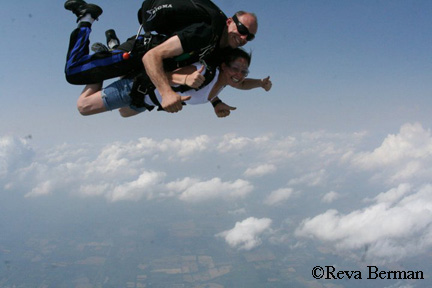
See this one here on my knee, I got this one when I went skydiving. Man, it was awesome, what a rush!  Nothing like falling through the air at 14,000 feet. Anyways, I didn’t quite nail the landing and I ended up with this scar right here.

This one on my arm, oh this one is a great story. It was my 18th birthday, my boyfriend at the time surprised me with a bike trip and picnic lunch. We were 10 minutes into our bike ride when I completely wiped out going down a hill. I cracked my helmet, hit my chin, road rash on both my legs, the palm of my hand, and the inside of my arm. We called an ambulance and get this, since I turned 18 that day, I could decide if I wanted to take the ambulance or not. I decided it wasn’t really necessary once they verified that I didn’t have a concussion. Everything healed pretty well except for my arm, which now resembles something between a birthmark and a burn. Not quite the type of birthday surprise we had in mind.

And this scar on my foot, this one I got at a club in Chicago. My friends and I were out dancing and this drunk girl wasn’t watching where she was going and her stiletto impaled the top of my foot. Holy crap that hurt! I could barely hobble off the dance floor, and the girl was completely oblivious to what she had just done. When the bruises faded, I was left with this nice scar.

(I’m realizing that these stories are doing more to highlight my clumsiness than anything else)
With all these scars, it really shouldn’t have been a surprise that I’m starting to have little scars on my stomach from my infusion set and/or CGM sensor. I never really noticed them before in the 12 years that I’ve had my pump, so I think my CGM sensor is the cause. The scars are small, some darker than others and some bigger than others, but they are there and honestly, I wish they weren’t. I know I’m being vain. However, if the scattering of scars that I see on my stomach is the result of wearing my sensor for 8 months, I wonder what it will look like in 5 years, in 10 years, in 20 years…
I think it’s time that I take my own advice. I have a few options:
1. I can face my fears. If I don’t want scars on my stomach, I can begin to rotate my sensor to other parts of my body. I’ve already moved my infusion set to a new site, so I’m sure I would get used to the sensor being somewhere different, like on my arm. It’s just working up the courage to try somewhere new.
2. I can work on not being self-conscious. Just like the other scars on my body, those small scars also tell a story. They tell a story of living with diabetes for close to 13 years. They are nothing to hide or be embarrassed about, they are part of who I am and I should work on accepting that fact.
3. I can focus on the positives. I have little scars, but luckily I don’t have lipohypertrophy or scar tissue that can affect insulin absorption. Lipohypertrophy is a medical term for a lump under the skin from an accumulation of fat at the site of many insulin injections. These are both possible side effects of insulin injections. I can choose to focus on the fact that right now, I just have little scars.

4. Other? I can try to put some mederma or something on the scars to see if they will fade or wait and see if they naturally fade with time (although in the meantime I’m just making more scars). Or I can take a break from wearing my CGM for awhile (but I’m starting to feel blind without it and really rather not).  

So which one will it be? What am I going to do? 
I don’t know yet.

My Sister’s Letter

I’m so lucky to have such an amazing sister. She is younger by only 2 and a half years and we have always been close. My sister is my best friend and has always been supportive and there for me. When I was diagnosed with diabetes at age 12, it clearly had an effect on everyone in my family, including my sister. She was 9 years old at the time.

Below is an excerpt from a letter written to her 4th grade teacher. It was written less than 1 month after I was diagnosed. Reading it for the first time, I just want to give her a huge hug, both the 9 year old her and the 22 year old. With this letter, I see my diagnosis through her young eyes, as well as the emotions that she was experiencing.

July 10, 2000

Dear Mrs. D,

Hi, how’s your summer going? Mine is fine except for one thing but I won’t get into that now.

… (I’ll skip the part about what my sister did that summer)

The thing that was a shock to my family is that my sister got diabetes. We found out when she went to her yearly check-up. She had to spend three days in the hospital getting taught her and my parents how to deal with diabetes. She needs to take 2 shots a day but she doesn’t mind them. She also has to watch what she eats, never skip meals, and take a snack before every meal. She doesn’t like that she can’t eat candy, cake, ice cream, cookies, marshmallows, or cotton candy, but they do make sugar free ice cream and candy. She can also have a little taste of anything else with sugar in it. But the part she hates the most is that she has to check her blood sugar 4 times a day and to do that she needs to poke herself. She had always hated it when she goes to the doctor and they do it there and now she has to do it 4 times everyday. I hate hearing her crying and screaming and saying that she can’t do it when it comes time to poke herself. Sometimes it takes her a long time and other times it doesn’t. I poked myself to know what it feels like and I didn’t mind it a bit. She gets a lot of bruises on her fingers by doing this and then she always can’t find a finger because they all have bruises on them. I am really mad and sad that this happened and it’s hard to describe my feelings about this on paper. So all I can say is I really hate that this happened and I think it’s totally unfair that Reva and other people who are diabetic have to go through this but it isn’t the worst thing to have happen. I really wish they would find a treatment that will make it go away or find a way to make it easier for people with diabetes like my sister.

This letter makes me want to laugh and cry. I smile when she talks about how she tried poking her finger and “didn’t mind it a bit” because that description fits her so perfectly. My sister, about to graduate college in less than a month, is hoping to enter the medical profession. Blood and needles and all that doesn’t seem to phase her, she is so intrigued by the workings of the human body. I on the other hand, get extremely squeamish. It made me sad to read how she hated hearing me cry and scream, I wish she never had to go through that with me. Her letter reminded me how truly difficult it was in the beginning, especially the first few months. I’ve talked about how it used to take me an hour to poke my finger, but as my sister’s letter describes, it was also accompanied by a lot of crying and screaming. I’ve probably tried to gloss over those memories over the years, but this letter brings them back. Finally, I love that my sister feels not only for me, but for all diabetics and hopes for a cure.

Any kind of illness, tragedy, or life-altering event has a ripple effect. It impacts those that are close to you besides just yourself. It’s so important to be there for one another and to recognize that even if it feels like it sometimes, you are not alone. It was easy for me to be selfish; it’s my disease, my life, my struggles, but this letter reminds me that my family had their own struggles from my diagnosis. My sister has always been by my side, through good and bad even when what was happening to me was affecting her as well. I am so thankful for her and even if I didn’t express it back then, I hope she realizes it now.

I love you so much Banana!

Self-Conscious

I’m not ashamed of my diabetes. Ask me anything about my diabetes, I’ll tell you. Oh you want to see what the infusion set or CGM sensor looks like? Here, I’ll show you. You want to watch me test my blood sugar or change my set? Sure, by all means.

I am open about my diabetes, but yet I have my moments. Maybe ashamed is too strong of a word, maybe it’s more that I become self-conscious.

It was a few months ago. I was a tourist in our country’s capital, spending the afternoon sight seeing on my own. All of the sudden I could feel my blood sugar dropping, and not the gentle kind of dropping. I took a pack of fruit snacks out from my coat pocket, ripped the packet opened, and poured the entire contents into my mouth at once. Yes, eating them one or two at a time may have been better etiquette, but sometimes etiquette goes out the window when it comes to diabetes. As I stood there masticating like a cow, I became aware of a man that was walking toward me, having witnessed the whole ordeal. He gave me a kind of confused look as he walked by. Part of me wanted to chase after him and tell him, “I don’t normally eat like that, I have diabetes and my blood sugar was low and I was feeling impatient!” but really I knew it didn’t matter, plus I was still working my way through the stickiness of the fruit snacks. It wasn’t just about that man though, it’s all the “inappropriate” times that I rip open that packet of fruit snacks and pour them into my mouth. I know it doesn’t matter what other people think, but sometimes I can’t help but wonder. What were those women thinking when I was eating the fruit snacks in the museum when it clearly said no food or drinks? What about the people at the gym when I have to stop halfway through my workout to eat a packet? In the waiting room of the doctor’s office? I mean they probably just think I reallllly like my fruit snacks, but I do wonder.

It was a few weeks ago. I was among a small group of people, gathered in someone’s home, listening to a community leader speak about his experiences over the years. Cheese and crackers, fruit, and cookies were served. I was seated next to this gentleman, everyone’s attention aimed just to my left. That’s when I realized I had forgotten to bolus for the fruit and couple crackers I had eaten. However, I was having one of those moments where I just wanted to blend in, I didn’t want to draw attention to myself as I knew pulling my pump out of my pocket and beeping away would. So I didn’t bolus then, I waited until our talk was over and everyone had gotten up. I suffered for my decision, my CGM showing my blood sugar in the 200’s and rising. I shouldn’t have cared, no one else would have. Or I should have excused myself and gone to the bathroom to give myself insulin. But I didn’t, and my blood sugars reflected that moment of self-consciousness.

It was a few days ago. I was shopping for some dress pants for my new job. I found a nice pair, but when I tried them on, I realized that the pockets weren’t real, basically just slits not big enough to hold my pump. “You can always just clip it to the outside of your pants.” I knew that, but I didn’t want to. I didn’t want it to show.

I’m not ashamed of my diabetes, but I realize I clearly still have moments of self-consciousness. I’m comforted by the fact that I’m sure everyone has their moments, whether it’s diabetes related or not. But what I have and what I do to take care of it should not be a source of self-doubt or make me feel self-conscious. What I do is necessary for my health and for my life. I can’t let moments like these prevent me from taking care of myself. While I recognize that I’ve had less of these moments as I’ve gotten older, I know it’s something I still need to work on.

Deserving Better

Provider-patient interaction and communication is very important. It doesn’t matter how old the patient is, he or she deserves to be treated with respect, dignity, and compassion. Thinking about all my appointments over the years with my various endocrinologist, I keep coming back to one particular appointment. I was probably around 13 or 14. I was having a lot of trouble with my blood sugars, my A1c was way higher than I want to admit, and I was struggling. It wasn’t that I didn’t care, I didn’t want the high blood sugars, but it was hard for me to remember to test and give insulin and my numbers reflected that.

I remember I used to dread going to my endo around this time. “I’m going to the doctor to get yelled at again” I would say. My mom and I would sit in the exam room, while I anxiously awaited some lecture about what I could be doing better. At this particular appointment my doctor looked at me and started asking some strange and poignant questions. “Are you not taking your insulin on purpose?” “Are you trying to lose weight?” What? No, why would I not take my insulin on purpose? Lose weight? What are you talking about? I was so confused. I looked at my mom who was just as naive as I was. The doctor explained that some type 1 diabetics purposefully don’t take insulin in order to induce ketoacidosis and in turn, lose weight. It’s a form of an eating disorder that is called Diabulimia, although he didn’t use that term at the time to describe it, and it is very dangerous. Neither my mom nor I had any idea about Diabulimia or that people did this. While I do appreciate that my doctor was just trying to rule out this possibility for my high blood sugars, I did NOT appreciate the manner in which he did so.

To me it felt very accusatory. More than that, it was as if he didn’t believe me about why I thought my blood sugars were high. An issue like that is a sensitive topic, but he did not approach it like that at all.  Would I have admitted it to him if I was suffering from it? With his demeanor, probably not. When my doctor saw my confused response to his accusation, we put it behind us and moved on with the appointment. I mostly forgot about this encounter until recently when I started reading blog posts about people that have suffered with diabulimia themselves. It made me think back on this encounter and made me angry. Diabulimia is a very real eating disorder that many type 1 diabetics suffer with it, but that’s not what this post is about.

I am a different person but also a different patient than I was 10 years ago, and a lot of that has come from being in the public health field (besides the fact that I’m now older). I believe that we as patients need to take an active role in our own health care. We should feel empowered to ask questions, to clarify and seek out answers, and to be treated like a human being and not just another statistic or number. Similarly, health care professionals should be working towards patient engagement and patient-centered care, to having meaningful exchanges and collaborative appointments rather than authoritative uni-directional lectures.

My pediatric endocrinologist had no bedside manner. He spoke in a monotone at me, not to me. He was not very personable and really did not see me as a person struggling with control of my diabetes, but probably rather as “14 year old female, type 1 diabetic, A1c 10.0”. I should not have stayed with that doctor as long as I did, but my mom and I did not feel empowered. We were still in the early stages of dealing with this diagnosis, there were so many unknowns for us and we were told that this doctor was one of the best. Well all I know is that his approach really did not get through to me. Yes he could adjust my basal rates and carb ratios, but his recommendations only hit the surface, he wasn’t getting to the underlying issues of my high blood sugars. It honestly took years before things really clicked for me, and it was with no help from that doctor.

I should have stood up for myself, even if that meant finding a new doctor that was a better fit for me and how I approach my diabetes. Having a positive rapport and relationship with your doctor is important. Being treated like a human being is important. You and your health are important.

Everyone deserves health care professionals who understand that.

Social Math

I had this great idea, I was going to use “social math” to describe the impact of diabetes. Social math is taking big numbers and statistics and putting them in a context that provides instant meaning, making the numbers more relatable and understandable for people. It helps people to see the importance of the numbers instead of just the numbers themselves. I thought this was perfect, I can show just how much supplies, money, and time is spent dealing with diabetes in a method that would make it more concrete. Well, turns out it’s not that easy.

Let’s start with how many. According to JDRF, each year, 15,000 adults and 15,000 children are diagnosed with type 1 diabetes in the United States. That’s approximately 80 people per day or about 1 person every 20 minutes.  So in the time it takes you to eat your breakfast, another person in the U.S. has been diagnosed with type 1 diabetes.

Type 1 diabetes accounts for a huge amount of money spent each year. Each year, T1D accounts for $14.9 billion in healthcare costs. That’s close to $2 million being spent every hour! But that $14.9 billion only makes up a fraction of the $174 billion that accounts for both type 1 and type 2 diabetes, according to the CDC. And that’s just for direct medical costs.

There’s a lot of supplies that come with being diabetic.

In one year, my skin has been punctured by at least 1,618 needles.

What about test strips? If every type 1 diabetic in the United States saved the test strips they used in one year and lined them up end to end, they would circle around the world, twice!
This is using an average of 4 tests per day, per person, and 2 million people with type 1 diabetes.

Here’s where the numbers aren’t quite as compelling.

Type 1 diabetics need insulin to live. However, we’re still talking about relatively small amounts. I go through about 2 vials of insulin a month, that’s 20 ml. In the almost 13 years that I’ve had diabetes, I’ve used about 3 liters of insulin, that’s less than 1 gallon. When I think about it, a gallon of insulin is a lot, but that’s because I’m very familiar with my insulin doses. To someone who has no idea, a gallon of insulin in 13 years may not seem very significant.

What about time spent on diabetes related activities? You know how someone has figured out how many days we spend in the bathroom or on the phone or watching tv? What about diabetes? When you add up all the minutes, how many days of our lives are spent strictly taking care of our diabetes? Here’s the thing, the answer is every day! It doesn’t work like that. Even if I say, oh yea I probably spend 30 minutes between bolusing, carb counting, testing and treating lows every day, I’m still thinking about my diabetes every other minute of the day. It is always on my mind.

Basically I decided that the numbers don’t come close to conveying the impact of type 1 diabetes. There might be 2 million of us in the United States, but we are only 5% of all diabetics. It has a high cost, but only a fraction of the amount spent on diabetes in total. But these numbers don’t convey the day to day experience of living with diabetes. It doesn’t convey the continuous level of vigilance and worry, the constant mental math, the feelings associated with low and high blood sugars, the level of necessary preparedness, or the frustrations we all feel.

I deal with 1618 needles a year, but that doesn’t tell you about how when I was first diagnosed, it took me close to an hour before I could psychologically send one of those needles into my finger. $20 spent on treating lows a month doesn’t tell you how disruptive and debilitating some of those lows can feel. And that 1 person that was diagnosed in the past 20 minutes, it doesn’t tell you the emotions he or she is feeling while being told that their life is about to completely change.

Social math is a great tool for some statistics, but when it comes to diabetes, there’s so much that it can’t tell you.


A Little Perspective

I had a different post for today, but I couldn’t go through with posting it. In light of current events, it just seemed so trivial. This past week I was informed about the tragic and untimely death of two people that I went to high school with. I can’t even fathom the grief and shock that their family and friends must be going through. That kind of pain and loss is unimaginable and my thoughts and prayers are with them during this difficult time. After hearing this devastating news, it seemed that everything else I heard was just more sad and horrible news. A brain tumor scare, a cancer diagnosis, the slow decline of a family member’s friend, relationship drama, car accidents, the list goes on. Perhaps I was just more acutely aware of these events because of the news of the first, perhaps every week has this much bad news, but it seemed so overwhelmingly negative. It’s all so hard for me to process, I don’t even think I can put into words how I’m feeling, only that I am so sorry that there is so much suffering in this world and I wish it didn’t have to be this way.

The one thing this week truly gave me though, is perspective. Yes, I may have a chronic disease, but it’s manageable and it’s not a death sentence. I’m still in good health, I have friends and family that love me, and I have so much to be grateful for. The events of this week made my own daily struggles and frustrations seem so small, and rightly so. It’s important to have that kind of perspective. It reminds you to not take anything for granted, to truly live each day to the fullest, to live in the moment, and to cherish the people in your life. It didn’t feel right to spend today’s post talking about low blood sugar or other inconveniences. Today is about taking a step back from your own life, stepping outside of your own daily hassles, frustrations, and problems and acknowledging the bigger picture. It’s about realizing that although your worries may seem great, there is someone else with far greater worries. It’s about recognizing the struggles and suffering of those around you and being there for them, even just in thought.

It’s so easy to get caught up in your own little bubble, but I’m learning that it can be beneficial to take some time to step back and to put your life and the problems you may be facing in perspective. Perhaps for a moment, they won’t seem quite so bad.

“I was angry, for I had no shoes. Then I met a man who had no feet.” ~ Chinese Proverb