The Ticking Time Bomb

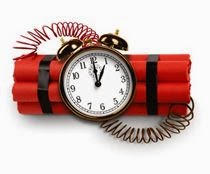
I held in my hand a ticking time bomb.

One of my worst fears was unfolding right before my eyes. But I was too late. The wheels were set in motion, I couldn’t reverse it, take it back, start over. I would have to let it play out and hope that I was wrong. 
This had never happened before. At least not to this scale. My heart rate started to quicken and I began to prepare myself for the worst.
I held in my hand my insulin pump. 
I had just finished an incredibly heavy italian meal including sangria, bread, appetizers, pasta, the entree, and dessert. I started the meal with a high blood sugar and counting the carbs in this meal, I knew it would be a lot. I had given the insulin. It was already in my body, there was no taking it back. I was uncomfortably stuffed, so full that the thought of eating more made me feel sick.
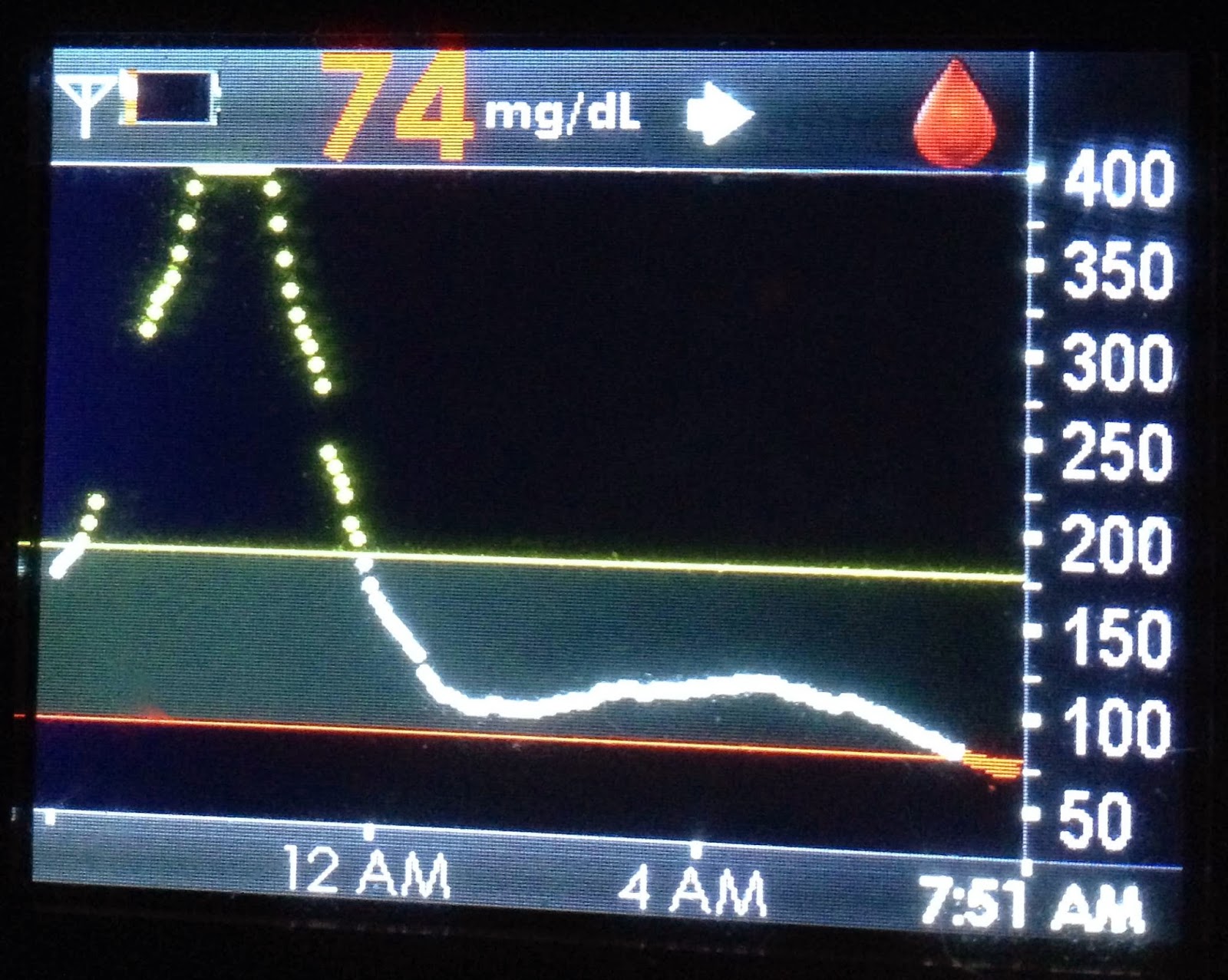
My CGM buzzed, but instead of telling me that I was high like I expected it to say, it was telling me that I was quickly dropping. I looked at the number, 190 and dropping fast. I pulled out my pump, there was an alarming amount of active insulin in my body, wayyy more insulin than I would need. I knew I was going to crash. It was only a matter of time.
Tick. Tick. Tick.
I pulled out a pack of fruit snacks, and although it physically pained me to eat more, I swallowed them down. I was determined to catch this low before it got bad. An hour later I was still dropping, but it seemed to be leveling off and I started to think that maybe the low wouldn’t be as bad as I thought. I was right around 70 and so I took another pack of fruit snacks.
Tick. Tick. Tick.
At 11 pm,  it hit me. In the span of 10 minutes, that 70 turned into 42 and then that 42 turned into 28. 
KABOOM!

 I was falling, crashing. I stumbled out of my room, downstairs and grabbed a small gatorade and another couple packs of fruit snacks. At this point the low had hit me full force, I couldn’t think straight, walk straight, or make much sense of anything around me. I’m moving out of my parents house in a week, but today I was glad that my dad was just a few doors down. I knew that I was in danger of passing out and just wanted someone to make sure I was okay. I knocked on the door. “My blood sugar is 28” I slurred, falling into bed. After confirming that I had already treated the low, my dad continued to ask me questions, making sure that I stayed conscious. The words felt heavy in my mouth, my sentences barely reflecting the thoughts in my head. I could hear myself slurring my speech. Eventually my sentences and speech became more coherent as I became more aware of my surroundings. I tested my blood sugar again, 67. 

I knew the worst was over and I made my way back to my own room, drenched in sweat from the low. My stomach hurt from all the sugar I had just consumed on top of my heavy dinner. And while I was sure I would probably be facing a high blood sugar in a few hours, I was relieved that the worst was over.
The low has come and gone, but was has managed to stick with me is that feeling of both impending danger, but also of the unknown. I’ve never experienced such a helpless awareness. It was like being in a runaway cart rolling down a hill, knowing that you would crash at the bottom, and not being able to stop it. And yes, sugar could and did slow it down, but I didn’t know how much would be enough to stop the crash, but not send me soaring in the other direction.

My insulin pump is my lifeline, but that night it truly felt like a ticking time bomb.

Energy Burnout

A couple weeks ago, I attended a 2 day course all about energy management. Energy management is a term that I had heard thrown around occasionally, but I wasn’t entirely sure what it meant besides well, managing your energy. Basically the idea is that energy is our most critical resource we have as human beings, but most of us fail to manage it effectively. Think about it, we manage our time, but few of us think about how we can skillfully invest our energy each day. Many of us find our productivity slipping at 3 pm, or we come home from work or school exhausted or irritable, or perhaps we are too drained to do the things we need to do when we finally have the time. These are all examples of ineffective energy management. Ask yourself, are the people who matter most to you in your life getting your best energy?

When you manage your energy, you find that you are able to fully engage, that you are giving your full and best energy right here, right now. The course talked about 4 distinct, but connected dimensions of energy: physical, emotional, mental and spiritual. I learned techniques for managing and expanding the energy that I have. This includes both moving and eating for energy. While the premise of the eating for energy, eating light and often, makes sense for people without diabetes, I had some issues with this component. The moving for energy meant that at least every 2 hours, you get out of your chair and stretch and move your body. This could be going for a short walk or even doing small stretches at your desk. Finally, we spent some time in the course on self-awareness, coming up with our “missions” in life. This mission is an overarching statement of purpose that can help you make decisions and navigate through your life. It’s the greatest driver of engagement and helps you decide how to best invest your energy.

After the course, I started thinking about where in my own life I have the biggest problems with energy management. Yes there are times when I could be more engaged at work, or with family and friends, but the blaring and obvious answer is in my diabetes management. And I don’t think I’m alone in this. We even have a term for when we run out of energy taking care of our diabetes, diabetes burnout. Managing a chronic condition takes tremendous amount of energy in all 4 dimensions, but especially physical, emotional and mental. It requires constant vigilance and attention. You’re always preparing and planning. Your body is continuously being subjected to glucose tests, insulin administration, and going through high and low blood sugars. You worry, you get frustrated, you get annoyed, and sometimes you just burn out.

But burn out with a chronic condition is dangerous! We aren’t talking about being too tired to get a work out in one day or not being as productive in the afternoon or as engaged with your partner. No, energy management with a chronic disease is vital! When someone isn’t managing their energy effectively, it effects how they take care of their disease which can have immediate, dangerous, and damaging consequences. I know that when I’ve gone through phases of burn out, I am less careful about carb counting and low and high blood sugars can become more frequent and extreme. This can lead to both short and long term consequences for my health.

So what are the strategies that someone can use so that the amount of energy that is necessary to care for a chronic disease does not lead to burn out? I don’t know. I have some thoughts, but it’s something I still struggle with myself. But the thing that I think may be most helpful is having your life “mission”. I know, you’re probably thinking how some statement is going to help with your health. But for me, poking my finger to check my glucose level is not about the number. It’s not even about my A1c. For me, it’s about being healthy so that I can get married, travel the world, have a family, be there to watch my children grow up and have the joy of becoming a grandparent. I want to live a long, healthy and fulfilling life. That’s my mission, that’s what drives me to do the little things each day: making sure I have enough test strips, counting my carbs, testing my blood sugar, remembering my fruit snacks, bolusing on time. That’s what I remind myself when I start to lose energy, when I see my self-care slipping. Maybe this will help you, maybe it won’t. But when it comes to your life, why do you want to take care of your diabetes? What is your mission?  Who/what matters most to you? What makes your life really worth living?

Energy is our most critical resource as human beings. How are you managing yours?

Diabetes Art Day 2014

I’m so pleased to be participating in the 5th Annual Diabetes Art Day! This is my second year participating. Art has always been valuable to me in my life as a form of expression, and I love creating art with a purpose. It’s a way to express thoughts or feelings that can sometimes be hard to articulate when it comes to my diabetes, and Diabetes Art Day is a great opportunity to share those feelings through a unique medium.

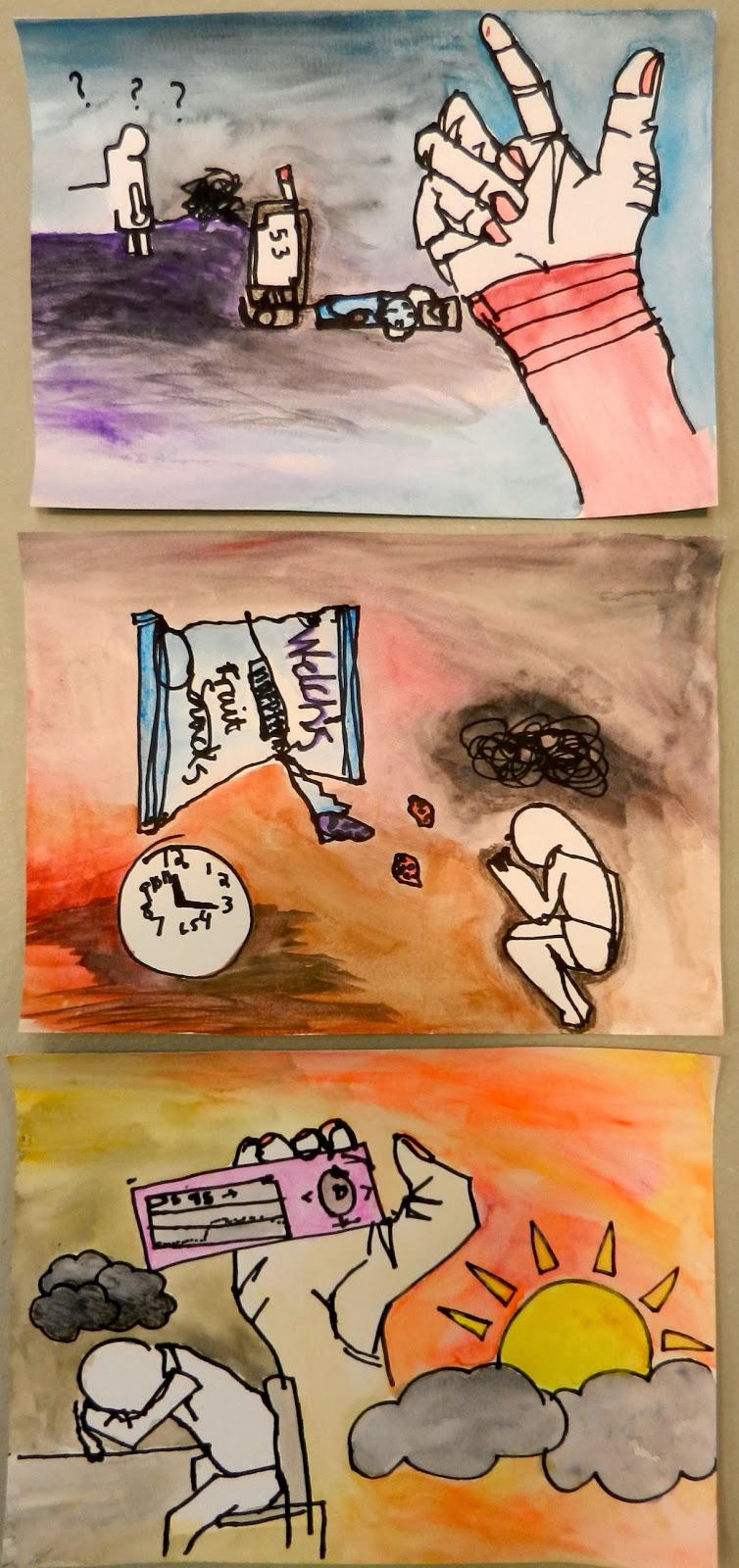
This year my piece is called “The Low Journey”. It’s an abstract interpretation of what low blood sugar feels like for me using sharpie and water colors. It begins in the first picture with the realization that you are going low, that dark, confusing feeling of being disoriented and out of sorts. The feeling is confirmed with a finger poke and reading on the meter. In the next picture, the treatment of the low is depicted. I use fruit snacks to treat my lows. Then comes the agonizing 15 minutes of waiting to feel better, but feeling helpless in the mean time. Finally, the last picture shows how the dark clouds hanging over you eventually begin to lift as your blood sugar returns to normal and the sun finds its way through the dark clouds.

The Low Journey
Thank you to Lee Ann Thill from the Butter Compartment for organizing Diabetes Art Day. Be sure to check out everyone’s wonderful submissions in the 2014 Diabetes Art Day Gallery!

100th Post, 100 Days

I was racking my brain for what this post should be about, it seems that my diabetes has been operating in the background lately. It’s been humming along at a pretty steady tone, no blaring alarms to garner attention and a blog post. I’m not complaining, it’s nice to not have it be constantly on my mind.

I was staring at my posts when I noticed a number, this is my 100th blog post. I felt that it warranted some sort of recognition. A number that can be celebrated.

At first I thought of doing some kind of list, you know the “Top 100” type of lists. But I was having trouble either thinking of 100 or the list wasn’t very exciting…

100 names that I’ve called my glucose meter:
1. pokey
2. meter
3. that damn thing
4. thingamajig
5. blood sucker
6. glucose gizmo
7. Dracula
8. the pricker
9.

100 places where I’ve gotten a low blood sugar:
1. in the car
2. at my house
3. at school
4. at work
5. on the tennis court
6. walking down the street
7. while at the gym
8. at the movies
9. in my bed

This list would probably be well over 100…

100 things others have asked or told me about my diabetes
1. so you can’t have sugar?
2. That’s the bad kind, right?
3. Can you eat that?
4. Can’t you just take that pill?
5. A raw foods diet can cure diabetes
6. Don’t worry, that won’t happen to you, your diabetes is controlled
7.

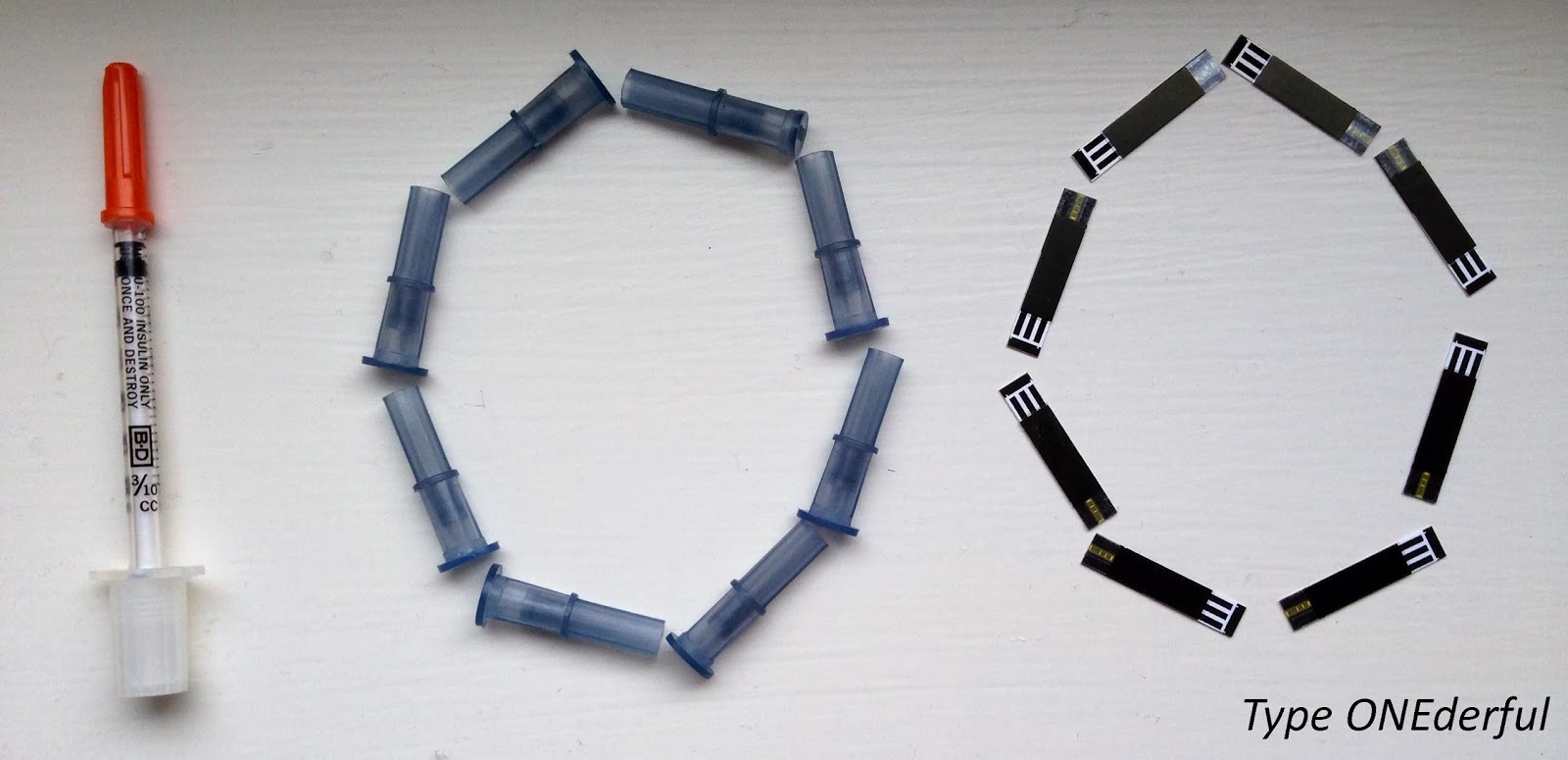
Instead, I decided on “100th Post, 100 Days.”  This post is dedicated to a glimpse of what 100 days of diabetes looks like for me. While I can’t quantify every experience, every emotion and feeling, and every minute living with diabetes, here’s what 100 days does mean for me:

  • 34 set changes. That means filling my insulin pump with insulin and inserting it into my stomach 34 times.
  • 10 sensor changes. I’ve been getting roughly 10-12 days out of my Dexcom CGM sensor, so I will have reinserted it under my skin around 10 times.
  • At least 300 finger pokes, although likely many more. This is assuming I test my blood sugar using my finger 3 times a day, but some days I test many more.
  • A conservative estimate of 70 packs of fruit snacks. I don’t go low every day, but there are times when I go low 3 times in one day, so 70 seemed like an accurate estimate.  But whether that number is closer to 50 or 80, it’s still a lot of packs of fruit snacks!
  • Around 9 vials of insulin
  • Roughly 50 interrupted nights of sleep with a beeping CGM indicating low and high blood sugars
  • Hundreds of dollars spent on supplies and doctor visits…after insurance
  • One visit with my endocrinologist
  • reading tons of blog posts in the DOC, filled with laughter, tears, frustrations,  and triumphs and around 14 of my own blog posts

So here’s to 100 blog posts! 100 posts providing a window into these last 14 months with diabetes. Hopefully you’ve enjoyed reading them as much as I’v enjoyed writing and sharing them.

Fleeting

This too shall pass.

This is one of my favorite quotes. I find solace among these words, as even now I turn to them for comfort. To me, it is a reminder that this moment or what you’re feeling right now will soon fade away. If it’s bad, you will get through it, things will get better. If it’s good, cherish the moments because they too will pass.

It’s a reminder of the temporary nature of much of our experiences and emotions; pleasure and pain, sadness and joy. It’s a warning to live in the now. From a broken heart to a broken leg, this phrase offers hope.

While this proverb has helped me through many moments in my life, applying it to my life with diabetes proves more difficult.

A chronic disease is by definition, well, chronic. It’s long lasting, it continues, it does not pass. Until there is a cure, it is something that I am stuck living with for the rest of my life. On a bad diabetes day I can find comfort in the fact that tomorrow is a new day, but it’s still a day with diabetes. So what do you do? What can you do?

You accept it.

You let your anger pass. You let your frustrations pass. You let your sadness pass. You let the pain pass.

You may not be able to change what happens to you, but you can change how you respond to it. The only chronic part of diabetes is the disease itself, not how you feel about it. So why hold on to the negative, when it too can pass.

The Other Room

I sit down at the table to eat. It’s past 1 and I’m starving. I don’t know what my glucose number is; my meter is upstairs. I take a bite. I don’t want to go up and get it. Pretty soon my lunch is gone. I left my diabetes in the other room.

I’m snuggled under a blanket. Snow is falling outside, piling high against the window. Flames flicker and dance in the fireplace as the heat warms my frozen toes. I hear a faint buzz from the other room. My CGM is telling me something: too high, too low, dropping, rising. I don’t listen. I left my diabetes in the other room.

We’re gathered around the table, 6 friends enjoying each other’s company and a delicious dinner. The waitress asks if we want dessert. A slice of giant chocolate layer cake is served with 6 forks. I take one and dig in, savoring each rich bite. Chocolate cake, chocolate frosting, raspberry sauce. I left my diabetes in the other room.

My pump lays on top of a pile of crumpled clothes. I’m untethered, liberated, disconnected. I jump into the pool. I left my diabetes in the room.

I’m in a meeting, staring at the computer projection on the screen. The words are there, but I can’t make sense of them. My head feels heavy, my hands shaky. My CGM is back at my desk. I left my diabetes in the other room.

Didn’t I? 

My heart rate quickens, my hands get clammy. I can’t think straight. I’m getting dizzy.

I didn’t leave it. I can’t leave it.

It’s always here.

New Year, New Beginnings

I never used to like the beginning of a new school year or a new course. The first couple weeks are always spent becoming familiar with the format of the class, with the new materials, and with one another. I usually preferred being in the thick of things. At this point you knew what was expected, what to do, and had already developed your routine and habits. That’s not to say that I don’t like new things, because I do. But I also like the comfort and familiarity of an established routine.

Today, I find myself at many “new beginnings”. I’m at the beginning of a new job. I am at the beginning of a new relationship. I’m at the beginning of a new year. And honestly, I’m at the beginning of what I see as a new chapter in my life. These new beginnings are exciting, but I also find them to be a little unnerving. They are full of potential, but also of unknowns. They present opportunities, but also new challenges. And while I enjoy the novelty of these situations, sometimes I find myself wanting to fast forward just a little.

But the beginning of a new school year, a new class, or a new year also presents a unique opportunity. It’s an opportunity to start fresh. You are given a clean slate for the most part, what happens next is entirely up to you. You can chose to be dictated by past behaviors, both good or bad, or you can choose to present a new you. So you didn’t do as well as you had hoped last year, well now is your chance to start over, to be the person that you set out to be.

January 1st is not in the beginning of a school year or even a college course. It probably isn’t your first day of a new job or first day in a new location. In fact, it probably falls in the “middle” of a lot of things in your life. However, it does present an opportunity for reflection, revision, and resolution. As we get older, we get fewer clean slates. You may have already started to establish yourself in your career, in your relationships with others, and in your community. But even if your boss, your spouse, or your friend doesn’t give you a “clean slate” come January 1st, you still have the opportunity to give one to yourself.

What does a clean slate look like? Well for me, I begin with erasing everything from last year that I wish went differently or that I wish I could have done better. In the act of erasing, I forgive myself and others, releasing any guilt, self-doubt, and grudges that I may have. I erase the weeks of high blood sugars that I know are partially the result of my lack in self-management. I erase the petty arguments, the lost tempers, the gossip, and the tears. I erase the weeks that I was too lazy to workout, when I ate more than I know I should have. I erase the times I forgot to bolus or test my finger. I erase all the times when I let my life get out of control, for messes to pile up, for responsibilities to build.  As I erase I vow to do better and be better in the coming year.

When I’m done erasing, I stare at that metaphorical blank slate with its infinite possibilities. What kind of person do I want to be in 2014? What do I want to accomplish? How do I want to be remembered and referred to by those who know me? What do I want to do to care for my health and for my future? I take these abstract questions and I set concrete goals for myself. I fill my slate with my goals and hopes for the following year. Maybe I’ll accomplish them, but maybe I won’t. But what is important to me, is taking the opportunity of a new year for personal reflection and making a resolution to myself to do and be my best in this coming year.

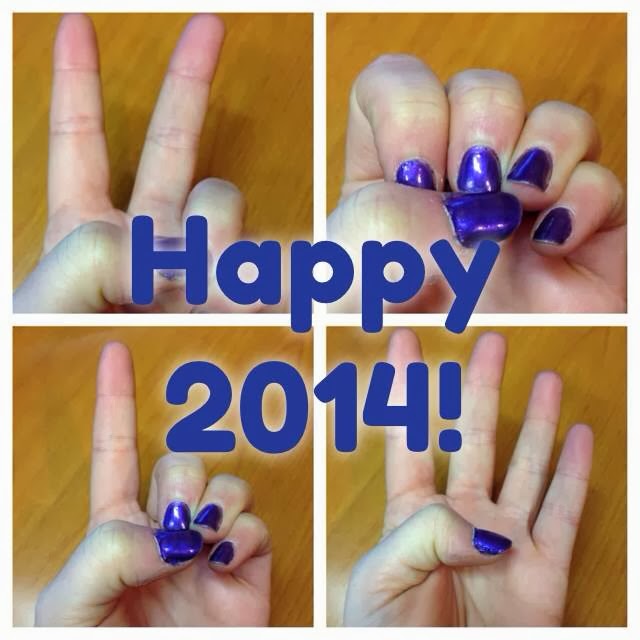
Happy New Year everyone! To new beginnings!

Going to Extremes

Two nights ago I had one of the highest blood sugars that I can remember in years. I wrote a whole post about what potentially may have led up to it, where my self-management went wrong, and just how horrible the experience was. I was ready to publish the post today, but then last night I had one of the lowest blood sugars that I’ve had in years as well. I can only think of 2 other times in the past 13 years when it was this low. I went from 515 one night, to 22 the next (for those who aren’t familiar with blood sugar numbers, I strive for a blood sugar around 100-120).

Both numbers are scary. The 22 was much more of an immediate danger, but the 515 was disappointing, perplexing, and just overall awful. Both numbers are extreme. Both are dangerous in their own way and both have left me feeling out of sorts.

As I write this, my blood sugar is at a comfortable 125, clearly recovered from both incidences. I’m mad at myself, especially for the high number. I know that it’s my fault. I wasn’t as vigilant and careful as I should have been, and because of that, I faced the consequences. Looking back there are certain moments where I could have intervened earlier so that the results weren’t as catastrophic, but at the time I did not realize how important those moments were. Even with the low, I heard my CGM buzzing, but I ignored it because I felt fine.

The high number was in part a result of my first spinning class.  Before I started the class I checked my blood sugar. It was 248. This number is too high, but I figured the intense exercise would lower it (my first mistake) and didn’t want to drop low during the class. So I didn’t give any insulin and disconnected my pump.

When I finished the class, I took out my CGM Gigi, but it was giving me the out of range signal and hadn’t been tracking my blood sugar. I should have tested my blood sugar at this point, but I didn’t. I went home and ate a low carb dinner, but I forgot to bolus for the few carbs I did have, only making the situation worse.

It was now a little before 10 and I started to recognize the symptoms of a high. I took out my meter and tested my finger. 439. WHAT?! That can’t be right. I tried a different finger, 498. Shit. One more finger, 515. At that point a said four letter word that I will not write here. I immediately took out a syringe and gave myself a shot of insulin and changed my infusion set. At this point I started to feel really sick, the nausea had started to set in. I laid in my bed feeling awful. It wasn’t until around 1 am when my blood sugar finally returned to normal.

I honestly don’t know what caused the 22 or why I didn’t feel it sooner. I must have overbolused for my dinner and just didn’t feel the symptoms early enough. I didn’t believe the number on the screen at first, testing 2 more fingers for confirmation. What was so strange about this low was that even though it was so drastic, the symptoms weren’t as strong as even when I’m in the 40’s or 60’s. Probably why I didn’t catch it earlier in the first place. I know that much lower I am at risk for passing out, so I ripped open 2 packs of fruit snacks and chugged some orange juice. I didn’t care if I went high, I just needed my blood sugar to go up. And it did, it kept going up and up until I was woken at about 2 am with a blood sugar now in the 300s. Clearly stuck on a roller coaster of highs and lows, I gave insulin and went back to sleep, waking up to a low in the morning. Low, high, low…it’s exhausting. And frustrating. And annoying.

No more extremes. I can’t take it. Even though it feels like my diabetes is all I think about at times, I have to do better. I have to be more vigilant, more cautious, more disciplined. I know it’s my responsibility. I cannot have another night like the past 2 nights, I hope that I never see either of those extreme numbers again.

A Shot to Type 1 Diabetes!

Our glasses were poised in the air, seven friends and our waiter all gathered around the table.

The cheer was proposed, and it wasn’t by me. “To type 1 diabetes!”

“To type 1 diabetes!” we all echoed. Our glasses clinked before downing the shot gifted by our waiter.

Did we just really toast type 1 diabetes? To better understand this bizarre occurrence, I’ll have to start at the beginning of the night.

I was meeting some friends out for dinner and drinks. Among the people I was meeting was someone that I had recently learned also has type 1 diabetes. Naturally when you put two type ones together for the first time we have a lot to talk about! When were you diagnosed? Do you have a pump? What kind? Oh the omnipod, do you like it? Do you use a CGM? My other two friends listened as we bonded over our broken pancreases. Since one friend is a nurse and the other used to work for the American Diabetes Association, they were still somewhat engaged in our conversation.

Just as my friend was saying the word “diabetes”, our waiter came up to the table. “Oh diabetes?” he inquired. “Yeah, we just learned that we both have type 1, do you know the difference?” she asked.

At some point, you start to get a little cynical. I was totally expecting the waiter to say something like, “that’s the bad kind right?” or “that’s the one where you can’t eat sugar”. Instead he answered, “Yeah, my sister has type 1.” I knew this guy understood. He asked if we used insulin pumps and I took mine out of my pocket to show him. “Yeah I was the jerk brother who would chase my sister around with the thing you poke your finger with and try to poke her in the arm. Sooo do you guys want some lemon drop shots? I can put equal around the rim for you two.” I liked this guy.

The rest of the night continued with hilarious quips about diabetes and other topics from our waiter. At one point he came over to the table and asked us, “so do you plan on having kids one day?” Caught a little off guard, we answered that we did. “This asshole doctor told my sister when she was 11 that she may be able to have 1 kid one day. She’s had 4 healthy babies.” Although a little out of place, I appreciated that comment and the sentiment behind it. It’s always nice to hear positive stories of other PWD. Then just because this was the kind of night we were having, he turned to my friend and added, “so keep on having sex.” Wait, what? Was this really happening?

A little while later, another friend came and joined our table. As she took her seat the waiter turned to her, “So do you have diabetes too?” Laughing, she replied that she didn’t. In a perfect Mean Girls style, the table blurted out, “You can’t sit with us!” It was all too perfect.

Which brings us to the drinks. Another two friends had joined, bringing our group up to 7. Out of no where the waiter returned holding shots for the table and one for himself. “What are these?” we asked. “I call them diabetes #1,” he answered.

So there we were, 7 girls and our waiter, 2 with diabetes and 6 without, about to take a shot while toasting type 1 diabetes. It’s not a situation I ever really expected to find myself in. It was one of the funniest dinners that I’ve had in awhile. Living with diabetes is a pain, but here it had brought a table and waiter together for a fun and hilarious night. And hey, I’ll take those kind of shots over insulin shots any day! 😛

Awkward Moments

Context is important. Statements that are completely normal and understood within my family can take on a whole new meaning when out in public.

“Dad, I’m so high right now!”

I remember the first time that I realized that this sentence does not always have the meaning that I intended. I had a friend over, I must have been 13 or 14 years old. We were about to eat lunch. I had tested my blood sugar and my number was high. The statement, “I’m high, Dad,” was followed by a shocked look from my friend. “What? Did you just tell your dad that you’re high?!” I returned my friend’s confused look, in my naivety being high only meant one thing, “Yeah, my blood sugar is really high right now.” My friend laughed, “Ohhh, that’s not what I thought you were talking about.” I think back and laugh, I’ve said that statement so many times, out shopping, out to eat, walking around. It’s funny to think about how many times someone overheard that comment and what they must have been thinking. Now I make sure that when I’m out in public to change the statement to “My blood sugar is so high right now,” to avoid any misinterpretations. 
This got me thinking about all the other awkward situations that my diabetes has gotten me into over the years. While not quite embarrassing, this situations usually do require some extra explanations.
I remember a time in middle school when I was wearing a skirt to class. I was wearing my pump in a strap around my leg since I didn’t have any pockets. I was sitting down when I started hearing this high pitched noise. Other people around me started hearing it too. This was before everyone had cell phones so we were all looking around trying to figure out where the sound was coming from. I shifted in my chair and the long drawn out beep was followed by 3 shorter beeps. I somehow had sat in such a way that a button had gotten held down on my pump. Everyone stopped and stared at me, it was clear that the unusual sound came from me. Not one to awkwardly disrupt the class and explain that I’m not a robot and in fact the noise was my insulin pump, instead my cheeks turned a bright ride as I mouthed a silent, “Sorry”.
It’s not just the beeps that get people’s attentions. This past weekend I was at a friend’s house party and left my purse on a chair where a friend was sitting. “Reva, is this your purse?” I replied that it was. “It keeps vibrating.” With my phone visibly in my hand, curious eyes turned to me to hear my explanation for my vibrating purse. “Um well yea, it’s my thing, blood sugar, um thanks.” I grabbed my purse, rustling inside to find Gigi and put wandering minds to rest.
And I can’t forget about all the times I’ve poured the entire contents of a fruit snack pack in my mouth at once as strangers looked on with curious expressions, or got my pump tubing caught on knobs, wrapped around seat belts, buttoned into my jeans, etc.
I’ve had my fair share of awkward diabetes moments, but I’ve also had many non diabetes related awkward moments. When it comes down to it, I’ve learned the best thing you can do is just laugh about it. 
Image from  Type 1 Diabetes Memes