Energy Burnout

A couple weeks ago, I attended a 2 day course all about energy management. Energy management is a term that I had heard thrown around occasionally, but I wasn’t entirely sure what it meant besides well, managing your energy. Basically the idea is that energy is our most critical resource we have as human beings, but most of us fail to manage it effectively. Think about it, we manage our time, but few of us think about how we can skillfully invest our energy each day. Many of us find our productivity slipping at 3 pm, or we come home from work or school exhausted or irritable, or perhaps we are too drained to do the things we need to do when we finally have the time. These are all examples of ineffective energy management. Ask yourself, are the people who matter most to you in your life getting your best energy?

When you manage your energy, you find that you are able to fully engage, that you are giving your full and best energy right here, right now. The course talked about 4 distinct, but connected dimensions of energy: physical, emotional, mental and spiritual. I learned techniques for managing and expanding the energy that I have. This includes both moving and eating for energy. While the premise of the eating for energy, eating light and often, makes sense for people without diabetes, I had some issues with this component. The moving for energy meant that at least every 2 hours, you get out of your chair and stretch and move your body. This could be going for a short walk or even doing small stretches at your desk. Finally, we spent some time in the course on self-awareness, coming up with our “missions” in life. This mission is an overarching statement of purpose that can help you make decisions and navigate through your life. It’s the greatest driver of engagement and helps you decide how to best invest your energy.

After the course, I started thinking about where in my own life I have the biggest problems with energy management. Yes there are times when I could be more engaged at work, or with family and friends, but the blaring and obvious answer is in my diabetes management. And I don’t think I’m alone in this. We even have a term for when we run out of energy taking care of our diabetes, diabetes burnout. Managing a chronic condition takes tremendous amount of energy in all 4 dimensions, but especially physical, emotional and mental. It requires constant vigilance and attention. You’re always preparing and planning. Your body is continuously being subjected to glucose tests, insulin administration, and going through high and low blood sugars. You worry, you get frustrated, you get annoyed, and sometimes you just burn out.

But burn out with a chronic condition is dangerous! We aren’t talking about being too tired to get a work out in one day or not being as productive in the afternoon or as engaged with your partner. No, energy management with a chronic disease is vital! When someone isn’t managing their energy effectively, it effects how they take care of their disease which can have immediate, dangerous, and damaging consequences. I know that when I’ve gone through phases of burn out, I am less careful about carb counting and low and high blood sugars can become more frequent and extreme. This can lead to both short and long term consequences for my health.

So what are the strategies that someone can use so that the amount of energy that is necessary to care for a chronic disease does not lead to burn out? I don’t know. I have some thoughts, but it’s something I still struggle with myself. But the thing that I think may be most helpful is having your life “mission”. I know, you’re probably thinking how some statement is going to help with your health. But for me, poking my finger to check my glucose level is not about the number. It’s not even about my A1c. For me, it’s about being healthy so that I can get married, travel the world, have a family, be there to watch my children grow up and have the joy of becoming a grandparent. I want to live a long, healthy and fulfilling life. That’s my mission, that’s what drives me to do the little things each day: making sure I have enough test strips, counting my carbs, testing my blood sugar, remembering my fruit snacks, bolusing on time. That’s what I remind myself when I start to lose energy, when I see my self-care slipping. Maybe this will help you, maybe it won’t. But when it comes to your life, why do you want to take care of your diabetes? What is your mission?  Who/what matters most to you? What makes your life really worth living?

Energy is our most critical resource as human beings. How are you managing yours?
My Dearest Diabetes

My dearest Diabetes,

On this Valentine’s Day, I’d like to take a moment and express my true and honest feelings towards you. After all, as the men I have dated have come in and out of my life, you have stuck to, er I mean by, my side. You have been with me through the highs and the lows, never mind that you caused many of them. But you’ve never abandoned me, you’re always here, even despite my best effort to get rid of you. I have to admire that kind of persistence.

Our relationship is unconventional. You were an unwelcomed force in my life, bringing with you many changes, disruptions, and emotions. Dare I say, I hated you when we first met. But you made it clear that you weren’t going anywhere so I learned to make the best of our relationship. I want you to know that you can be a real pain. Sometimes I wonder why you’re such a prick. But other times you can be so sweet, so it’s hard to stay mad at you for long.

You’re needy, demanding, and all consuming. I think about you all day, every day. Sometimes you’re even in my dreams. It’s hard to remember my life before you, and to think of it without you, should that day ever come. I complain about you all the time. To my friends, family, strangers. Some understand completely, others try to, and some will never know what it’s like to have you in their life. You bleed me dry.

But you’ve changed me. I would not be who I am today, where I am today, without you. While you’ve taken so much from me, my time, my energy, my fears, my health, you’ve also given me so much in return. You’ve given me determination, a strong sense of responsibility, strength, a community, and purpose. I hate you, I wish you never found me, but I cannot deny that deep down, you’ve made me a better person.

Happy Valentine’s Day, Diabetes. I hope it is a sweet one.

Love,
Me

Diabetes Art Day 2014

I’m so pleased to be participating in the 5th Annual Diabetes Art Day! This is my second year participating. Art has always been valuable to me in my life as a form of expression, and I love creating art with a purpose. It’s a way to express thoughts or feelings that can sometimes be hard to articulate when it comes to my diabetes, and Diabetes Art Day is a great opportunity to share those feelings through a unique medium.

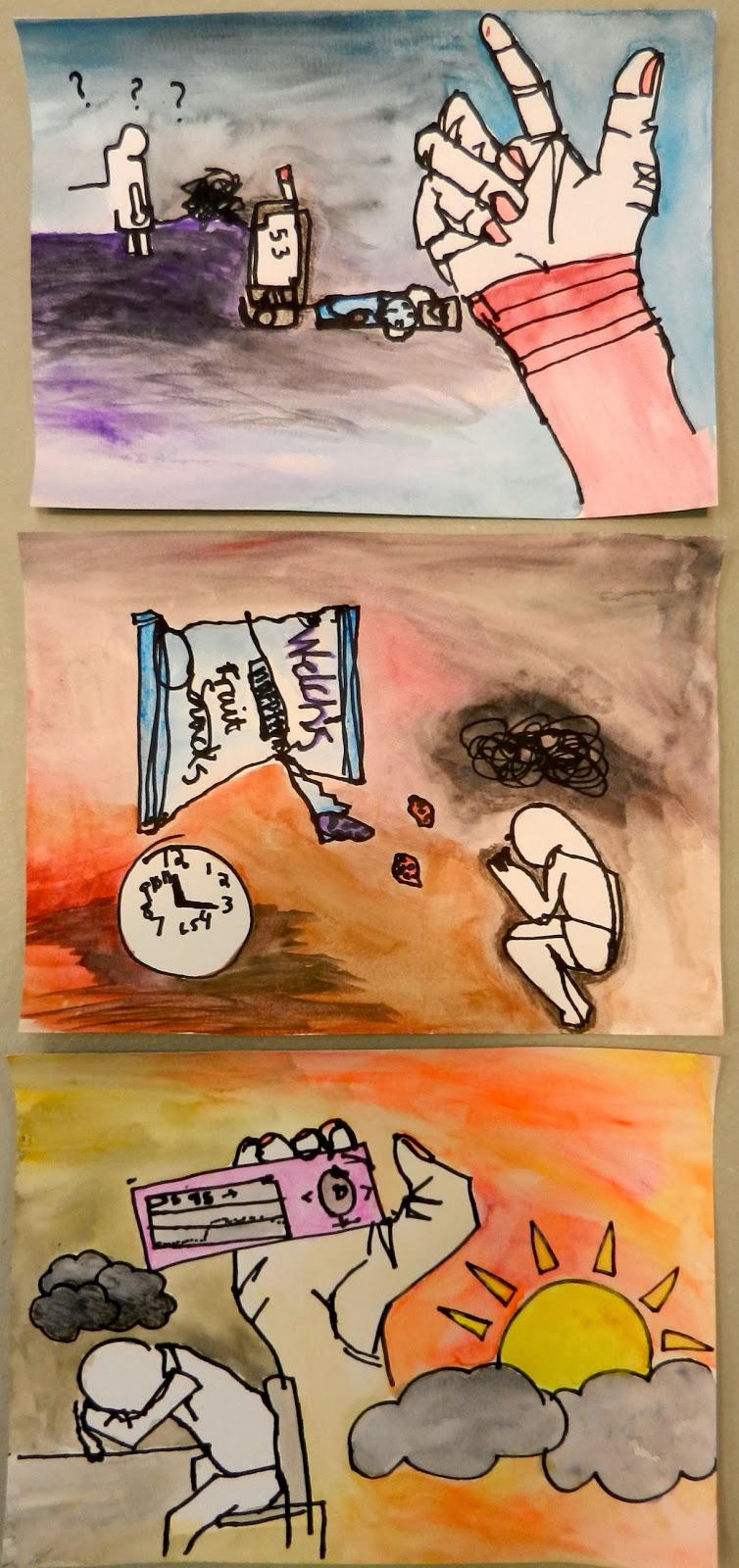
This year my piece is called “The Low Journey”. It’s an abstract interpretation of what low blood sugar feels like for me using sharpie and water colors. It begins in the first picture with the realization that you are going low, that dark, confusing feeling of being disoriented and out of sorts. The feeling is confirmed with a finger poke and reading on the meter. In the next picture, the treatment of the low is depicted. I use fruit snacks to treat my lows. Then comes the agonizing 15 minutes of waiting to feel better, but feeling helpless in the mean time. Finally, the last picture shows how the dark clouds hanging over you eventually begin to lift as your blood sugar returns to normal and the sun finds its way through the dark clouds.

The Low Journey
Thank you to Lee Ann Thill from the Butter Compartment for organizing Diabetes Art Day. Be sure to check out everyone’s wonderful submissions in the 2014 Diabetes Art Day Gallery!

MATHter Mind

Math is a powerful force in my life.

In school, you are taught how basic math skills will become part of your everyday life. It’s not just a problem on the chalk board or on your homework. You will use math every day in countless ways: figuring how much change you’ll get when you pay with a $20, what is a 20% tip on a $15.65 meal, how much flour do you need if you are doubling the recipe, etc. It’s easy to think of professions and situations where a miscalculation can be disastrous and detrimental. A mistake in a budget can cost a company thousands or even millions of dollars, a builder’s wrong measurement can compromise an entire structure, or a doctor’s miscalculation of dosage could be lethal. However, for most of us in our every day lives, the consequences of our calculations are not as significant or potentially harmful.

Diabetes changed all that for me. It’s a disease of countless and continuous calculations. And while technology has aided with some of the calculations thanks to features like the bolus wizard, there is still so much that the individual must figure out. But unlike a school assignments where a wrong answer is designated with a red “X” or minus points, a miscalculation for me has a direct effect on my health. This was clearly demonstrated to me last night.

Carb counting in theory is simple, you take how many carbs are in a food and divide by your carb ratio (how many units of insulin to give for a certain number of carbs) which is determined by your doctor. For instance, if your carb ratio is 1:15, for every 15 grams of carbohydrates, you would give 1 unit of insulin. However, in actuality, carb counting is never that simple. When it comes to meals, you can rarely just look on the box and have a magic number, most meals are a combination of foods in different proportions, and many not coming from a box. Even looking online for “lasagna” can give you a rough idea of the number of carbs, but it’s still going to vary based on the ingredients you used and your serving sizes. I’m also more of a grazer when I eat, a little of this, a little of that, more of this, which definitely doesn’t make the process easier.

Here’s what went down last night:

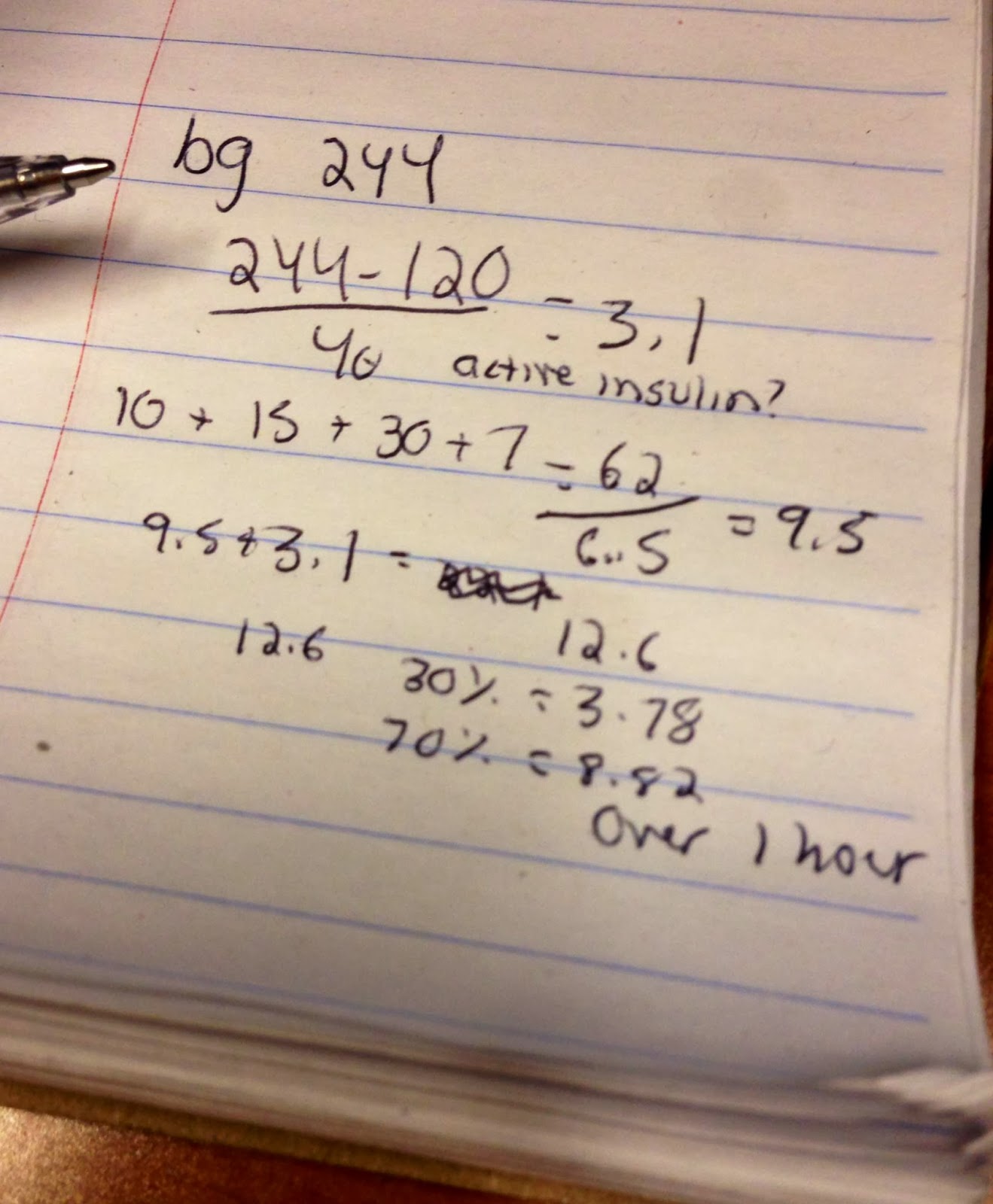
Pre-dinner blood sugar: 244
Too high so should correct for that first. 244- 120/40= 3.1 units
Dinner: Smorgasbord of leftovers and prepared food from local grocery store.

Spoonful of brussel sprouts and small serving of grilled vegetables. Well there probably isn’t a lot of carbs in the vegetables, maybe around 10 based on my serving.

Sliver of pizza. Well I know roughly how many carbs are in a normal piece of pizza, but is this piece bigger or smaller? But I only had 1/3 of the piece, so should I just divide a typical piece of pizza by 3?

1/2ish cup of risotto. Granted I didn’t actually measure it, but it was roughly 1/2 a cup, I think? But I don’t have a box to look at since we bought it prepared. I guess I’ll estimate based on looking it up in the past.

A few more bites of pizza. How many carbs in a few bites?

I added this all up and put the total carbs into my pump which divided it by my carb ratio for this time of day.

Then it was on to dessert. I made a cup of decaf coffee and put some flavored creamer in. A few carbs in that. Then the desserts came out. I couldn’t even tell you what I was eating, let alone how many carbs are in them. Some kind of sugar covered fried muffin, a lemon cake thing, and some other kind of bar. My family cut off little pieces of each and picked from the plate, a typical style of eating in my family, but hard to determine just how much I ate and how many carbs it is. I took my best guess.

I felt relatively confident in my decisions that night. It was a more difficult meal with so many different types of foods and different portion sizes. However even if I was off, I didn’t think I’d be off by more than 10ish carbs.

Boy was I wrong.

Somewhere along the way I had miscalculated, and around 10:30 pm about 2 hours after our late dinner and when I was all ready to go to sleep, my blood sugar fell to 42. Not that a low is ever pleasant, but this particular low was a bad one. I laid in my bed, shaking, light headed, disoriented, feeling awful. Where did I go wrong?! How were my calculations this far off??

It’s not often that this happens, when I am so off in my calculations. When I think about the fact that I do this at least 3 times a day, every day for 13 years, I can say that I’m typically pretty good at carb counting. When I am off, I more likely end up with a high blood sugar instead of a low. However, it’s these rare instances that remind me how important math has become in my life. One miscalculation hours earlier can drastically effect my health and how I feel.

Now that is some powerful math.

100th Post, 100 Days

I was racking my brain for what this post should be about, it seems that my diabetes has been operating in the background lately. It’s been humming along at a pretty steady tone, no blaring alarms to garner attention and a blog post. I’m not complaining, it’s nice to not have it be constantly on my mind.

I was staring at my posts when I noticed a number, this is my 100th blog post. I felt that it warranted some sort of recognition. A number that can be celebrated.

At first I thought of doing some kind of list, you know the “Top 100” type of lists. But I was having trouble either thinking of 100 or the list wasn’t very exciting…

100 names that I’ve called my glucose meter:
1. pokey
2. meter
3. that damn thing
4. thingamajig
5. blood sucker
6. glucose gizmo
7. Dracula
8. the pricker
9.

100 places where I’ve gotten a low blood sugar:
1. in the car
2. at my house
3. at school
4. at work
5. on the tennis court
6. walking down the street
7. while at the gym
8. at the movies
9. in my bed

This list would probably be well over 100…

100 things others have asked or told me about my diabetes
1. so you can’t have sugar?
2. That’s the bad kind, right?
3. Can you eat that?
4. Can’t you just take that pill?
5. A raw foods diet can cure diabetes
6. Don’t worry, that won’t happen to you, your diabetes is controlled
7.

Instead, I decided on “100th Post, 100 Days.”  This post is dedicated to a glimpse of what 100 days of diabetes looks like for me. While I can’t quantify every experience, every emotion and feeling, and every minute living with diabetes, here’s what 100 days does mean for me:

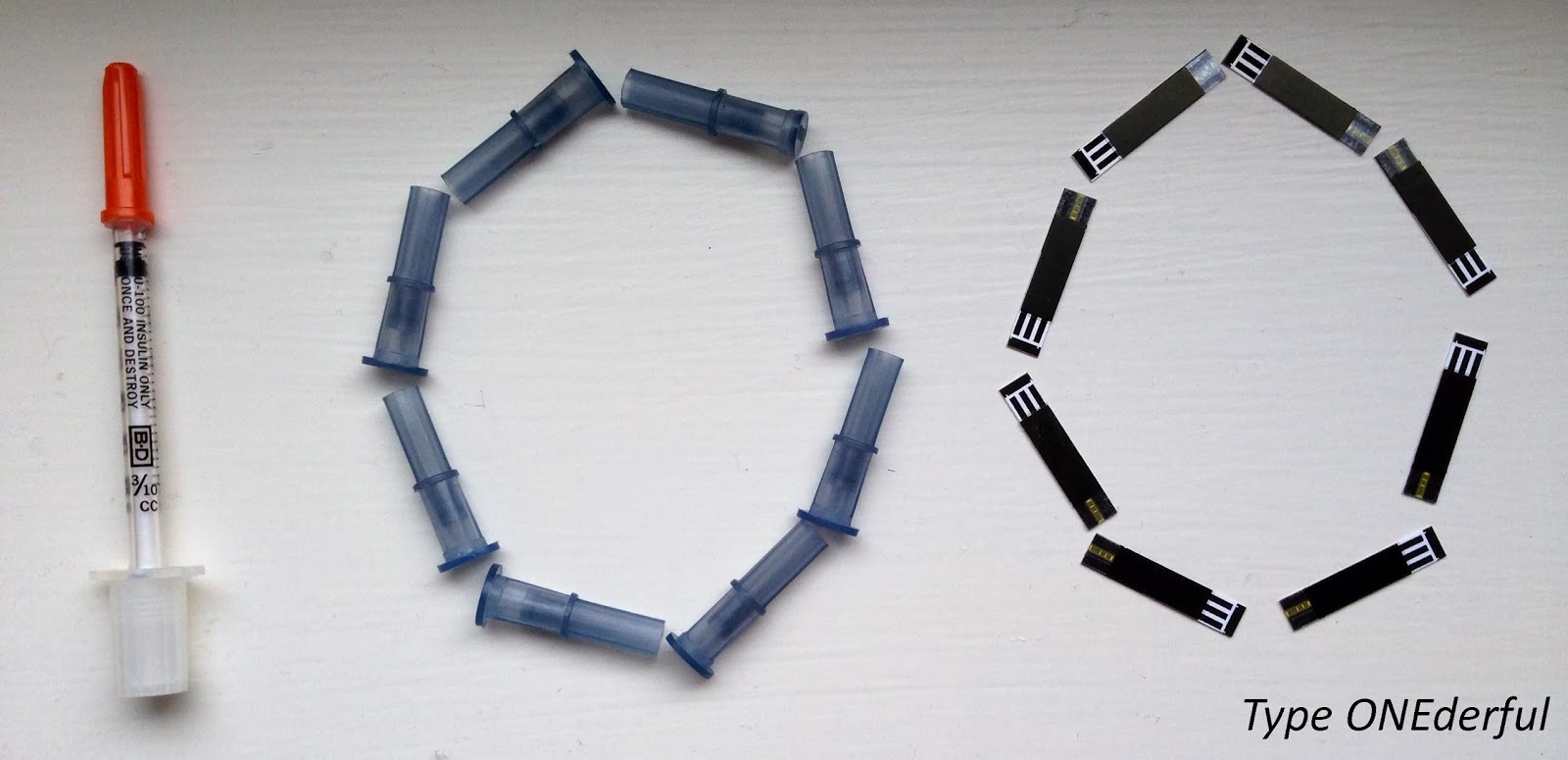
  • 34 set changes. That means filling my insulin pump with insulin and inserting it into my stomach 34 times.
  • 10 sensor changes. I’ve been getting roughly 10-12 days out of my Dexcom CGM sensor, so I will have reinserted it under my skin around 10 times.
  • At least 300 finger pokes, although likely many more. This is assuming I test my blood sugar using my finger 3 times a day, but some days I test many more.
  • A conservative estimate of 70 packs of fruit snacks. I don’t go low every day, but there are times when I go low 3 times in one day, so 70 seemed like an accurate estimate.  But whether that number is closer to 50 or 80, it’s still a lot of packs of fruit snacks!
  • Around 9 vials of insulin
  • Roughly 50 interrupted nights of sleep with a beeping CGM indicating low and high blood sugars
  • Hundreds of dollars spent on supplies and doctor visits…after insurance
  • One visit with my endocrinologist
  • reading tons of blog posts in the DOC, filled with laughter, tears, frustrations,  and triumphs and around 14 of my own blog posts

So here’s to 100 blog posts! 100 posts providing a window into these last 14 months with diabetes. Hopefully you’ve enjoyed reading them as much as I’v enjoyed writing and sharing them.

Fleeting

This too shall pass.

This is one of my favorite quotes. I find solace among these words, as even now I turn to them for comfort. To me, it is a reminder that this moment or what you’re feeling right now will soon fade away. If it’s bad, you will get through it, things will get better. If it’s good, cherish the moments because they too will pass.

It’s a reminder of the temporary nature of much of our experiences and emotions; pleasure and pain, sadness and joy. It’s a warning to live in the now. From a broken heart to a broken leg, this phrase offers hope.

While this proverb has helped me through many moments in my life, applying it to my life with diabetes proves more difficult.

A chronic disease is by definition, well, chronic. It’s long lasting, it continues, it does not pass. Until there is a cure, it is something that I am stuck living with for the rest of my life. On a bad diabetes day I can find comfort in the fact that tomorrow is a new day, but it’s still a day with diabetes. So what do you do? What can you do?

You accept it.

You let your anger pass. You let your frustrations pass. You let your sadness pass. You let the pain pass.

You may not be able to change what happens to you, but you can change how you respond to it. The only chronic part of diabetes is the disease itself, not how you feel about it. So why hold on to the negative, when it too can pass.

The Other Room

I sit down at the table to eat. It’s past 1 and I’m starving. I don’t know what my glucose number is; my meter is upstairs. I take a bite. I don’t want to go up and get it. Pretty soon my lunch is gone. I left my diabetes in the other room.

I’m snuggled under a blanket. Snow is falling outside, piling high against the window. Flames flicker and dance in the fireplace as the heat warms my frozen toes. I hear a faint buzz from the other room. My CGM is telling me something: too high, too low, dropping, rising. I don’t listen. I left my diabetes in the other room.

We’re gathered around the table, 6 friends enjoying each other’s company and a delicious dinner. The waitress asks if we want dessert. A slice of giant chocolate layer cake is served with 6 forks. I take one and dig in, savoring each rich bite. Chocolate cake, chocolate frosting, raspberry sauce. I left my diabetes in the other room.

My pump lays on top of a pile of crumpled clothes. I’m untethered, liberated, disconnected. I jump into the pool. I left my diabetes in the room.

I’m in a meeting, staring at the computer projection on the screen. The words are there, but I can’t make sense of them. My head feels heavy, my hands shaky. My CGM is back at my desk. I left my diabetes in the other room.

Didn’t I? 

My heart rate quickens, my hands get clammy. I can’t think straight. I’m getting dizzy.

I didn’t leave it. I can’t leave it.

It’s always here.

New Year, New Beginnings

I never used to like the beginning of a new school year or a new course. The first couple weeks are always spent becoming familiar with the format of the class, with the new materials, and with one another. I usually preferred being in the thick of things. At this point you knew what was expected, what to do, and had already developed your routine and habits. That’s not to say that I don’t like new things, because I do. But I also like the comfort and familiarity of an established routine.

Today, I find myself at many “new beginnings”. I’m at the beginning of a new job. I am at the beginning of a new relationship. I’m at the beginning of a new year. And honestly, I’m at the beginning of what I see as a new chapter in my life. These new beginnings are exciting, but I also find them to be a little unnerving. They are full of potential, but also of unknowns. They present opportunities, but also new challenges. And while I enjoy the novelty of these situations, sometimes I find myself wanting to fast forward just a little.

But the beginning of a new school year, a new class, or a new year also presents a unique opportunity. It’s an opportunity to start fresh. You are given a clean slate for the most part, what happens next is entirely up to you. You can chose to be dictated by past behaviors, both good or bad, or you can choose to present a new you. So you didn’t do as well as you had hoped last year, well now is your chance to start over, to be the person that you set out to be.

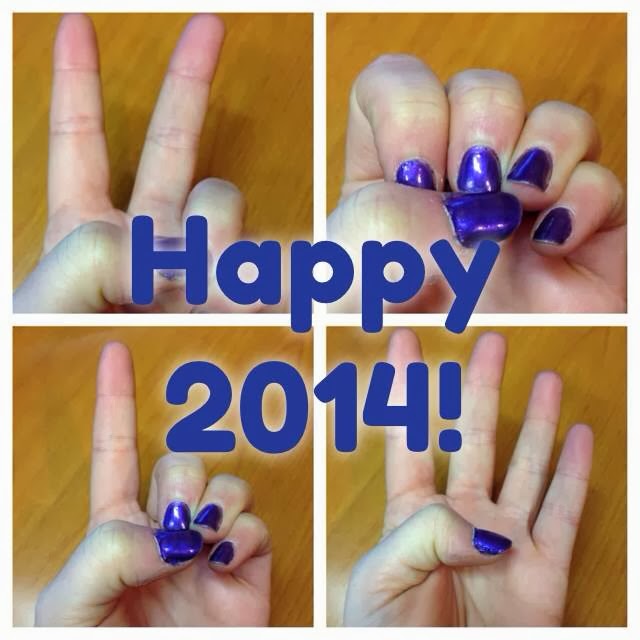
January 1st is not in the beginning of a school year or even a college course. It probably isn’t your first day of a new job or first day in a new location. In fact, it probably falls in the “middle” of a lot of things in your life. However, it does present an opportunity for reflection, revision, and resolution. As we get older, we get fewer clean slates. You may have already started to establish yourself in your career, in your relationships with others, and in your community. But even if your boss, your spouse, or your friend doesn’t give you a “clean slate” come January 1st, you still have the opportunity to give one to yourself.

What does a clean slate look like? Well for me, I begin with erasing everything from last year that I wish went differently or that I wish I could have done better. In the act of erasing, I forgive myself and others, releasing any guilt, self-doubt, and grudges that I may have. I erase the weeks of high blood sugars that I know are partially the result of my lack in self-management. I erase the petty arguments, the lost tempers, the gossip, and the tears. I erase the weeks that I was too lazy to workout, when I ate more than I know I should have. I erase the times I forgot to bolus or test my finger. I erase all the times when I let my life get out of control, for messes to pile up, for responsibilities to build.  As I erase I vow to do better and be better in the coming year.

When I’m done erasing, I stare at that metaphorical blank slate with its infinite possibilities. What kind of person do I want to be in 2014? What do I want to accomplish? How do I want to be remembered and referred to by those who know me? What do I want to do to care for my health and for my future? I take these abstract questions and I set concrete goals for myself. I fill my slate with my goals and hopes for the following year. Maybe I’ll accomplish them, but maybe I won’t. But what is important to me, is taking the opportunity of a new year for personal reflection and making a resolution to myself to do and be my best in this coming year.

Happy New Year everyone! To new beginnings!

One Handed Independence

My CGM has changed real estate. While it says it is only approved for use on your abdomen, I know that people have had success wearing it other places, such as their arm. This cold weather has left my skin rather dry and sensitive to the tape. For this reason, I decided to switch things up and move the sensor to my arm, giving my stomach a slight break. This is a move that I have done once before, with assistance. Inserting the sensor isn’t exactly difficult, but it does have multiple steps. Push down on the plunger like piece then pull back up removing the needle. Hold down the two side pieces while you pull off the top plunger piece and snap the sensor into the plastic piece. Then I always cover it with another piece of tape, fitting the hole around the sensor. Not necessarily difficult, but also a process that typically requires two hands. When inserting the sensor on your arm, you can obviously only then use one hand, making this feat much more challenging.

This time though, I didn’t want to ask for help. I was going to do it one handed. And I did. And it was hard. At one point, I had the needle pushed into my arm, but I couldn’t get the piece to pull back up. The apparatus was just hanging from my arm, held on by the tape as I stood there taking deep breaths, silently coaching myself through the task. Then the piece wasn’t disconnecting, I tried jiggling it with one hand, trying to get it to cooperate. And the tape, yea it’s hard with one handed and limited vision to line up a piece of tape so that the hole fits exactly over the sensor while still lying flat everywhere else.

So why didn’t I ask for help? Well because I know this is something I need to be able to do on my own. I started a new job this week (which is partially why it has taken so long to post this week). In a few months I hope to move to the city where I am working. While I’ve always lived with someone else, whether it was my family or roommates, I’m now looking at places by myself. The thought is half terrifying and half exciting. But living alone means that there won’t be someone there to help me insert the sensor in my arm. Or to keep an eye on me when I’m feeling low. Or grab me orange juice when I need it. I am independent when it comes to my diabetes; I know I can take care of myself. But that doesn’t mean that I don’t have these moments where I catastrophize a situation. What if I drop so low that I pass out, no one will even know. How long before someone realizes or finds me?  Granted in 13 years of living with diabetes, I’ve never passed out, but I can’t help my mind from jumping to the worst case scenarios. But I’m not one to let the “what ifs” (especially the irrational ones) or my diabetes hold me back. 

For some, independence is being able to support yourself financially or living on your own. For others, independence means being able to jab a sensor in your arm with one hand. 

Sensor through the sweater


Going to Extremes

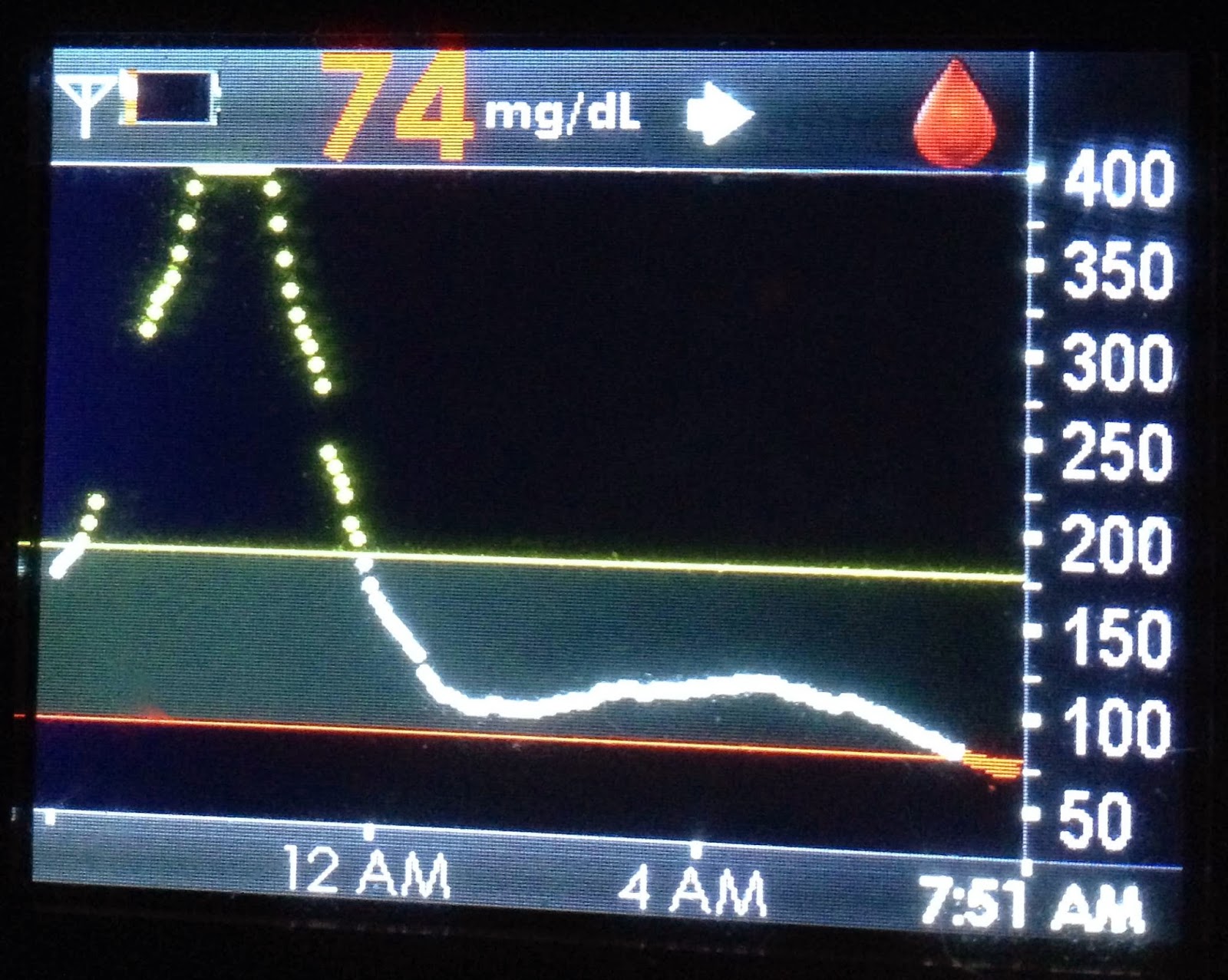
Two nights ago I had one of the highest blood sugars that I can remember in years. I wrote a whole post about what potentially may have led up to it, where my self-management went wrong, and just how horrible the experience was. I was ready to publish the post today, but then last night I had one of the lowest blood sugars that I’ve had in years as well. I can only think of 2 other times in the past 13 years when it was this low. I went from 515 one night, to 22 the next (for those who aren’t familiar with blood sugar numbers, I strive for a blood sugar around 100-120).

Both numbers are scary. The 22 was much more of an immediate danger, but the 515 was disappointing, perplexing, and just overall awful. Both numbers are extreme. Both are dangerous in their own way and both have left me feeling out of sorts.

As I write this, my blood sugar is at a comfortable 125, clearly recovered from both incidences. I’m mad at myself, especially for the high number. I know that it’s my fault. I wasn’t as vigilant and careful as I should have been, and because of that, I faced the consequences. Looking back there are certain moments where I could have intervened earlier so that the results weren’t as catastrophic, but at the time I did not realize how important those moments were. Even with the low, I heard my CGM buzzing, but I ignored it because I felt fine.

The high number was in part a result of my first spinning class.  Before I started the class I checked my blood sugar. It was 248. This number is too high, but I figured the intense exercise would lower it (my first mistake) and didn’t want to drop low during the class. So I didn’t give any insulin and disconnected my pump.

When I finished the class, I took out my CGM Gigi, but it was giving me the out of range signal and hadn’t been tracking my blood sugar. I should have tested my blood sugar at this point, but I didn’t. I went home and ate a low carb dinner, but I forgot to bolus for the few carbs I did have, only making the situation worse.

It was now a little before 10 and I started to recognize the symptoms of a high. I took out my meter and tested my finger. 439. WHAT?! That can’t be right. I tried a different finger, 498. Shit. One more finger, 515. At that point a said four letter word that I will not write here. I immediately took out a syringe and gave myself a shot of insulin and changed my infusion set. At this point I started to feel really sick, the nausea had started to set in. I laid in my bed feeling awful. It wasn’t until around 1 am when my blood sugar finally returned to normal.

I honestly don’t know what caused the 22 or why I didn’t feel it sooner. I must have overbolused for my dinner and just didn’t feel the symptoms early enough. I didn’t believe the number on the screen at first, testing 2 more fingers for confirmation. What was so strange about this low was that even though it was so drastic, the symptoms weren’t as strong as even when I’m in the 40’s or 60’s. Probably why I didn’t catch it earlier in the first place. I know that much lower I am at risk for passing out, so I ripped open 2 packs of fruit snacks and chugged some orange juice. I didn’t care if I went high, I just needed my blood sugar to go up. And it did, it kept going up and up until I was woken at about 2 am with a blood sugar now in the 300s. Clearly stuck on a roller coaster of highs and lows, I gave insulin and went back to sleep, waking up to a low in the morning. Low, high, low…it’s exhausting. And frustrating. And annoying.

No more extremes. I can’t take it. Even though it feels like my diabetes is all I think about at times, I have to do better. I have to be more vigilant, more cautious, more disciplined. I know it’s my responsibility. I cannot have another night like the past 2 nights, I hope that I never see either of those extreme numbers again.