The Support of the DOC

For many people, living with a chronic condition can be very isolating. It is difficult for those who do not have the disease to understand what it is like to live with it every day. Although diabetes is becoming increasingly prevalent, many people may not have close contact with another person that has diabetes (especially type 1), a person with whom they can share their experiences. People end up feeling alone in their struggles, their health suffers, and many people may become depressed. 

That’s why social support is so important.

I know how incredibly lucky I am. From the minute I was diagnosed, I’ve never felt unsupported or isolated with having diabetes. Even though there is no one else in my family with type 1 diabetes, my family and friends have always been incredibly supportive and helpful. I’ve even been fortunate enough to have a very close friend who also has type 1 diabetes, as well as a handful of other friends over the years. While our friendship is so much deeper than just our shared medical condition, I know that I can always talk to her about the ups and downs of my diabetes and know that she completely understands. 
My social support network consists of those people that are close to me, people I interact with regularly in person and some through the phone, email, or text messages. And for the past 12 years, I’ve been very content with this arrangement. It wasn’t until the past couple of months when I began my blog that I was introduced to a whole new world of social support, the diabetes online community (or the DOC as they call themselves). I truly had no idea how much I was missing out on. 

Let me tell you a little about the DOC. Being new to it myself, I am constantly learning and discovering new things about it every day. The DOC is composed of bloggers, twitterers (tweeters?), facebook pages, forums, discussion boards, communities such as TuDiabetes and Diabetes Daily, websites like DiabetesMine and dLife filled with all different kinds of resources, youtube channels, diabetes advocacy, grassroot projects and initiatives, diabetes research, associations, and news sources, and even Pharma and medical companies. And this is only the tip of the iceberg!

The DOC is overwhelming in the amount of information and support that is available, but overwhelming in an amazing way. The DOC is welcoming. They are empathetic, understanding, and want to be helpful however they can. They communicate in forums and discussions, they tweet each other, they write supportive and encouraging comments on blogs, they reach out to those who are struggling, and they provide valuable insight and information from their own experiences. Whether you are an active participant or prefer reading from the sidelines, they are accepting and are there for you no matter what. They are strangers, yet they are instant friends. They understand you and what you’re going through, they’ve been there. They share an unbreakable bond. They are in the same city and they are across the world, but they are always ready and eager to talk. They share laughs and accomplishments, as well as tears, frustrations and struggles. 

Intuitively, the benefits of the DOC are clear. It’s instant access to hundreds of thousands of other diabetics. But it’s about more than just access; it’s about support. There are four common functions of social support: emotional, instrumental, informational, and appraisal support. Emotional support includes expressions of empathy, caring, and reassurance. Instrumental support includes provisions of material aid such as financial assistance that directly benefits a person. Informational support includes the provision of relevant information and advice or guidance to help the individual cope. And finally, appraisal support involves information that is useful for self-evaluation purposes, such as constructive feedback, affirmation and social comparison. 

In the DOC, you can find countless examples of all of these types of social support.

Emotional: The DOC is full of people expressing empathy, compassion, and reassurance to others about what they are going through.  Here are some direct quotes taken from forums, discussion, and comments:

I am so, so sorry to hear you are struggling so much, but of course you have a chance at regaining your happiness.”

“Hang in there! I have had some of those days and they indeed suck! Keep going at it!!”

“So many days, I laugh with you, and I cry with you. But even though some days are tough, thank you for sharing your story and reminding me that I’m not alone.”

“trust me. i feel like this sometimes, too!…diabetes does suck, but i am thankful we have (the) tools we have to control it! vent all you want, we are always here to listen =)”

“I can only say how sorry I am and send you warm thoughts across the miles.”

“I am so sorry for you pain. Please know we are with you and will be always.”

Instrumental: In the DOC, instrumental support is often in the form of money raised for diabetes research or for diabetes related initiatives and projects as well as volunteer hours.

Informational: In the DOC,  there is information on just about any topic you can think of. When I had a question about exercise and blood sugars, I posted a question in a forum and within minutes, I already had informative responses. Here are some other examples of PWD (people with diabetes) providing answers to questions based on their knowledge and experiences:

The intensity of exercise certainly does vary the background level of glucose secreted. The advice I was given which works wonderfully was to have carbs + matching insulin 30 minutes prior to exercise. That way the glucose rise has some active insulin around to counter it, and when I finish exercise my BGL is perfect. Still have to watch out for hypos 2-3 hours later.”

“It could be that the cannula size doesn’t suit you. You could try using a different depth. It can have a big influence over the effectiveness of the infusion set.”

“When you try to figure out which factor is playing a role and therefore which one to adjust, it can be confusing and daunting. Keep a detailed log. Write everything down, at least for a week or two. It is a powerful tool that will make your efforts much more effective.”

“Do you keep your insulin in the refrigerator? If so that is one reason why you are getting air bubbles. Before you load the cartridge take the insulin out of the frig and let it warm up. Basically cold insulin leads to Champagne bubbles which after they regroup many hours later form several large bubbles that will affect your BG.”

Appraisal: Many of the comments that I’ve seen in the DOC include some sort of affirmation that the person has had a similar experience and that what happened is normal and they are not alone. People also recognize and acknowledge the accomplishments of others, no matter how big or small.

I hope you know, we are all really proud of the progress you have made.”

“Wow, that’s a lot of stuff. I’m no longer feeling bad because I have to carry around a lot of crap in my pockets. You win.”


“You’ve made so much progress… focus on the positives. You are not a failure.”

“I relate to this so much… Thanks for posting this, it helps me feel less alone”

“Congratulations, that is such great news! You must be feeling very proud.”
So what does having all that support really mean? Having perceived social support can help people with diabetes (or any other condition) better cope with the demands placed on us. And as we know, managing diabetes can be quite demanding at times. The social support that people gain from the DOC is a coping strategy, it provides us with appropriate resources that we can use to meet the many challenges that arise while managing our type 1 diabetes. Whether it’s the reassurance that we are not alone in our experiences, or advice about new tapes, meters, or infusion sets, the DOC has so much to offer PWD. These coping strategies and social support can help to reduce the effects of stressful experiences. While I know that the DOC is not a substitute for professional medical advice, I am less stressed knowing that when I need guidance, someone to vent to, or just confirmation that what I am experiencing is not atypical, I can turn to the DOC. 

There are very few aspects of having type 1 diabetes that I would ever wish on another person. However, having the unconditional support and understanding of an entire online community and knowing that they are always there to help when you need it, is something that I wish everyone could experience. I know I am not alone. I’ve always known it. But now I’m reminded of it every day when I check my twitter, when I read other PWD’s blogs, and when I see comments left by people I’ve never met on this blog. It is an incredible feeling to know that you are a part of such a welcoming and amazing community of strong and inspiring people.

If you have diabetes or you’re life has been touched by diabetes, I hope you take some time to introduce yourself to the DOC if you haven’t already, and if you don’t or it hasn’t, I hope that you too find a community in which you feel that you belong. Social support is a powerful thing, and we are lucky to live in a time where an entire supportive community is waiting right at the tips of our fingers.


So thank you, DOC, for all of your support!

Diabetes Art Day 2013

Today is Diabetes Art Day, and my first time participating. I’m so glad that I learned about this opportunity as I am quite excited to be combining my creativity and love of art with such an important part of my life, my diabetes.

Taken from the website, here is a description of the initiative:

Diabetes Art Day is a web-based initiative for the Diabetes Online Community to “tell a story” about life with diabetes though creative visual expression. It’s a way for us to tell our stories so we can connect and share with each other and with our loved ones. It’s a way to generate diabetes awareness outside of the DOC (diabetes online community) by sharing artwork on Facebook, Twitter, blogs and community websites…Diabetes Art Day is for you to show the world what it’s like to live with diabetes in that “a picture is worth 1000 words” kind of way.”

I’ve never really been one to sketch out my work before I begin. I always just start and see where the picture takes me. And that’s exactly what I did. Here is the final result:

 
Depicted in my artwork are three fishlike creatures, representing the dark and mysterious unknowns of diabetes in general and of the daily management of it. These ominous creatures are always swimming and lurking, whether in darkness or in light. They feed on the blood sugars, shown here as a school of CGM arrows. The varying directions of the arrows shows the ups and downs of my blood sugar, as they swim through and around difficulties and obstacles. The repetitiveness of the arrows also signify the repetitive nature of the disease: blood sugar testing, carb counting, bolusing, blood sugar testing, carb counting, bolusing, etc. The light and colorful background is in stark contrast to the dark creatures, showing that hope and light can and does still exist. Finally, the intermittent patches of tape say that even though there are unknowns and moments of darkness and fear, I will stick with it and take care of myself and my diabetes.
Working on this artwork was a truly positive experience. It allowed me to take some time to reflect on what it is I wanted to share about living with diabetes and how I wanted to accomplish that visually. It had been a while since I had done anything artistic and I appreciated having such a positive purpose behind my work.
I hope that you will take some time to look at some of the other wonderful pieces submitted by people living with diabetes, found on the Diabetes Art Day website.
 

New Placement

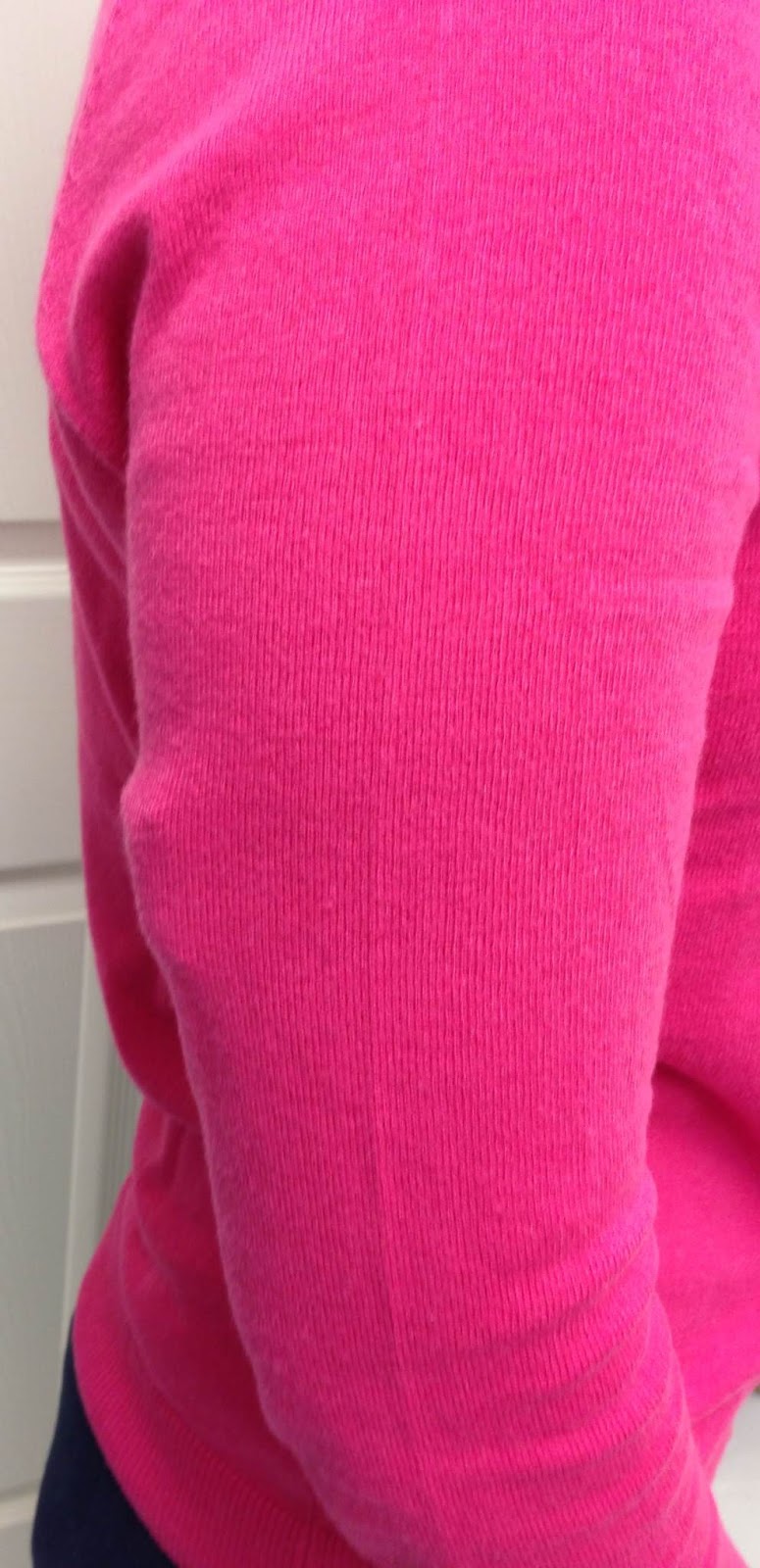
“What’s that bulge under your sweater on your arm?”

“My muscles? Thanks for noticing, I’ve been working out. Oh wait, you mean my sensor, don’t you?”

After 6ish months of wearing both my infusion set and my sensor on my stomach, I decided it was time to switch it up. I’ve been reading many blog posts and forums about fellow Dexcom users inserting their sensors on their arms with fabulous results. They said it had much more accurate readings, little pain or discomfort, and were overall quite pleased. I decided that I would give it a try.

As indicated in my last post, I already have some difficulty with the insertion of the sensor, even when it is on my stomach. Although in theory I like the idea of trying it on my arm, I wasn’t sure I was physically going to be able to insert it myself. Luckily, my mom was around and was more than willing to help.

I sat down in a chair, removed the tape from the inserter, and stuck it to the outside of my upper arm. My mom stood next to me. “Okay, just tell me what to do.” She had never watched me insert the sensor before and wasn’t quite sure how it worked. I explained the steps that she had to take; what she had to push down, then what to pull up, and then what to take off.

This was then followed by a moment of panic. Even though I’ve been dealing with all of this for 12 years, the first time doing something new always makes me super anxious, whether it’s a new product, new inserter, or new spot on my body. It was as if I was 12 years old again, getting my first shot.

“Wait wait wait! I’m not ready. I’m not sure this is a good idea. Don’t push it yet! Stop!”

My mom, unfazed by my sudden attack of nerves, replied in a calm voice, “Take a deep breath, I won’t do it until you’re ready and you say so.”

I listened and took a deep breath. Her fingers were on my arm, ready and waiting for me to give her permission to proceed.

“Okay, one second, I think I’m almost ready.”

I don’t know what kind of pain I was mentally preparing for, but suddenly my dad, sitting across the table, started laughing.

“You should see the faces you are making right now, where’s my camera?”

Thanks, real supportive, dad.

“Just do it, I’m ready.”

My mom pushed down and the needle went in. It hurt, but nothing unbearable or more than usual. Phew! I struggled to remove the rest of the inserter, a much more difficult task when you are trying to do it one handed. Then when I attempted to snap the transmitter in place, I accidentally pushed it down and to the side. Now that hurt! A small amount of blood began to pool under the tape. Great. With the sensor in, I just hoped that I hadn’t just accidentally bent it under my skin.

Thankfully everything is working fine. I know it may not seem like it, but this is actually a pretty big accomplishment for me. I get so used to doing the same thing over and over that it becomes familiar and comfortable and harder to try something new. And even though I know my mom will not always be conveniently around to help me out, I realized it’s okay to ask for help from time to time.

I’m not sure if this new placement is something I’m going to continue with in the future, but I definitely gave myself a pat on the back for trying something different. The sensor placement was slightly uncomfortable while sleeping and doing things like yoga, as it would get pushed into my arm, and it has gotten caught a few times while taking off clothing. On the other hand though, it is pretty accurate and comfortable (when nothing is pushing on it), it’s been nice to give my stomach a slight break, and it’s nice knowing that I have an alternative site when I do decide to use it.

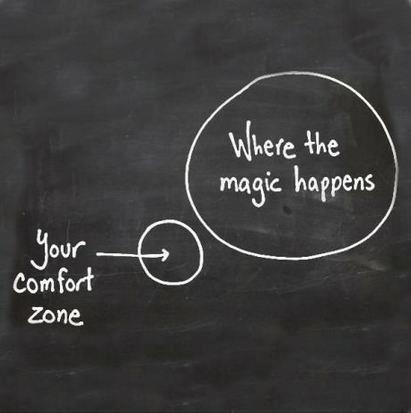
I’m proud of myself for stepping outside of my comfort zone. It’s something that I need to do more often in my life, not just with my diabetes. As it is said, “Life begins at the end of your comfort zone.”

Just Push It

I hate needles. Well I suppose no one really likes needles, but I have a pretty strong aversion to them. It’s not that I’m necessarily afraid of pain, although I’m sure that’s part of it, it’s more that it makes me light headed and uncomfortable to watch a needle penetrate skin. I always have to look away when receiving a shot or getting blood drawn.

You’re probably thinking to yourself, “but wait, don’t you have to deal with needles everyday?” Yes. Yes, I do. Funny how life works, isn’t it?

They say that when you do an unpleasant task enough times, you become numb to it. I can give myself a shot now and be okay with it, but I think it’s because I’m concentrating so hard that I no longer view it as a needle and skin. Luckily, I don’t give many shots anymore anyways.

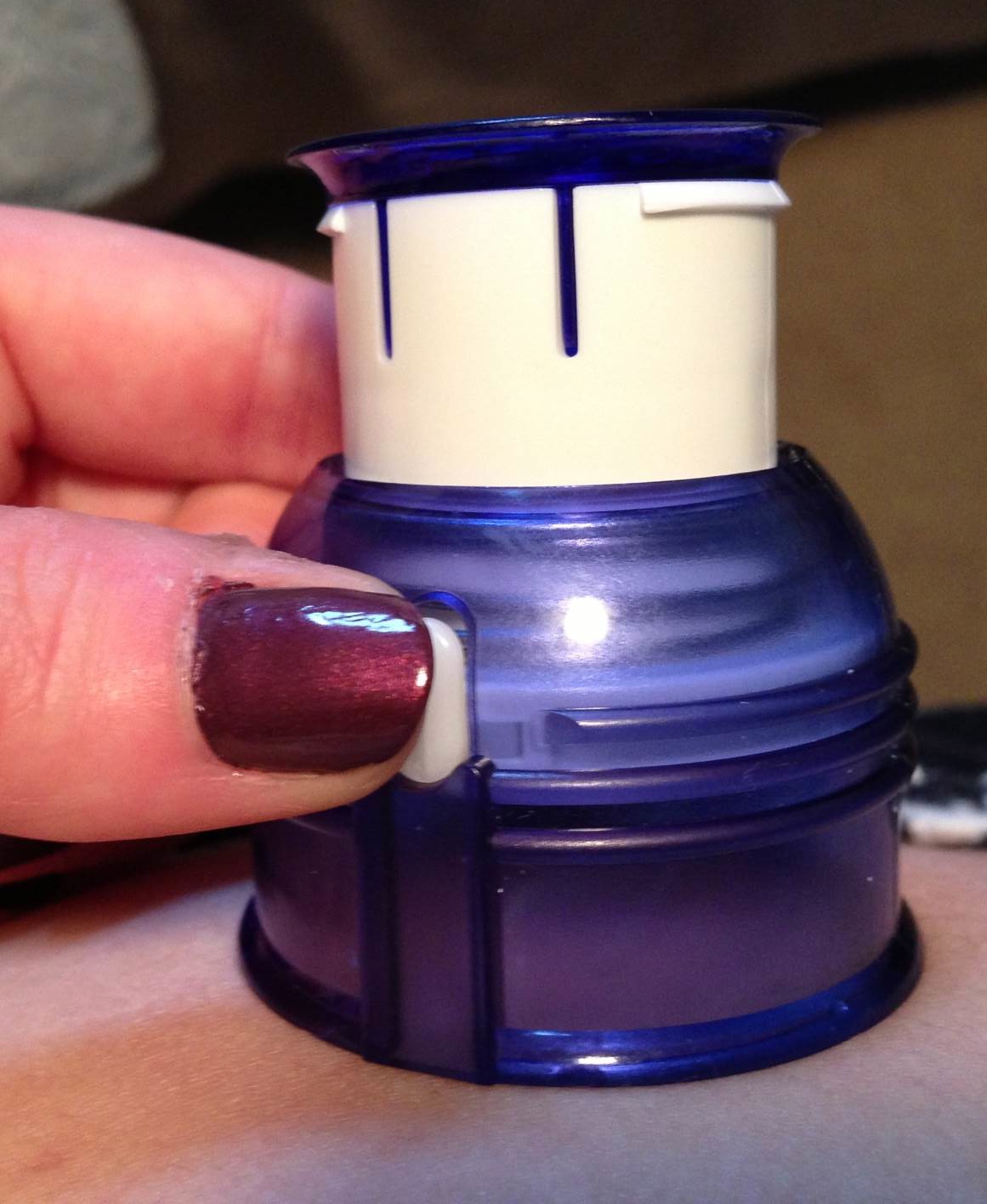
Infusion set inserter

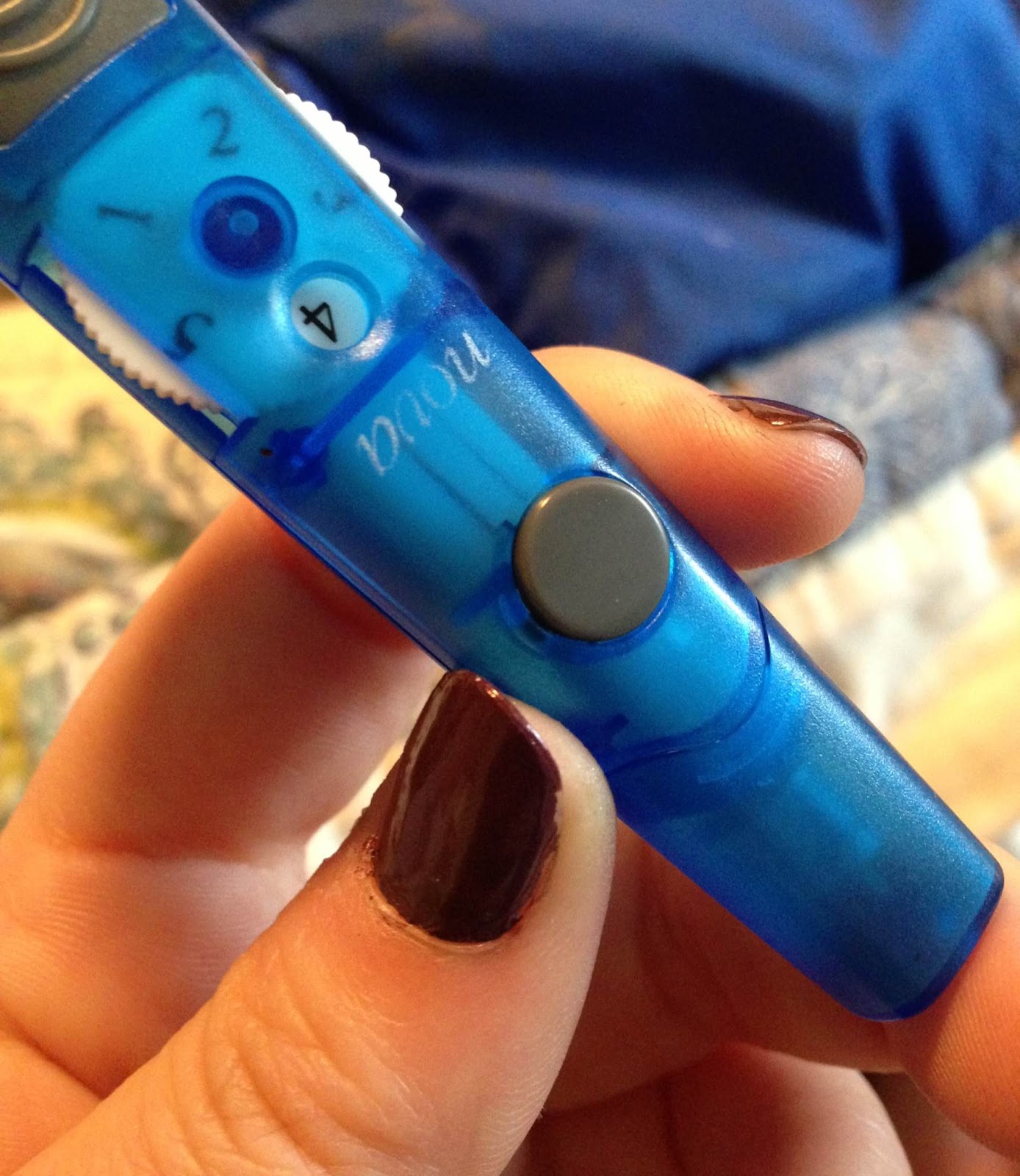
So what do I do instead? I push buttons. No, not the kind on your sweater. To poke my finger and to insert the infusion set into my stomach both require pushing a button, sending a needle to quickly puncture the skin. In the case of the finger poke, the needle retracts automatically. For the infusion set, I pull the needle out, leaving a small tube under the skin, similar to how an IV works. All I have to do is get the courage to push the button, the hard part is done for me. The best part is, I never see the needle puncture the skin.

Device for finger prick

Enter the Dexcom CGM (continuous glucose monitor). Unfortunately, the CGM does not have a quick-insert button. This small fact was almost enough to deter me from getting it in the first place. You see, instead of pushing a button and it’s done, I have to manually push the needle and sensor duo sideways into my skin. The design makes it simple to do this, you just need to push down until it clicks, but psychologically, this is quite a difficult task for me.

To me, a button insertion is like jumping off a diving board into a pool of freezing water. Once you jump and your feet leave the board, the rest just happens. A manual insertion is like slowly wading into freezing, deep water, you have to commit to it the entire way. More than once when inserting the CGM, I’ll stop half way once I feel the initial prick. Bad idea. It’s pretty hard to continue once you stop, let me tell you. While the pain is only fleeting, to me it’s more psychological, it’s knowing that I’m pushing a sharp object through my skin. For some people, this is probably not a big deal at all, but for me, it’s taken some getting used to.

CGM sensor inserter

Commitment. Every time when I’m poised to insert the sensor, I make a commitment to myself. I tell myself that I’m just going to keep pushing, even if it starts to hurt. Sometimes I barely feel it at all, while other times its like a sudden, sharp pain. A smooth insertion ensures that the sensor doesn’t get bent and that it will be able to give an accurate reading. If it isn’t inserted correctly, the sensor won’t send the blood sugar signal to the transmitter and the whole thing is a waste. Commitment.

The pain is fleeting. I’ll get through this. I can do it.

And I always do. I’ve had my CGM around 6 months and the whole process is just starting to get a little bit easier. I hesitate a little less, I don’t hold my breath quite as long in anticipation, I am more confident.

I may not be pushing a button, but I am pushing myself.

Apple Snob

Today I realized that I am an apple snob. Not an Apple snob, although honestly I might be that too, but the kind of apple that you find in the grocery store. I’ve known for some time that I am very particular when it comes to apples, but today it was confirmed. If it’s not a Honeycrisp apple, then pretty much forget about it.

I had just finished my workout and was experiencing another low blood sugar, 49 (ughhh!). One of the symptoms of a low can be hunger. However, I wasn’t experiencing normal hunger, it was this insatiable appetite that made me want to go into the kitchen and just binge on crackers or chips or whatever else I could find. I had already treated the low with my fruit snacks, but the hunger remained, like a bottomless pit in my stomach. When this kind of hunger from a low strikes, the best solution is an apple. Apples are healthy, filling, and satisfy that urge to just crunch on something. Luckily, I had one apple in the fridge with my name on it.

I took a bite. Woah, this is NOT a Honeycrisp. It was missing that perfect combination of sweetness, firmness and tartness. This apple was definitely not crisp and was not living up to the high apple expectations that a true Honeycrisp apple had set.

So how do I know that I am an apple snob? Because I couldn’t even get myself to finish the apple! Let me remind you that my motivation for eating the apple in the first place was not for taste or enjoyment, it was to satisfy the symptoms of my low blood sugar, but yet I still was refusing this perfectly average apple.

While I am quite aware that it is past Honeycrisp Apple season, I either need to track them down or find a suitable replacement because whatever imposter was in my fridge today is just not cutting it.

Diabetic Humor- part 2

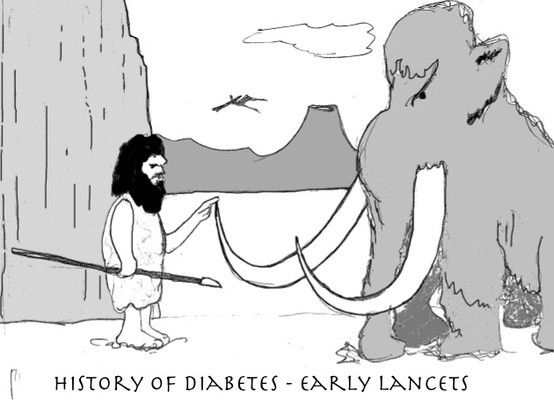
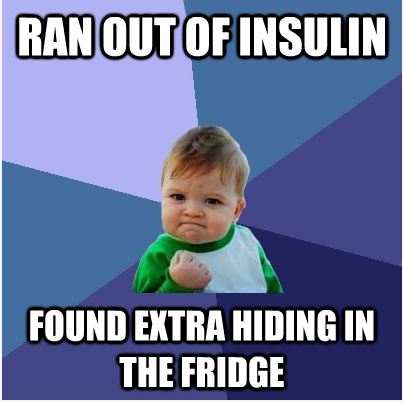
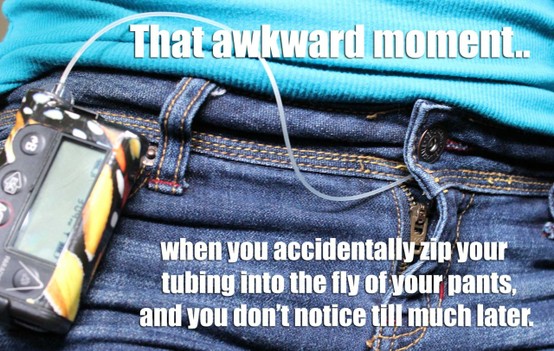
I’ve been scouring the internet and found some more cartoons/memes, whatever you want to call them. What makes them so funny, for me at least, is that I can relate to so many of them. Sometimes it’s nice to know that you aren’t alone in your experiences. Having diabetes isn’t funny and it’s not a joke, but it does help when you can find some aspects to laugh about. Enjoy!

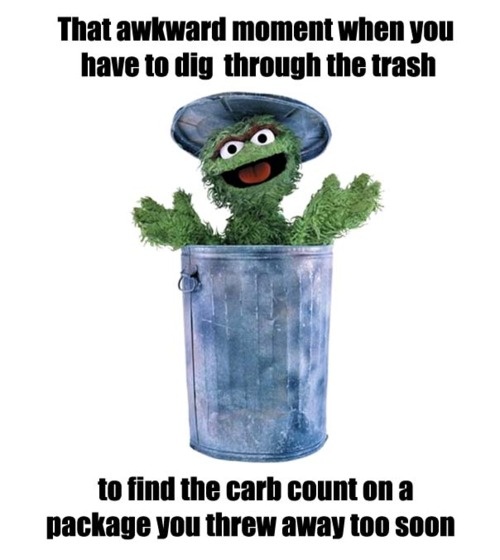
carb counting isn’t always easy

Many of these memes can be found at (http://type1diabetesmemes.tumblr.com/) as well as on Pinterest.

An Emotional Eye Exam

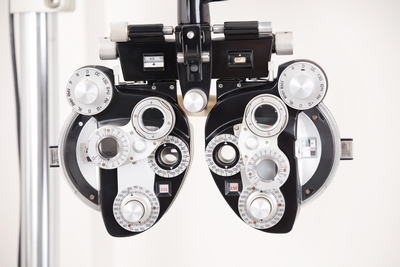
Last week I had my yearly eye exam. One of the many dangers of uncontrolled blood sugars is the damage that it can do to your eyes, such as retinopathy, therefore I make sure to get my eyes checked at least once a year. During my appointment and after my eyes had been dilated, the doctor took a series of pictures of the inside of my eyes. He pulled up the images on the computer.

“What are you looking for exactly?” I asked him.

“I’m looking for areas of breakage or bleeding in the blood vessels,” he replied. “Your eyes look healthy, I’m just going to check some of the areas that I can’t see in these images.”

I sat upright in the examining chair, staring straight ahead as my doctor positioned the magnifying device in front of me. I could barely keep my eye open as a high intensity light was shone into my eye.

“Look straight ahead. Now look up and to the right. Up and to the left. Now look down.”

With one eye still recovering from the bright light, he moved on to the other. When he finished with that eye, I started to sit back, relieved that the worst part of the exam was over.

“Just one more second, there’s a spot that I want to check again.”

Wait, what?

“Sure, no problem,” I said, struggling to maintain my composure.

You know how there are some times in your life when time seems to slow down or stand still? Well, this was one of those times. I imagine that what I’m about to describe to you happens to many people in many different situations, when further tests are needed, when there’s a false positive, when there aren’t adequate answers, etc. What in reality took only about one minute seemed to last forever.

All at once I found myself caught in the middle of an argument between Logic and Emotion, and let’s just say Emotion got the better of me.

Emotion: What did he just say?? He needs to look again? Oh my god, I bet he saw something bad! How can this be happening?!

Logic: Let’s not get ahead of ourselves. He’s just looking, we don’t know for sure if there is anything wrong yet.

Emotion: Ah, what am I going to do?! I knew this day would come. My parents kept saying I’m too young for anything like this to happen, but no one can be certain. Here it is, my first complication from my diabetes! I can’t believe this!

Logic: Calm down. He hasn’t found anything yet, let’s wait to worry about it when we know more.

Emotion: What does this mean? What do I do? Is the damage reversible? Is there a treatment? Is it too late?? I’m too young!  Please, I’ll be better! Oh my god, am I going blind?!?!

This is the part where I imagine Logic slapping the hysterical Emotion across the face, like you see in the movies.

Logic: Pull yourself together!! It’s not doing you any good to jump to conclusions like this!

Emotion, recovering from the shock of just being slapped, was about to say something when the doctor intervened.

“Everything looks good, there’s no damage here.”

Logic looked smugly at Emotion, “See, what did I tell you?”

Relieved by the good news, I began to relax. My eyes are healthy, there is no damage from my diabetes. I was in fact, freaking out about nothing. However, I’m glad that I had that initial emotional response. I don’t want to be in denial or think that I am immune to these types of complications, even though I am young. Logic may be right, it’s better to worry about things as they happen, but Emotion helps to keep you concerned and vigilant. This exam reinforced that yes, this could happen to me. Every choice has a consequence, and if I want to continue to be in good health, I need to continue to make good decisions when it comes to taking care of my diabetes.

That is something I am sure both Logic and Emotion can agree on.

Numbers and Motivation

“From the day we are born, we are defined by a number. But is a number inspiring? We believe in a more powerful motivation. Not a number, but the way we want to feel.”

Numbers. Numbers play a large role in everyone’s lives. Time, money, weight, grades, rankings, health indicators (cholesterol, blood pressure, heart rate, etc.), distance, speed, these are all numbers. For some, these numbers are what determine their level of happiness, fulfillment, self-esteem, and worth. They are driven by these numbers, to work harder, to eat less, to prioritize, to sacrifice. The number on their paycheck or the number on the scale are a means to an end. What do they hope these numbers will help them achieve? Success, recognition, esteem, praise, happiness? Perhaps.

I like this commercial and campaign by Kellogg because it makes me think. It made me stop and consider how much of my own life is, on the surface, being motivated by numbers. The answer is a lot. This commercial made me ask myself, “but why do I care about that number?” I wanted a 90% on my test. Why? Because I wanted good grades. Why? Because I wanted to get a good job when I graduated. Why? Because I want to be able to make money doing something I enjoy. Why? Because I want to be happy. I started to ask myself why for a lot of the numbers in my life. I want to lose 5 pounds. Why? Because I want to look thinner and feel stronger. Why? Because it will help my self-esteem. Why? Because it will give me more confidence. Why? Well you get the idea.

Every time I asked myself why? I was getting to a motivation that was beyond just the number. The true motivator are those end feelings, it’s the numbers that help verify that you are reaching your goal. It is these motivations that Kellogg is trying to tap into in their commercial. But are they right? Are numbers themselves uninspiring?

I started to think about my diabetes. The day-to-day management of my diabetes completely revolves around numbers. Blood sugars, carbohydrates, units of insulin and ultimately my A1c number. From the moment I wake up to when I fall asleep (and even while I’m sleeping), my goal is to keep my blood sugar numbers within range so that ultimately my A1c number is low. Why? Well I want to avoid future complications and live a long and healthy life. I want the sense of accomplishment of knowing that I am finally “under control” after 10 years and I want the peace of mind that my future won’t be filled with negative consequences. These are all important motivators, but there is a fundamental difference between these types of “gains” versus the types of “gains” when you lose weight.

When you lose weight, there are tangible positive results. You physically look different. Your body shape changes, you may fit into smaller sized clothes, you have more energy, and you generally feel better. All of these physical changes can lead to positive emotional changes. More confidence, sense of accomplishment, higher self-esteem, etc. You truly are “gaining” a positive in the process of losing weight. Contrast that to my diabetes. Right now at this very moment I have no complications from my diabetes, I am at a healthy weight, my diabetes has not affected my eye sight, nerves, kidneys, circulation, feet, or any of the other potential negative effects it can have. I am at the “gain” from the beginning. I am working to maintain the absence of a negative, not towards the presence of a positive. I am in good health working to avoid complications as opposed to someone who may be overweight and is working towards better health. It is the epitome of prevention.

But prevention is a hard sell, especially to someone who is considered “healthy” in the beginning. It requires you to imagine yourself in the future, to imagine that your health has deteriorated. This is not a pleasant task and not something people want to think about. With so much to think about and do in the present, it can be hard to devote yourself to preventing something from happening in the future. As someone in the public health field, I know how essential prevention is, but the key is finding the right motivator.

So let me bring this back to numbers and what motivates me for my diabetes. There is no end to diabetes. When I reach my ideal A1c it doesn’t mean I’m cured and my diabetes disappears, it means that I now have to work and maintain it for the rest of my life. Although I am ultimately motivated by the thought of living a long, complications-free life, I have to take my diabetes day by day. And for me, this means that I am motivated by those numbers. Every day trying to ensure that they fall within my designated range. Am I defined by those numbers? Of course not. Are they the most inspiring? No. But they are what keep me on track everyday, they are necessary to my focus and to my health, they are my daily motivation.

But perhaps I can still take a page from Kellogg. Maybe I don’t need to wait 3 months until I see my A1c or the years that it may take me to reach my goal to start to feel that sense of accomplishment. Perhaps I can find motivation in the daily or weekly successes and in how I feel today. But more than that, maybe it’s reminding myself periodically that it isn’t just about the numbers on the screen, it’s about the purpose behind those numbers. It’s about staying healthy and living long enough to get married, raise my own family, and being able to some day play with my own grandchildren.

So take a moment to think about the numbers in your life and ask yourself, why? Perhaps you will uncover some deeper motivations to help you on your own journey.

The One I Can’t Live Without

If my relationship with Sugar were on Facebook, it would say “It’s Complicated”.

I’m not sure when Sugar and I first met, it seems like we’ve known each other forever. I hadn’t really paid too much attention to him when I was young, but I was always happy when he made an appearance. Sugar, or Sug for short, didn’t really come around too often. I think he was intimidated by my dentist dad and health conscious mom. He did however show up at birthday parties, holidays, and other special occasions. He and I always had a good time together, especially eating candy at the movies, cotton candy at the fair, and ice cream in the summer.

When I was diagnosed with type 1 diabetes, my relationship with Sugar began to change, and has been evolving ever since. I think that was the first time I really took notice of him. He had that certain mix of sweet, yet dangerous. He’d make you feel good, but left you wanting more.

I couldn’t stay away.

Sug and I began to spend a lot of time together. When we weren’t together, he was constantly on my mind. There seemed to be two sides to him. On the one hand, he could always make me feel better when I was feeling low. I needed him, and he was always there for me. But on the other hand, when I spent too much time with him, he’d make me feel sick.

I know that Sug can be trouble. In the past few years he’s started showing up at the bar where I’d be hanging out with my friends.“He’s coming over,” my friends would tell me, “and he looks good!” He would approach the table with an invitation that is hard to refuse. Tripple sec, sour, orange juice, and cranberry juice. He was coming on strong tonight! He’d clearly already worked his magic on my friends, sometimes he could be so sweet that it was hard to say no to him. I eyed my other options, water, beer, vodka soda, but his smell was intoxicating. The thing about Sug is that you always have a good time with him, it isn’t until later that you begin to regret your decisions.

We often get into arguments. I tell him that I don’t want to hang out all the time with him and his friend Cal O’Rie, that the two of them are trouble when they are together. He accuses me of cheating on him with Complex Carbs, even though he knows it’s not the same. In the end though, we always apologize, we both know that we need each other.

My friends and family often try to tell me that he is bad for me. “Look at how he makes you feel, your relationship with him just isn’t healthy.” Sometimes they are right, he is bad for me. But even though our relationship is complicated, sometimes they seem so hypocritical. “How can you say that to me? I know you guys hung out last weekend. I saw the candy wrappers in the trash!” I would say. When they would tell me that I was better off without him, it just made me want to prove them wrong. “You don’t know what you are talking about, we just shared that piece of cake together and everything is fine!” At least I wanted it to be. It truly is a roller coaster when we are together, but we face those highs and lows together.

I know my friends and family just want what’s best for me, but they don’t know him the way I do! Sure Sug comes over to their houses disguised as a tub of ice cream or chocolate, and they say he helps them through their hard times and pain, but it’s not the same. No one can make me feel better the way he does, no one can take away my lows as fast, no one knows what it’s like to need Sugar that badly sometimes.

It’s hard to say if Sugar and I should be together or not. I know that he helps me, but he has the potential to hurt me as well. We have one of those relationships that other people might not understand and may not always be perfect, but in the end, it’s pretty sweet.

New Year, New You

During my time in college, I used to dread Januarys at the gym. As someone who regularly frequented the gym between and after classes, I had figured out the best times to go when it was relatively empty and I could use the machines I wanted without having to wait for them. I developed a schedule and could usually count on completing my workout routine without interruption or delays.

That is until January came around.

Suddenly the gym became filled with people whose New Year’s resolution was to get in shape, lose weight, and work out more often. Instead of being able to jump on my usual machine, I now had to wait in line for the first available one. Don’t get me wrong, I love that people had suddenly decided to become healthier, I just wished that they didn’t all decide at the same time. By mid March however, the gym had mostly returned to its previous occupancy.

What happened? Pretty simple to figure out. By March, most of the people who were driven by their New Year’s resolutions to become healthier had begun to lose their motivation and eventually returned to their typical schedules. This phenomenon happens every year for all sorts of behaviors. Perhaps you begin the year with the intention to eat healthier, to cut back on smoking or drinking, to gamble less, save more money, to exercise more, the list goes on and on. But as each of us can probably attest to, many New Year’s resolutions go unfulfilled. I know many of mine have.

With the New Year right around the corner, I started to think about why. Why do so many of us fail at keeping our resolutions, especially when we are so motivated in the beginning? There are many reasons why this may happen, but I identified 3 major areas that I believe are critical components to any successful New Year’s resolution.

1. Scope
One of the biggest problems is that people set goals that are too lofty. Perhaps ideally you want to lose 20 pounds in the New Year, but that task can be daunting and overwhelming, especially if in the first few months you’ve only lost a few pounds. With such a large goal, it is easy to become discouraged in the beginning and not follow through. It’s important that your resolution is realistic. Saying that you want to lose 2 pounds a month may seem more surmountable than to lose 20 pounds. Even though you are setting a goal for the whole year, it becomes more manageable if you can break it into smaller monthly or even weekly goals. If you want to quit smoking or dipping this year, perhaps you begin by picking a number to cut back by each week. Setting these smaller goals can help make your overall resolution more attainable.

2. Concreteness
This brings us to the second problem. Resolutions need to be specific. What does it mean to exercise more or to eat healthier? The more specific and concrete a resolution is, the easier it is to follow through. Perhaps exercising more means doing at least 30 minutes of moderate cardio, 4 days a week. Eating healthier may mean incorporating at least one serving of fruits or vegetables into every meal. You want to save more money this year? How? Does that mean cutting back on the number of times you go out to eat? Does it mean spending less on clothes or electronics? Saying to yourself that you will only go out to eat twice a week gives you a concrete task to adhere to rather than an abstract objective.

3. Preparation
Without this third aspect, your resolution is doomed from the beginning, however many people do not spend enough, or any, time at this stage. This involves the planning and practicing of the new behavior. It involves identifying potential obstacles that you may encounter and planning for how you will overcome them. If you want to exercise more, do you have the right equipment? Do you have gym shoes, a gym membership, or routine for working out on your own? If you want to cut back on smoking or drinking, have you thought about what behavior will replace it? This may involve rearranging the environment you live in, removing triggers of a negative behavior and putting in things to remind you of your new positive behavior. Throw away old alcohol bottles, lighters, and junk food. Put your running shoes in a place that you will be sure to see them, leave motivational sticky notes around your house, keep healthy snacks in your car. Tell people about your resolution and find people that support you. Anticipate slips in your journey, but don’t let them become falls. Even with preparation and motivation, you may still resort back to old behaviors from time to time, but persevere! Behavior change takes time and the occasional detour is okay, just try not to stray too far off course.

During my public health education, we would talk a lot about how objectives to any program should be SMART. The same applies for your resolutions. Any resolution should be:

S: specific
M: measurable, meaningful, motivational
A: attainable, achievable
R: realistic, relevant, results-oriented
T: time bound

So time to take my own advice. What is my New Year’s resolution? I want to lower my A1c. Well that’s pretty abstract. I want to lower it by 0.5 in the next 6 months. Okay, that’s better, but how exactly will I do that? I suppose there are lots of things I could try, but based on my past behaviors there are 2 main areas that I want to improve on:

  • The first is that I want to be better at bolusing right after I finish eating, instead of occasionally having 15-30 minutes pass before I remember. How can I be better at remembering? Perhaps I can set reminders on my phone or move my missed bolus reminder closer to when I typically eat my meals. 
  • The second behavior is that I want to be better about sending in my glucose numbers to my endocrinologist when I notice that my numbers may need adjusting. For me this means finally putting the CGM software on a computer so that I can download all the data and then email it to my doctor. It also means remembering to do this every few weeks. Perhaps I can also set a reminder on my phone every 2-3 weeks to email my doctor my glucose numbers. 
Hopefully by accomplishing the above 2 behaviors, it will help to bring my blood sugars under tighter control which will ultimately lower my A1c. By coming up with concrete steps that I can do to accomplish this goal, I feel more confident that this year’s New Year’s resolution will not go unfulfilled.

What about you? Have you thought about what your resolution is going to be? Whatever it is, just remember to be SMART. 
Good luck and Happy New Year!