Happy Holidays!

I love the holiday season. I love waking up to a fresh layer of snow blanketing the grass and trees in a sparkling white. I love seeing the trees, streets, and buildings twinkling with colored lights. I even love braving the crowded malls and stores in search of the perfect gift. For me, the holidays mean spending time with family, getting together with friends, and enjoying delicious food. Despite my affection for this time of year, winter and the holidays are also a challenging time. This may be true for a lot of people, but I find it especially hard at times as a diabetic.
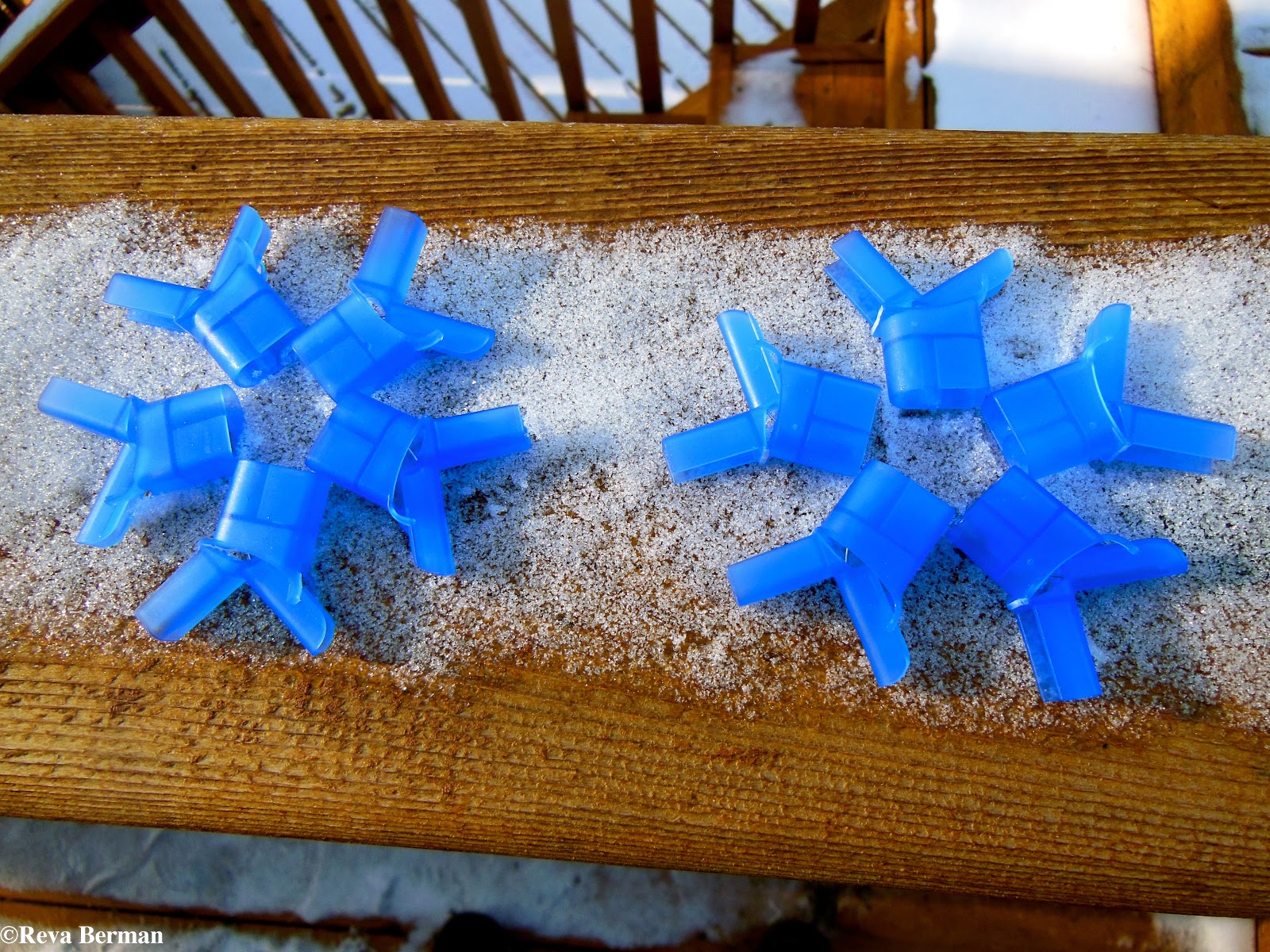
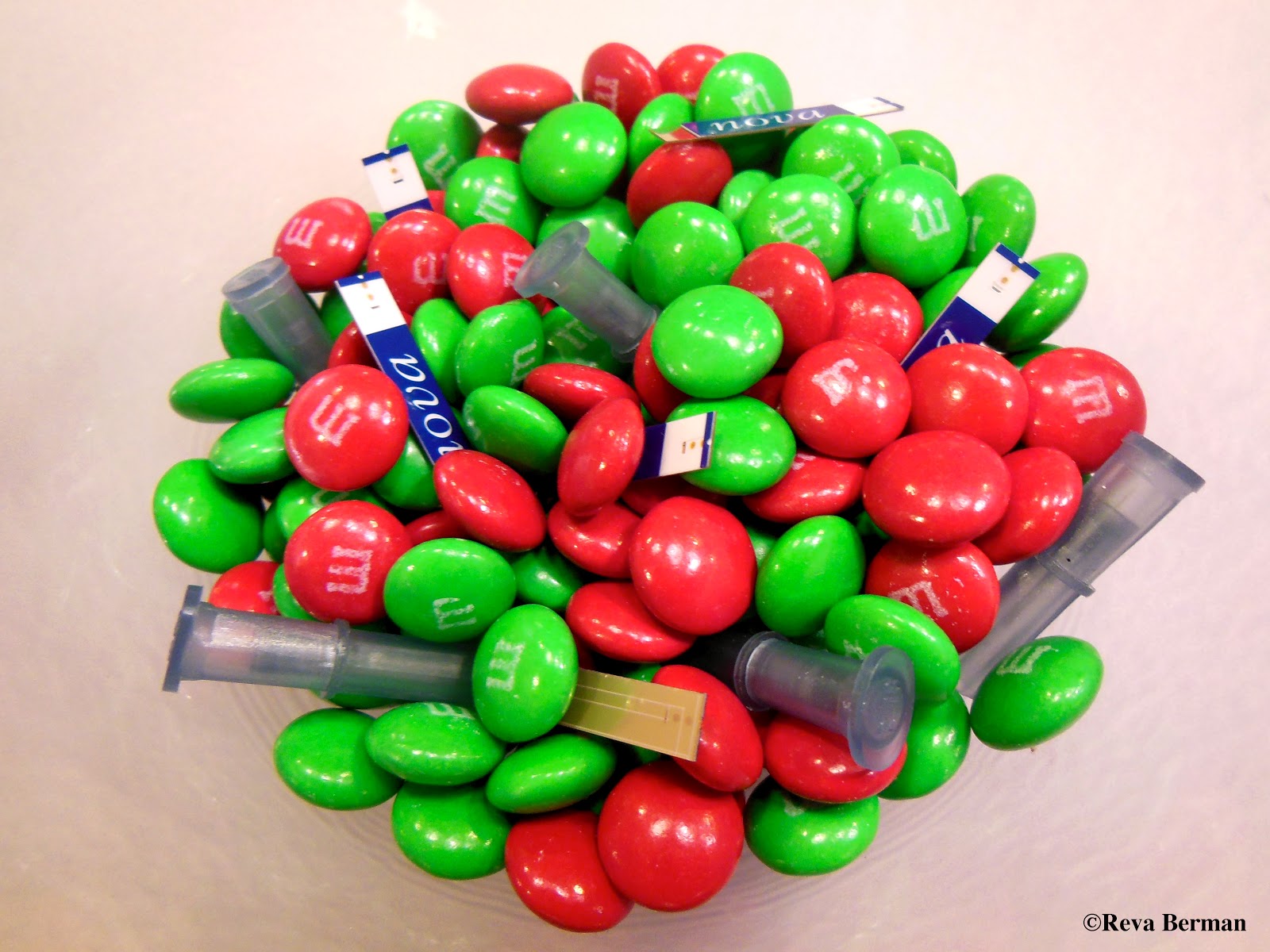
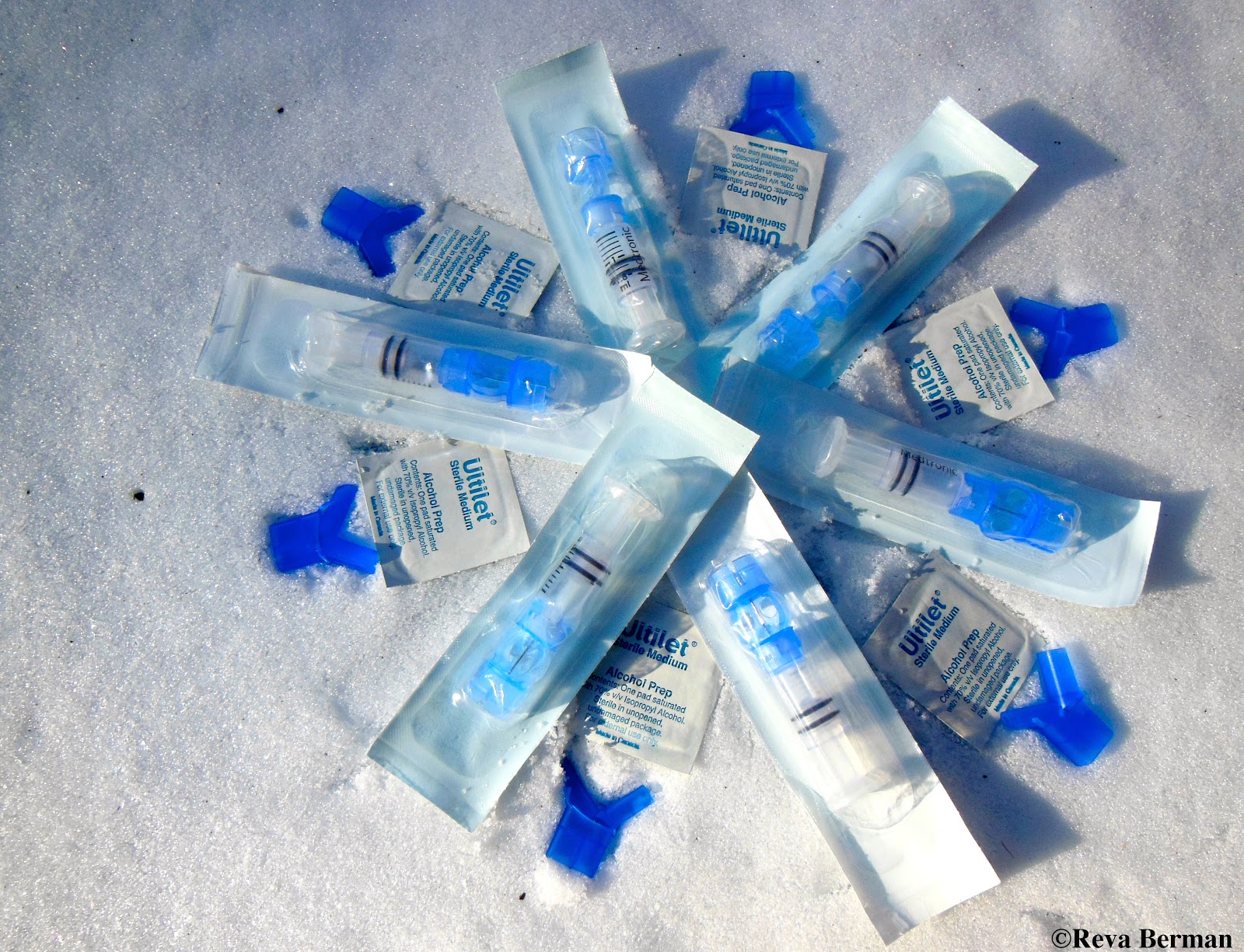
Being a visual person, I decided to create a series of photographs, my interpretation of the holidays through the eyes of a type 1 diabetic. Inherent in these photos is the juxtaposition of beauty and pleasure with disease and discomfort. Sweetness and enjoyment isn’t without careful deliberation and vigilance.
Cold weather brings challenges with blood sugar testing. When the temperature drops and your fingers get cold, it becomes even more difficult to get enough blood to take a reading. Sometimes I think my fingers might as well be covered in snow with how little circulation there is in the winter cold.
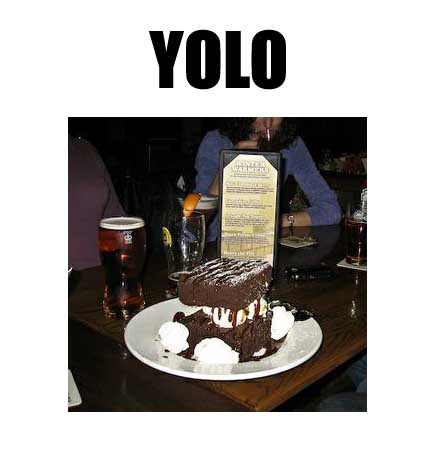
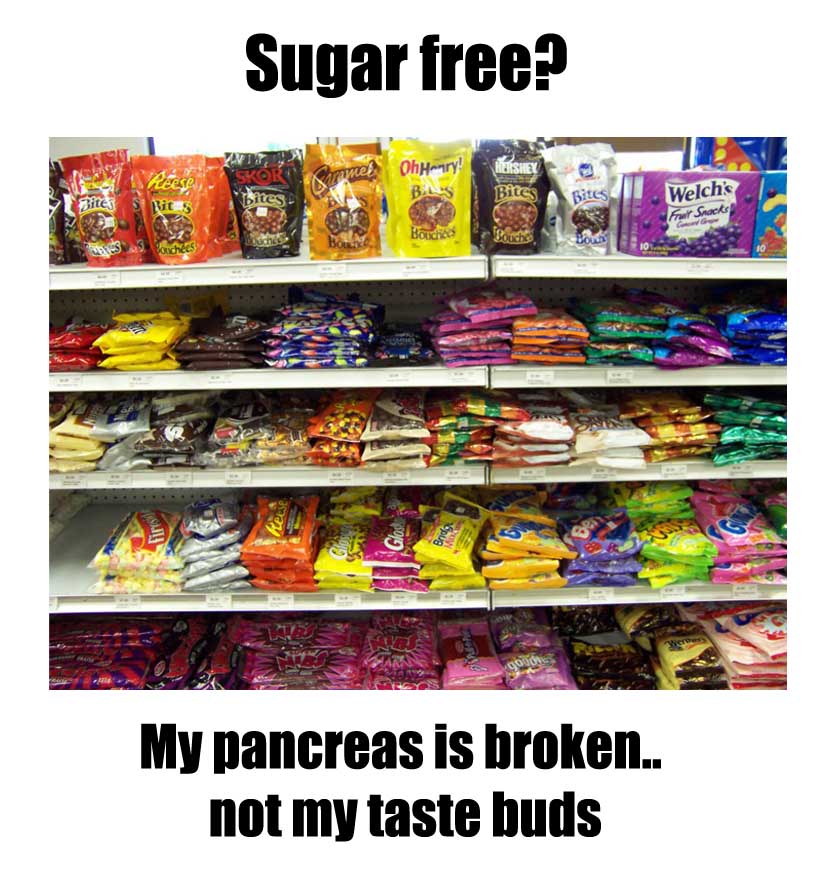
I love sweets. I’ll admit it. Being diabetic doesn’t necessarily mean that I can’t enjoy these treats, it just means knowing exactly how many carbs I’m having, giving enough insulin to cover it, and anticipating spikes in my blood sugar. That being said, it’s hard for me to look at candy, alcohol, or baked goods without thinking about calculating insulin, counting carbohydrates, and testing blood sugars.
The holidays are about remembering and appreciating what is truly important in your life. That may mean ignoring those questioning looks when you grab a brownie or excuse yourself to check your blood sugar. It’s about remembering everything you have to be grateful for instead of focusing on the inconveniences.
 
Warmest thoughts and best wishes for a wonderful holiday and a very happy, healthy, and prosperous New Year to you all! 

Let’s give this a shot

The first insulin shot that I gave myself was motivated out of anger. It wasn’t anger at my diagnosis or even my diabetes, at least not on the surface; it was anger towards my mother. I was just over 12 years old, a pre-teen caught up in the drama of middle school. I can’t even tell you what I was so mad at my mom about, but that fury led me away from our heated discussion, down the hall and into my room, slamming the door behind me. I lay there brooding in my bed, watching the fan above me spin in slow circles. I knew my mom would try to come talk to me, but in that moment, I was determined not to see her.

Unlike most moody teenagers, I now found myself in an even bigger predicament. I needed my mom in order to eat, a loss of independence I was still grappling with. Having only been diagnosed with Type 1 Diabetes a few months earlier, I still relied on my parents to give me my insulin shots before my meals. Suddenly I went from slowly gaining my independence and more responsibility to having my every move micromanaged and being treated like a child.
In that moment, all I knew was that I was going to be stubborn. I was not going to see my mom, not even so she could give me my shot.
I was angry. But now it wasn’t just at my mom. I was angry at my loss of control, my loss of my independence, and in a way, the loss of my freedom. I had had enough; I was determined to take back control of my life.
I was going to give myself my insulin shot.
I had always hated needles, closing my eyes whenever receiving a shot. The unease still remained even after dealing with needles on a daily basis. I got up from my bed and opened the dresser drawer. With the boxes of syringes, test strips, needles, alcohol swabs, and other supplies, the drawer looked like something out of a hospital room. Sometimes I still couldn’t believe this drawer was for me.

I pulled out the insulin vial, alcohol swab, and a syringe. After watching my parents perform this task hundreds of times, I knew exactly what I needed to do. The rubbing alcohol felt cool against my skin as my heart began to race. This was really happening. I stood there pinching my skin with one hand, holding the needle with the other. I can still remember the conversation in my head as I attempted to coach myself through the endeavor.

 “Come on, you can do this! It probably won’t even hurt. Well, it might hurt, but if it does, it’s only for a couple seconds. Do you really want to have someone give you a shot every time you need one? Of course not! They aren’t the ones with diabetes, you are. This is your responsibility. Okay ready? One, two, three…now. Now. Now…”
Fifteen minutes passed as I just stared at the needle. Nothing ever looked as sharp and menacing as that needle poised against the skin of my stomach. My hands were shaking and I was light headed from holding my breath in anticipation. I could practically hear my heart beating outside of my chest. But I knew I was too close to quit; I knew I had to do this.
The first insulin shot that I gave myself was motivated out of anger. But anger was the last thing on my mind when I raced from my room, down the hall, and into my mother’s arms, hugging her in triumph. 

The Travel Bug

I love to travel. As I write this, I’m sitting on a plane on my way to Boston. Whether it’s to a new city or different country, I love the experience of visiting a different place. There is so much to absorb when you go somewhere new; food, fashion, language, culture, art, music, architecture, and scenery, just to name a few. I’ve traveled far distances (Australia, New Zealand, Nepal), for long amounts of time (6 months in England) and on many different forms of transportation (planes, trains, buses, boats, cars). While there are inherent challenges to any type of traveling, traveling with diabetes does present some additional obstacles.
The first is packing. Between my meters, insulin pump, and CGM, I need to travel with a lot of supplies. I always take more than I think I need. For instance, if I will need to change my infusion set twice while I’m gone, I’ll bring at least 2 extra sets with me, if not more. You never know if there will be something wrong with the supplies so it’s always better to have extra. I also always bring extra test strips, batteries, syringes, tape, insulin, and of course fruit snacks. I try to fit most of my supplies in my carry on bag, and not a checked bag. If I can’t fit it all, I at least have enough to last a week. I’ve had luggage get lost and not be returned for days, if I didn’t have my supplies with me, I don’t know what I would have done.
Most of the time I don’t have any trouble going through airport security. I usually disconnect my pump and keep it in the bin when I go through, but I’ve also left it attached and just explained what it was and that it was connected to me, and everything was fine. The only time I was ever questioned was when I was flying to Nepal. I had to explain why I had syringes in my bag. Once I explained that it was for my diabetes, there wasn’t any problem.
The last part about traveling is one that I often forget about, changes in time zones. For places where the time difference is 3, 6, 12, or even 14 hours, it’s very important to change the time on my meters and pump. Since I get different amounts of insulin throughout the day and have different carb ratios, left unchanged, things can get very off schedule and mess with my blood sugar levels. I made the mistake of not changing the time on my meter while I was on vacation in Australia and New Zealand. It wasn’t until I had my appointment with my endocrinologist when I got back a week later that I realized that all my readings would be useless since it was completely off schedule. What was a reading taken at 2 in the afternoon showed up as 4 am. It was hard to make any adjustments when everything was so off.
Traveling can be stressful, exhausting, frustrating and overwhelming. That alone is enough to disrupt my blood sugar levels. Even with as much traveling as I’ve done, I still get anxious from time to time with figuring out logistics. One thing that I think every traveler learns is to be flexible. Things happen unexpectedly when you travel, there are delays, cancellations, miscommunication, wrong directions, etc. I’ve learned to become flexible with my diabetes as well, sometimes having to change my infusion set in bathroom stalls or treating a low while rushing through a busy terminal.
When you need your supplies to survive, you learn to make them a priority. They are at the top of every packing list, first into any bag, and always on my mind. Whether I am leaving my house, hotel, or walking through airport security, I always do that awkward pat down, except I’m not checking for my wallet or phone, I’m making sure I have my insulin pump and meters.
I don’t have the option to leave my diabetes at home, but I refuse to stay home with it. I’m going places, and you better believe that it’s coming along for the ride!

50 Shades of Low Blood Sugar

It’s hard to accurately describe what it’s like to have low blood sugar (hypoglycemia) without really experiencing it for yourself, but I can say that the feeling sucks. Low blood sugar happens when there is not enough glucose (sugar) in the body to be used as fuel for cells. Most people, whether you are diabetic or not, probably have experienced a mild form when you’ve gone a really long time without eating. Maybe you get a little grumpy or light headed. Now take that feeling and multiply it by 100. While some symptoms are more common than others, people with diabetes experience their lows differently, you just learn to recognize your symptoms. I’ve compiled a list of common and possible symptoms, starting with the ones I’ve experienced personally.

1. Shaky– my hands literally shake when my blood sugar drops
2. Light headed– kind of a dizzy, out-of-it feeling
3. Hungry!– It’s your body’s evolutionary response to tell you to eat and get more carbs. The lower the blood sugar, the hungrier I feel, even if I just ate a huge meal. More than I’d like, I find myself raiding the refrigerator and eating until I start to feel better and that awful low feeling disappears. This is one of the worst symptoms for anyone on a diet or trying to watch what they eat! And this over-treating can lead to high blood sugar and a seemingly endless roller coaster of ups and downs.
4. Lethargic– Sometimes it feels like my limbs have become really heavy and all I want to do is lay down.
5. Trouble thinking/concentrating–  It becomes really hard to put together coherent thoughts when my blood sugar is low, which was incredibly inconvenient if I was taking an exam or writing a paper in school.
6. Irritable/short temperedThis symptom I personally never noticed, but I’ve been told that I can occasionally get “mean” when my blood sugar drops.
7. Pounding heart/racing pulse– This symptom can be deceiving, often when I’m nervous or anxious I confuse the feeling with having low blood sugar.
8. Suddenly feeling very warm/hotI’d imagine its kind of like having a hot flash? Nice when it’s cold out, but not so great any other time.
9. Numbness in mouth and tongue– This symptom freaked me out! It happened for the first time recently and I had no idea that it was a common symptom.
10. Confusion

11. Dizziness
12. Headaches
13. Pale skin
14. Sweating
15. Trembling
16. Weakness
17. Anxiety
18. Poor coordination
19. Nightmares or bad dreams– that’s interesting, I actually didn’t know that one (thanks WebMD)
20. Skin becomes cold and clammy
21. Drowsiness
22. Sleep disturbances
23. Blurred vision
24. Slurred speech
25. Depressed mood
26. Restlessness
27. Personality changes
28. Tingling in hands or feet
29. Frequent sighing
30. Nausea or vomiting– for me, this is a symptom of high blood sugar, not low, but apparently it happens to people

So these next few I’ve personally never experienced (and hope to never!), but it is what happens if a person’s blood sugar drops dangerously low:

31. Passing out/unconsciousness
32. Seizures
33. Coma

Not quite 50 symptoms, but there are definitely a lot.

While I try to avoid having low blood sugar, I have accepted it as part of being diabetic. And while I don’t think I can ever get used to the horrible feeling, I’ve learned to tolerate it. However, having an episode of low blood sugar might be the most disruptive part of having diabetes. Sure it takes time to test your blood sugar or give insulin, but we’re talking less than a couple minutes for those tasks. Most episodes of low blood sugar last about 15 minutes before I start to feel normal again. That’s 15 minutes of not being able to think straight or concentrate, 15 minutes where your body feels shaky, weak, and light headed, 15 minutes of wanting to just sit or lie still. Most of the time I don’t or can’t completely stop what I’m doing at the time. I eat my fruit snacks and carry on with my life, but it’s not always an easy thing to do. And while I enjoy the taste of my fruit snacks, there’s nothing worse than exercising and working hard to burn off those calories to then have to turn around and eat sugar because my blood sugar had dropped.

Sometimes I will go days, maybe even a week without experiencing a low, but there have been other times where I will drop low 3 or more times in a single day. The scariest part is, you never really know when or where you will be when it drops low and it can become very dangerous very quickly, so you must always be prepared. That’s why I carry packets of fruit snacks with me everywhere. The best thing is to learn to recognize your symptoms so that you can react and treat it early before it gets too low. That’s one of the reasons I really like my continuous glucose monitor, it tells me when I’m dropping low sometimes even before I feel it. 

I’m sitting here trying to think of what kind of silver lining there might be from having to deal with low blood sugars. I could say that it has taught me to always be prepared and to expect the unexpected. But maybe, it’s more that sometimes things in life just suck! There’s no better way to put it. Having low blood sugar is awful, but it’s part of having diabetes and just something you have to learn to live with and deal with. I think everyone has something in their life that they wish they didn’t have to deal with, something that might be disruptive, uncomfortable, or unpleasant. Maybe you’re lucky and can find a way to deal with it so that it disappears, but for the rest of us that are stuck with our “low blood sugars”, it’s recognizing that sometimes even though life has handed you lemons, you can still have a great life.

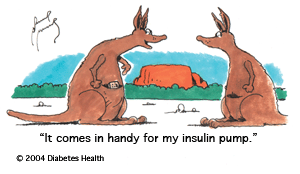
(Images from DiabetesHealth- http://www.diabeteshealth.com/cartoons/)

Why me?!

I first learned how to give a
shot by practicing on an orange

My diagnosis was a really hard and scary time, not just for me, but for my family and even friends. Part of what made it so difficult was that it was literally out of the blue. I had gone in to my pediatrician for my 12-year-old yearly check-up, seemingly healthy. I had no family history of diabetes and wasn’t showing any symptoms. The diagnosis was a complete shock to everyone. I remember sitting on the examination table, crying. I had no idea what diabetes was and what having it would mean for my life. From that moment on, everything was a whirlwind. We checked in to the hospital and over the next few days, I was visited by nurses, doctors, nutritionists, health educators, counselors, you name it. My family and I were bombarded with information, absorbing as much as we could in that short amount of time. I learned everything from how to count carbohydrates to how to give a shot. It was when I was released from the hospital that the fear and anxiety truly set in. How was I going to remember all of this, let alone give myself finger pricks and shots?? At this point, the idea of inflicting pain on myself to poke my finger was so appalling that it would sometimes take me an hour before I got enough courage to push the button.

I remember feeling a lot of different emotions: anger, confusion, frustration, sadness and fear. However, I kept most of that to myself, bottled up inside. Finally one day a few weeks later, I lost it. I have this image of me, lying in the middle of our foyer, curled in a ball, bawling. I remember this day vividly because for me, it was a turning point. I laid on the floor, repeating over and over in my head, “why me, why me!?” Then suddenly I knew my answer. In my 12-year old mind, I said to myself, “My life is pretty perfect, God is just giving me a challenge”. I told this to my parents, and my mom to this day, has never forgotten that sentence. She told me it was what helped her to begin to heal, to know that things would be okay.
To me this statement isn’t about God or even about the diagnosis having a higher purpose, it was about knowing that this was something I could handle, even if it wasn’t going to be easy. It’s hard for me to say that everything happens for a reason when there is such sickness, tragedies, and atrocities that happen to good and innocent people in the world every day. How can you tell a mother who lost a child or someone who died too young from cancer that it happened for a reason? I believe that horrible things happen for no reason at all. However, I do believe that some kind of meaning or purpose can come from a bad situation IF you are open, willing, and active in accepting this possibility, even if this takes years or even decades. A death of a loved one can lead a person to become an advocate for a certain cause or to prevent others from having the same fate. Tragedies can bring families and communities together. But on the other hand, it can tear them apart. This is where the type of person you are or want to be plays a role. This is where resilience comes in. Do you let something bad that happens to you defeat you, or do you rise above it? Do you become bitter and resentful, or do you find a way to move on, to make things better? At 12 years old, I had a realization that my diagnosis was going to be a challenge, but that it was something that I would learn to live with the best that I could. It was an obstacle to be overcome, not a dead end.
I wish every day for a cure. Obviously I would never have chosen to have this disease, but having diabetes has also played a role in the person that I am today. My choice to pursue a master’s degree in Public Health was largely influenced from my experience living with a chronic disease. I’m not sure where my future will take me personally or professionally, but I do know that my diabetes will play a role. You can’t always choose what happens to you, and unfortunately bad things happen to everyone. You just have to learn to make the best of it, any way that you can. 

It’s cute, but does it have pockets??

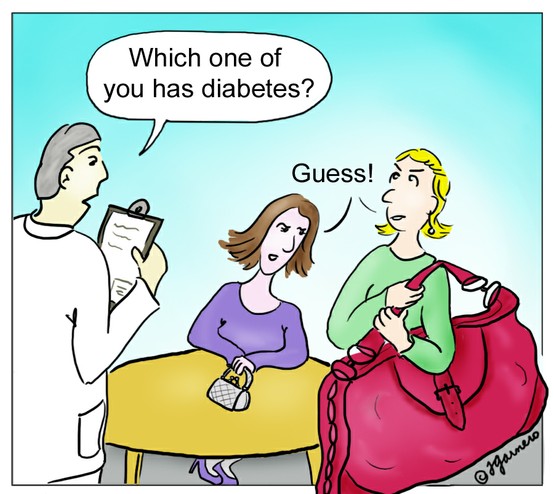
As I’ve gotten older, there have been many advancements in the management of type 1 diabetes. However, I’ve also noticed a correlation between technological advancements and how much stuff I have to carry around with me. When I was first diagnosed, I had an insulin vile, syringe and my glucose meter. Simple enough. A year later, I switched from injections to an insulin pump, a device that literally is always by your side. Next came the continuous glucose monitor, a monitor that takes a reading every few minutes and graphs trends in blood glucose over time. Since it uses a wireless signal, it can’t be more than a few feet away, meaning it’s another device to carry around. And let’s not forget about always having something on you to treat a low blood sugar. For me, these are packets of fruit snacks. Luckily being a woman, I can shove most of it in a purse, but it does get to be cumbersome. And that’s just for my diabetes. Throw in my wallet, keys, and cellphone and I’ve already got a pretty packed purse.  I sincerely hope that these medical device companies follow in the footsteps of companies like Apple, and continue to make their products slimmer, lighter, and smaller. Or better yet, make one device that does it all! My shoulder and back would be very grateful.

All these things to carry means there’s more to forget. While most kids growing up just had to worry about not forgetting their lunch or their homework, I had to make sure that I did not go anywhere without my fruit snacks and meter. Seems trivial, but if you get low blood sugar and don’t have a way to treat it, things can get dangerous very quickly. This definitely taught me to be responsible at a young age. And I must admit, I did use that increased responsibility to my advantage. For instance, I was one of the first of my friends to get a cell phone back when it was unusual for a 13 or 14 year old to have one. Thanks mom and dad! 😉

Pockets are another big thing. When I first got my insulin pump, a year after being diagnosed, I was still self-conscious and did not want it to show. I kept the pump in my pocket and the cord tucked away. When it was clipped to my pants, I was constantly asked if it was a pager, to which my initial response was always, “I’m 14, why would I need a pager??” Eventually though, I saw this question as an opportunity to teach people about diabetes and what an insulin pump does. I discovered that most people were just curious and were interested in hearing about it. Today I’m not concerned if my pump shows or not, although I still prefer pockets.

I’ve also learned to not be self-conscious about all the different things attached to my stomach, especially at the beach or pool. Between my infusion set and wireless sensor, things can start to feel a little crowded, in addition to being a bit unusual looking. Rather than feeling uncomfortable, I’ve learned to view it as a conversation starter. Granted not many random people ever stop me to ask what they are, but if they did, I’d be ready!

It’s not always easy finding ways to incorporate an external device into your life. While I’ve been fortunate to not have dropped it in any body of water, I’ve come across other unpleasant situations. One that particularly stands out is when the cord of my pump got wrapped around a knob of a drawer, yanking the infusion site out of my body as I walked the other way. Incorporating these devices also involves being creative from time to time, especially when figuring out how to wear an insulin pump with skirts and dresses. But where there is a will, there’s a way.

It’s easy to get caught up in all the negatives, to adopt a “woe is me” attitude. I’ll admit that I’ve had my moments of self-pity. But what good does that really do you? Feeling sorry for yourself isn’t going to make things better or easier. What does help is trying to find something positive about the situation or to even compare your circumstances to those who have it worse than you, and many, many people do. Yeah I have a lot of stuff to carry, but that’s just a good excuse to buy a cute purse to hold it all. Yeah I have an insulin pump attached to me all the time, but at least it is small enough to fit in my pocket and not something that has to be wheeled around. Yeah I have to have fruit snacks with me wherever I go, but at least they are delicious 🙂

If you don’t like something, change it. If you can’t change it, change your attitude. 
~ Maya Angelou

(Image from DiabetesHealth- http://www.diabeteshealth.com/cartoons/type-1/15.html)

Hello!

I’m 24 years old and have had type 1 diabetes for 12 years. That’s half of my life. A lot has happened in those 12 years. I finished school and went to college at the University of Michigan, earning both a B.A. and a Masters Degree in public health. I spent a semester studying abroad in England, I’ve traveled the world, I’ve even gone bungy jumping and skydiving. There has not been a single day in those 12 years where I have not thought about my diabetes. Has it stopped me from doing what I wanted to do? Never. Rather, it has given me direction and purpose in my life. Has it impacted how I live my life? Everyday.

Diabetes has become part of who I am. While it doesn’t define me, its part of my identity. I’ve come a long way in my self management in the past 12 years. From being dependent on my parents for my insulin shots when I was 12 years old, to using an insulin pump and continuous glucose monitor, I embrace the advancements technology has brought and the independence it has given me. However, I have a long way to go. My A1c is not where I want it to be. Today I went to my endocrinologist and was told that it is at 8.0. Every appointment I see it get slightly closer to my goal of 7.0 (and eventually even lower), but I have yet to achieve it. I’m hoping that this blog will do 3 things:

1. I hope that it will make me more accountable for my health and will bring me that much closer to gaining the control that I want over my diabetes.
2. I hope that others will read my experiences and learn something, relate to what I am going through, and maybe even feel inspired to make some changes of their own.
3. I hope to learn from others who share their stories and experiences with me.

I’m not a doctor and nothing I say should be taken as medical advice, rather this blog is meant to share my experiences, my successes and mistakes. Do I make mistakes? Of course. I forget to bolus after a meal, I miscalculate carbohydrates, I forget to check my blood sugar, the list goes on and on. I’m not perfect, but I’m trying to be better. So I invite you to join on my journey. A journey to better health, happiness and fulfillment.