Diabetes Blog Week Day 4- Mantras

“Yesterday we opened up about how diabetes can bring us down. Today let’s share what gets us through a hard day. Or more specifically, a hard diabetes day. Is there something positive you tell yourself? Are there mantras that you fall back on to get you through? Is there something specific you do when your mood needs a boost?”

I have two mantras, two sayings that get me through the hardest days. I share them both with you, perhaps one will speak to you and help the way it’s been able to help me.

1. Tomorrow is a new day.

I get frustrated a lot by my diabetes, and I imagine that I’m not alone. I make mistakes, I see numbers that I don’t want to be seeing, I deal with feelings that I don’t want to be dealing with. It’s easy to get caught up in the numbers and emotions each day. It’s easy to look at a CGM graph that looks more like a roller coaster than a flat line and feel defeated. To feel hopeless and helpless. But you can’t. Tomorrow is a new day. Tomorrow you can do better. Tomorrow you can try harder. Tomorrow you don’t have to make the same mistakes that you made today. Tomorrow’s numbers will be better, you’ll see. Tomorrow you will feel better. You won’t have those icky lows or those gross highs. You’ll look at your CGM and smile, not frown and shake your head. Tomorrow is a new day. And if it’s not better? Guess what, there’s another new day after that.

2. You are not defined by a number. 

That blood sugar number that you see that you don’t like, it doesn’t define you. It doesn’t show what kind of person you are, how much you care about your health and taking care of yourself, how much you care about others. That number doesn’t know how much you tried to keep it in range. That A1c number that’s higher than you want, it doesn’t tell the whole story. It doesn’t mean you don’t care, that you didn’t try, that you don’t want to do better. You are not defined by a number. Numbers are there to help you, to keep you on track and tell you what you need to do. They are information, data collected to help you be healthier and live better. They aren’t there to label you, to judge you, to condemn you. Good or bad, you are not defined by a number. No number can capture the effort you put into caring for your health: the worry, guilt, frustrations, sadness, preparation, vigilance, triumphs, determination, resilience, and all the blood, sweat and tears.

You are not defined by a number. 

You are so much more.

 

Diabetes Blog Week- Day 3 What Brings Me Down


“May is Mental Health Month so now seems like a great time to explore the emotional side of living with, or caring for someone with, diabetes. What things can make dealing with diabetes an emotional issue for you and / or your loved one, and how do you cope?”

For most things in my life, my level of effort has been indicative of the outcome. That is, when I try my best and put a lot of hard work in, I can usually expect favorable results. Of course this is not always true, but it has been true in many cases. For instance, my grades throughout school, events that I put a lot of effort into planning, projects at work, you get the idea. And if the results are not what I had hoped for, it’s usually not unexpected. I usually know that maybe I didn’t study enough, or put enough thought into something, or cut corners. So if I wasn’t completely satisfied with the results, I usually knew what was to blame.

One of the most difficult aspects of living with diabetes for me is the frustration that comes with trying to keep my blood sugars under control. There have been many times where I think that I’ve done everything “right” only to be disappointed. I counted my carbs (yes, I looked them up even), I checked my blood sugar, I gave my insulin before I ate, and I checked my blood sugar 2 hours later. But despite all of this, sometimes I still end up with a high blood sugar or a low blood sugar and I have no idea why.

It’s beyond frustrating to think you’re doing everything you’re suppose to but still don’t get the result that you want. There are a million reasons why that blood sugar could be off. Maybe my infusion set isn’t working, maybe the insulin isn’t good anymore, maybe the food was actually more or less carbs than I thought, maybe the low is a result of exercise I did hours earlier, maybe I’m getting sick, the list can go on and on.

So many times I’ll check my blood sugar and just be perplexed. The number is unexpected and not what I want to be seeing. 345?! Ugh!! Why?! I’ll shake my head, I’ll audibly sigh, I’ll mutter obscenities. As much as I try to dissociate emotions from these numbers, it’s not always possible. High numbers can put me in a bad mood. They make me angry and frustrated and can often feel like a personal failure.

I can always do better. I can be stricter, more vigilant, more attentive. I know that. Most of my high blood sugars I can point to something that I did or did not do that is most likely the cause. But those high or low blood sugar numbers that are unexpected are the ones that really get to me. Those are the one’s that I hate dealing with, but you know what? You just deal. You accept that once in awhile you might not have anything to blame, sometimes you don’t have an answer, things are out of your control. But dwelling on it isn’t going to raise that low blood sugar or lower that high one. So you do what you have to do, and you move on. Because pretty soon, there will be another number, and hopefully that one won’t be unexpected.


Diabetes Blog Week- Day 2


“This year, Diabetes Blog Week and TuDiabetes are teaming up to bring out the poet in you! Write a poem, rhyme, ballad, haiku, or any other form of poetry about diabetes.”

CGM, Go To Bed

An ode to my continuous glucose monitor


10:30 pm:

I put you on my nightstand, I lay you down to rest,
In case I don’t feel well, my blood sugar you will test.

My blood sugar is steady, not too high and not too low,
That ice cream after dinner, I hope you will not show.

An undisturbed night of sleep is what I really need,
A steady line on your graph in the morning, I truly hope to read.

Slumber is upon me, I’m drifting off to sleep,
I beg you CGM, a quiet night without a peep.

1 am: Buzz buzz buzz

Double arrows pointing up I awaken with a start to find,
Of all the arrows, up and down, you’re my least favorite kind.

Not much I can do, laying here with insulin on its way,
Groggily back to sleep I go, and hoping this time to stay.

2 am: Buzz buzz buzz

My eyes spring open, you caught me quite off guard,
My bg’s now over 180, you just had to make this hard.

My number is too high now, but I’m hoping not for long,
It may start to drop too fast, but hopefully I’m wrong.

4:30 am: Beeeeeep Beeeeep Beeeeeep

From my nightstand I hear your sound, which can only mean one thing,
“You’ve dropped below 55, wake up, wake up!” your beeps eagerly sing.

I take my fruit snacks and into my mouth I dump them all,
For the last time tonight, please back to sleep I hope I fall.

4:45 am: Buzz buzz buzz

Now you say I’m under 80, well at least I’m on the rise,
Maybe giving insulin for that high wasn’t all too wise.

Please CGM, let this be all, I’m really very sleepy,
If you wake me up one more time I may get a little weepy!

7:30 Ringgg Ringgg Ringgg

You’ve got to be kidding me, what is it now? You haven’t had enough?
With all the ups and downs this night, my sleep has been quite rough.

It’s my alarm! Time to get up; to work I must get ready and go.
Oh what’s that on the graph? A perfect number NOW you decide to show!

Diabetes Blog Week- Day 1

Today begins the Fifth Annual Diabetes Blog Week, and I am happy to be participating for my second year! Each day this week, I’ll be responding to a different prompt, sharing my perspective on different topics within the diabetes community. I’m excited to share my thoughts as well as read all the different posts in the Diabetes Online Community (DOC). I hope to discover some new and thought provoking blogs as well! So here we go!

Change The World- Monday 5/12

“Let’s kick off Diabetes Blog Week by talking about the diabetes causes and issues that really get us fired up. Whether or not you “formally” advocate for any cause, share the issues that are important to you.”

I love technology. I may not always be the first to have the latest and greatest, but I definitely get excited with every advancement. But more than the gadget itself, I love what technology can do to ease and even improve our lives. When used for good, technology can have a powerful influence in shaping people’s behaviors. Where I get excited is how technology can be used to help people live healthier, more fulfilling lives.

Take the Fitbit or other wearable sensors, for example. This simple, discreet wristband essentially tracks distance in the form of steps. Integrated with a smartphone app or wireless USB adaptor, it presents a user-friendly interface with real time tally of steps taken, distance in miles, calories burned, minutes active, and other tracking features. It gives the user simple indicators in a clear way, even using stoplight colors to show when you are close to your goal. It even incorporates with social media, showing you where you rank amongst your friends. Simply by wearing this wristband and having instantaneous access to my daily progress, I’ve found that I have changed my behaviors to reach my daily goal. These changes may be small but they’re still positive changes. Whether that’s taking the long way somewhere or opting for a walk during lunch, every step counts.

This is a post about diabetes, why am I talking about Fitbit? Well because I’m passionate about the integration, communication, and synchronization of all diabetes related devices into a meaningful experience. While there’s been significant progression, we aren’t there yet. My glucose meter talks to my insulin pump, but neither my insulin pump nor my meter talks to my CGM (yes I know some can). None of these are talking to my smartphone. I know there are some great apps out there, and even special meters that can be plugged right into my phone, but that’s not what I want. I don’t want to have to manually enter in my blood sugars or my boluses, I’m lazy and forgetful. I want an app that already knows because it’s collecting data wirelessly from all my devices.

But I don’t want it to stop there, I want clear graphs and indicators providing me trends in my blood sugars and recommendations of what I need to do based on a personalized history and my doctors recommendations. I want it to alert me the way my CGM does when it notices a trend in a negative direction. But I want my alerts to be tailored to me based on the carbs it knows I ate and the insulin it knows I gave. Data is great, but not if I don’t know what to do with it and surely not if it doesn’t have meaning to me as a patient and a person.

We as diabetics do and track so much. There’s so much to remember, so much to calculate. I want something that will reduce my burden, not add to my list of things to do. Why do I love my Fitbit? Because it’s not asking me to count my steps and then enter it in an app, it already knows. It takes that information, calculates it into other meaningful statistics and gives me a sense of what my next steps are (no pun intended). I want this for my diabetes self-management. This is the cause that gets me fired up. I want integration. I want to reduce user burden. I want clear, meaningful data that is comprehendible by someone without a medical degree. Well, what I really want is a cure, but until then, I’m counting on technology to at least make things a little easier.


The Forgotten Pancreas

How could I have been so stupid?! So careless. So irresponsible. So forgetful?

I was cursing myself for a mistake that I had made. One that I have only made about 4 other times in the past 13 years. I was in a rush to get to a friend’s BBQ, I couldn’t be late because I had the hamburger meat with me. I scurried around my apartment collecting everything that I would need, including my belongings for the weekend since I wasn’t planning to come back to my apartment for a couple days. Meat? Check. Pasta salad? Check. Duffle bag? Check. Keys? Check.

I got into my car, driving the hour to my friend’s house, getting there just in time for him to put the hotdogs and burgers on the grill. My friends began to arrive, bringing an assortment of delicious foods. I filled my plate and got ready to bolus. I reached into my pocket only to realize that my pump wasn’t there.

Where is it?! I ran out to my car, ruffling through my duffle bag hoping that it had fallen in or was in the pocket of the pants I was wearing earlier. No luck. I checked the floor of my car and all around, but it was nowhere to be found. I must have left it on my bed, forgetting to reconnect it after getting dressed.

I went back inside distraught. It was only 8 pm, I had the whole night ahead of me. It would be a 2 hour drive to go back and get it and drive back. Would it be worth it? If I went back to my house, I probably wouldn’t want to come back. There goes my whole night, a night that I was looking forward to for weeks.

“I have to go home.” I said, feeling defeated.

“What? Why??”

I explained that I didn’t have my pump, and I needed it.

“But you have Gigi right?”

I explained that I could test my blood sugar, but that I didn’t have a way to give insulin. My friend that’s a doctor chimed in, do you have insulin, what about injections?

Of course! I could give shots. I had a vile of insulin and a couple syringes just in case. While the thought of giving multiple injections over the course of the night was not ideal, it would at least get me through the night. I gave a shot for the food and a correction for my high blood sugar and waited. I watched as my blood sugar continued to climb.

My anxiety rose with my blood sugar. What if the shots didn’t work? I was starting to feel sick and told myself that if it didn’t start coming down soon, that I was going to leave and drive home. But sure enough, the arrows started pointing downward and my blood sugar began to drop. I made it through the rest of the night with injections and opted to drive home at 1 am knowing that I’d have my pump through the night.

I know we all make mistakes. We’re all forgetful from time to time. But essentially leaving your pancreas on your bed is a mistake that I hope I don’t make again any time soon.

Integration

“What is it?”

The devices gathered around, peering inquisitively at the band that lay in the middle of the circle.

“I don’t know,” B.G. Meter replied, inching closer.

“Don’t touch it! We don’t know what it does! It might be dangerous!”

Meter gently tapped on the black surface and a series of bright white circles bounced across a mini screen.

“Look it lights up!” Gigi exclaimed.

“Why hello there,” the band stretched out, springing to life. My name is Fitbit Flex. And who are all of you?”

“Oh um, hi. My name is B.G. Meter and these are my friends Insul N. Pump and Gigi CGM. We didn’t mean to bother you, but we noticed that the Human started wearing you and we were curious what you were doing.”

“Oh how lovely! It’s always a pleasure to meet new devices. I’m a tracker. When the Human puts me on her wrist I can tell her how many steps she takes each day, how many calories she’s burned and even how well she slept!”

“Oh wow. You must take a lot of blood to figure out all that information. Where is your lancet hidden? Not that I was checking you out or anything, but you have a rather sleek design.”

“You’re making me blush, Meter. I actually don’t need to take any blood to figure out those numbers.”

“Whattt!? No blood? But you’re still under the Human’s skin right, like Gigi or Insul?”

“Nope. I prefer to stay away from bodily fluids and functions.”

“Crazy! How come you can’t do that, Gigi? So how does the Human know how many steps she’s taken? I noticed you don’t have a very big screen.”

“Yes, bigger is not always better, Insul. When the human lightly taps on me, my dots show what percentage of her goal she has completed. One dot is 20%, two is 40%, etc. But more importantly, if the Human takes out her phone and opens my app, she can see all these numbers and graphs right on her phone.”

“Wait, let me get this straight. You send your information right to the Phone, the thing that the Human always has with her?! And she doesn’t have to type anything in? We’ve been trying to get our numbers on the Phone for ages, but it will never take it from us!”

“Well that seems rather silly to me. The app also lets the Human keep track of other things too like her weight, calories eaten, and how much water she drinks. She can even cheer on or taunt her friends to reach their goals.”

“How can we get our numbers on there?? I know that the Human can manually type in that kind of information, but she’s kind of lazy. It would be perfect if her blood sugars and units of insulin delivered was wireless sent and synced right in your app. With your information about steps and activity and food logging and our information about glucose numbers and insulin, we could really help the Human understand the big picture!”

“You know what, Gigi, that’s a great idea. Hopefully someone smart is working on figuring that out right now.”

I sure hope so.

The Obscure Train of Thought of a Slightly Panicked Diabetic

“Hello?”

My voice sounded strange as I answered my phone. It was 10 pm. I realized that I had not spoken out loud since leaving work 5 hours earlier. Since moving into my own apartment, I’ve been getting used to living alone. The solitude, the freedom, and the silence. Without any immediate person or animal to talk to, I realized that I could now go hours without hearing my own voice. It’s still a strange concept.

But the lack of chatter is just one aspect of living on your own. And while I admit that there are moments when I miss human interaction, I know that this is a time of immense learning and growing for me. Every problem, big or small, becomes my responsibility. Whether that means calling a friend or parent for advice, calling a repair person, or problem solving a solution myself, it’s up to me to fix my own issues.

But fixing a leaking sink or figuring out how to set up my cable are not quite the same as problem solving health obstacles on your own. And while obviously I have concerns about my diabetes, these instances are not always related to that. But I have also found that when I do have these moments of “panic”, my mind goes straight to the most obscure details. Allow me to demonstrate:

I was sitting in front of the TV eating nachos. Immersed in the TV show I was watching, I took a collection of gooey chips from the bowl without looking down and put it in my mouth, swallowing with minimal chewing. But rather than going down smoothly, I could feel the lump get stuck in my throat. I wasn’t choking, I could still breathe, but the lump had become rather painful. I coughed, hoping that it would  help the food move down my throat, but it only made it hurt more. I took a sip of water. No luck. Now I was starting to get worried. I’m not really sure what the normal thought process would be, but I started thinking about what I would do if the food remained lodged in my throat. I thought about who I would call. Should I go next door and see if someone is home? Since recently moving, I’ve only met one of my neighbors one time. But realistically what would she do? And what would I say? Should I call my parents? “Hi dad, so I’m not reallllly choking, but there’s this lump of nacho painfully lodged in my throat. Suggestions?” Which piece of furniture would be best to throw myself over if I needed to do the Heimlich maneuver on myself? Would that even work? Wouldn’t that be funny marketing if a furniture advertised, “Great for if you ever find yourself choking and alone in your apartment!”  I sat there considering my options when the food finally dislodged and the pain disappeared. Phew, crisis averted.

A few nights earlier, I had another obscure train of thought while contemplating my predicament. My blood sugar had somehow skyrocketed, I mean wayyyy out into space. It was the middle of the night and I felt soooo sick. My stomach was killing me, I kept switching from being hot to cold and back again, I was thirsty, and just overall in pain. I had given insulin hours before, but my blood sugar had only continued to climb. I decided to give a shot in addition to the insulin that my pump may have delivered. Watching my blood sugar continue to climb as I laid in excruciating pain, I started thinking what I would do if I couldn’t get it to come back down. My first thought though was if the emergency room has valet parking. What do I do with my car? If I drive myself to the hospital, do I go park in the structure then walk to the emergency room? Having only ever gone with my parents, these logistical details seemed extra important in the moment. Then do I email my work that night or wait until the morning to tell them that I may not be in? What the heck, why am I thinking about parking and emails right now?! I continued to lay there for another hour before I saw the encouraging downward arrows on my CGM. I finally drifted back to sleep and awoke to a beautiful line of blood sugars hovering around 100.

The mind truly works in random, mysterious, and clearly entertaining ways. I’m just glad that I didn’t have to act on any of my obscure thoughts!

It’s Not A Pager

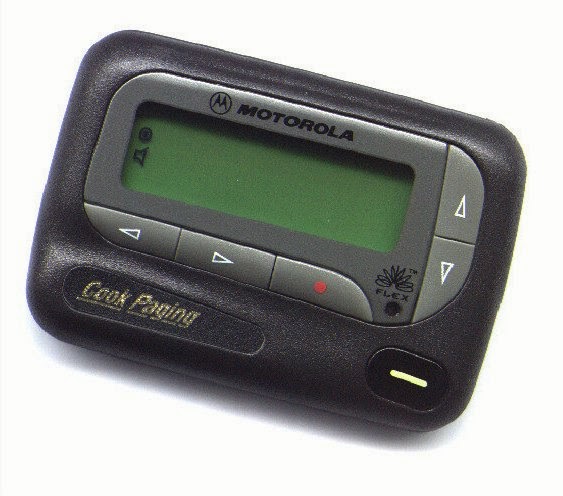
“Is that a pager?”

I had pulled my pump out of my pocket to what I thought was discreetly bolus for my dinner. I was at a large dinner seated with friends, strangers, and acquaintances. That question has always been a great opener to a usually educational conversation about type 1 diabetes, a conversation that I never minded having and actually often looked forward to. But this time I didn’t even look up from my pump as I worked out the carbs and calculations in my head.

“No, it’s an insulin pump,” I replied, not even bothering to lift my head.

That’s all I said. Not, “No it’s actually an insulin pump, I have type 1 diabetes and I give insulin this way instead of shots.” Not, “Hah no, its an insulin pump, I have type 1 diabetes and I have to give insulin when I eat.” No explanation, no education, no discussion.

“Oh sorry, it kind of looks like one.”

“Don’t worry, she gets asked that a lot.” My friend seated next to me took the opportunity to chime in.

I should have said that to him, I should have made sure that he didn’t feel awkward, that he knew that I didn’t feel awkward by his question, but I didn’t. I finished entering my bolus and put my pump back in my pocket. And that was the end of it.

It was not my typical response when someone inquired about my diabetes. I wasn’t trying to be rude, I wasn’t offended, or embarrassed. I’ve thought about my response, or lack there of, for the past few days. Why was this time different? Why this time did I find myself to be slightly…well, annoyed?

It’s happened many times where I’ve known a person for years before they find out that I have diabetes. That’s because most of the time, you can’t necessarily tell. I keep my cords tucked away, my pump in my pocket, my infusion sets covered by my clothing. But other times, I don’t care who sees. I test my blood sugar at my desk or on my lap at the table. I wear my pump clipped to my side, my tubing dangling below the edge of my shirt. And when questions are asked, I explain. I teach, I answer questions, I demonstrate and I educate. I usually like doing it, I like talking and sharing my experiences and life with diabetes.

But not that night. I didn’t want to talk about my diabetes. I didn’t want to explain what it was and what I was doing. I didn’t want the next 20 minutes to be about me or about diabetes or about anything related to it. I didn’t want my diabetes to be at that dinner, at that table.

For the past month, I haven’t worn my CGM. And while I still tested my blood sugar, it was less frequent. It was a month of not constantly being summoned by buzzing and beeps. It was a month of a sort of denial of my blood sugars. Without my CGM to tell me otherwise, I had a tendency to trick myself into believing that they were in range when mostly likely they weren’t. It was a month of drastically less lows, but probably more highs. But it was a quiet month, a necessary month. A month where everything wasn’t about my diabetes. Where my focus and energy, for better or worse, was spent elsewhere.

So when I was asked if my pump was a pager that night, I didn’t want a diabetic discussion and my response reflected that.

Today, after a month, I took my CGM back out of the drawer and started wearing it again. Today I stopped pretending like diabetes isn’t a part of my life and can be ignored, even for a month. I know I don’t always have to talk about my diabetes, that I can decide when I want to keep it to myself and when I want to share it. But whether it’s today, or tomorrow, or the day after, not talking about my diabetes does not mean that it isn’t there and that it will go away.

“It’s not a pager, but I get asked that a lot. I have type 1 diabetes and this is an insulin pump, I can tell you more about it if you’re interested…”

Superpowers and Kryptonite

I tend to not remember a ton from the time when I was diagnosed, but I clearly remember one conversation with a doctor that I had when I was 12 and probably type 1 diabetic for only a couple weeks.  I remember the doctor telling me that I would get to know my body so well, better than most people without diabetes, and know roughly my blood sugar just by the way I feel. It was such a foreign concept to me at the time. At that age, I wasn’t paying attention to my body for the most part, maybe the way it looked since I was at the beginning of puberty, but not how I was feeling. I was skeptical, but I found the concept intriguing. “It’s kind of like I have a superpower!” I thought. “I’ll be able to feel my blood sugar. You ordinary humans can’t do that!”

The doctor was absolutely right. As with many health conditions, you become hyper attuned and aware of changes within your body. Sure, I can feel a low blood sugar, but more specifically I can often feel the difference between a 90, 70, and a 50. Between 120 and 220 and even 320. I can feel the low coming sometimes even before it’s reflected in the number on my meter. With my CGM, these feelings are often confirmed by the device, but the discrepancies between how I feel and what the CGM says are often in agreement with how my body feels.

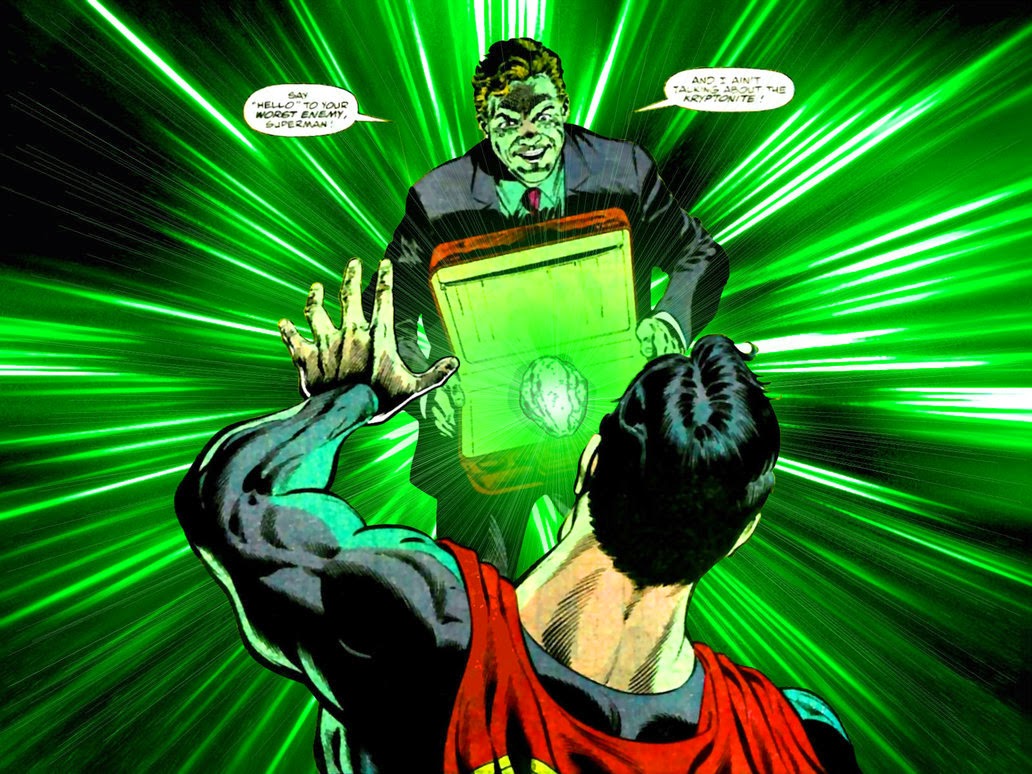
DC Comics, The Adventures of Superman

I’ve been without my CGM, Gigi, for close to a month now. It wasn’t a purposeful decision, but when my transmitter battery died, it’s been taking longer than expected to get a new one sent. So I’ve gone back to using my superpower more, for better or worse. But during these past few weeks, I’ve learned that my power is not perfect and indestructible. Rather, my superpower has a kryptonite. These dangerous forces weaken my power, they confuse me, and they ultimately make me unable to accurately predict what my blood sugars are. Perhaps T1Ds have different forms of kryptonite, different interfering forces, but below are the 5 that I have had to battle against:

1. Adrenaline. I remember before my big interviews or doing something crazy like going bungy jumping or even before a first date, constantly testing my blood sugar because the adrenaline rush that I felt mimicked the feelings of a low. I’m shaking, my heart is racing, am I excited or am I low?!

2. Anxiety. Similar to the rush of adrenaline, my feelings of anxiety often get mistaken for a low. Context is obviously important, but in the middle of the night when I can’t sleep and feel shaky and unsettled, there are times when it’s been nerves rather than a low.

3. Alcohol. I was warned about this one even years before I could legally drink. “Alcohol is dangerous,” my doctors would says, “You can’t always feel your lows when you drink.” While this hasn’t been too much of an issue for me, I do notice that I don’t feel my lows until they are much lower, so in the 50s as opposed to catching them in the 70s.

4. Other medications. I hate using my asthma inhaler even when I need it. After using it, I always get this shaky feeling and my heart races. But usually the desire to breathe normally wins out over potentially feeling low.

5. Nitrous oxide (laughing gas). When I got my wisdom teeth pulled out, my dentist turned on the gas and in less than a minute, I was telling him to turn it off. The feeling reminded me so much of being low that instead of the serene feeling that others get, it made me feel anxious, uneasy, and just uncomfortable.

Unfortunately, a few of my kryptonites are unavoidable and thus my superpowers are always in jeopardy. But part of being so vigilant and aware is also knowing when these weakening forces may be at work, and then taking extra precautions. This may mean more finger tests or checking my CGM more often. But in the end, I may not have the world to protect with my power, but I will do what it takes to protect the one life that is mine for the saving.


The Ticking Time Bomb

I held in my hand a ticking time bomb.

One of my worst fears was unfolding right before my eyes. But I was too late. The wheels were set in motion, I couldn’t reverse it, take it back, start over. I would have to let it play out and hope that I was wrong. 
This had never happened before. At least not to this scale. My heart rate started to quicken and I began to prepare myself for the worst.
I held in my hand my insulin pump. 
I had just finished an incredibly heavy italian meal including sangria, bread, appetizers, pasta, the entree, and dessert. I started the meal with a high blood sugar and counting the carbs in this meal, I knew it would be a lot. I had given the insulin. It was already in my body, there was no taking it back. I was uncomfortably stuffed, so full that the thought of eating more made me feel sick.
My CGM buzzed, but instead of telling me that I was high like I expected it to say, it was telling me that I was quickly dropping. I looked at the number, 190 and dropping fast. I pulled out my pump, there was an alarming amount of active insulin in my body, wayyy more insulin than I would need. I knew I was going to crash. It was only a matter of time.
Tick. Tick. Tick.
I pulled out a pack of fruit snacks, and although it physically pained me to eat more, I swallowed them down. I was determined to catch this low before it got bad. An hour later I was still dropping, but it seemed to be leveling off and I started to think that maybe the low wouldn’t be as bad as I thought. I was right around 70 and so I took another pack of fruit snacks.
Tick. Tick. Tick.
At 11 pm,  it hit me. In the span of 10 minutes, that 70 turned into 42 and then that 42 turned into 28. 
KABOOM!

 I was falling, crashing. I stumbled out of my room, downstairs and grabbed a small gatorade and another couple packs of fruit snacks. At this point the low had hit me full force, I couldn’t think straight, walk straight, or make much sense of anything around me. I’m moving out of my parents house in a week, but today I was glad that my dad was just a few doors down. I knew that I was in danger of passing out and just wanted someone to make sure I was okay. I knocked on the door. “My blood sugar is 28” I slurred, falling into bed. After confirming that I had already treated the low, my dad continued to ask me questions, making sure that I stayed conscious. The words felt heavy in my mouth, my sentences barely reflecting the thoughts in my head. I could hear myself slurring my speech. Eventually my sentences and speech became more coherent as I became more aware of my surroundings. I tested my blood sugar again, 67. 

I knew the worst was over and I made my way back to my own room, drenched in sweat from the low. My stomach hurt from all the sugar I had just consumed on top of my heavy dinner. And while I was sure I would probably be facing a high blood sugar in a few hours, I was relieved that the worst was over.
The low has come and gone, but was has managed to stick with me is that feeling of both impending danger, but also of the unknown. I’ve never experienced such a helpless awareness. It was like being in a runaway cart rolling down a hill, knowing that you would crash at the bottom, and not being able to stop it. And yes, sugar could and did slow it down, but I didn’t know how much would be enough to stop the crash, but not send me soaring in the other direction.

My insulin pump is my lifeline, but that night it truly felt like a ticking time bomb.