An Emotional Eye Exam

Last week I had my yearly eye exam. One of the many dangers of uncontrolled blood sugars is the damage that it can do to your eyes, such as retinopathy, therefore I make sure to get my eyes checked at least once a year. During my appointment and after my eyes had been dilated, the doctor took a series of pictures of the inside of my eyes. He pulled up the images on the computer.

“What are you looking for exactly?” I asked him.

“I’m looking for areas of breakage or bleeding in the blood vessels,” he replied. “Your eyes look healthy, I’m just going to check some of the areas that I can’t see in these images.”

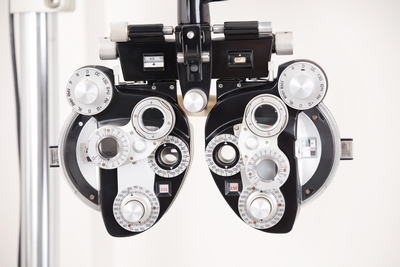
I sat upright in the examining chair, staring straight ahead as my doctor positioned the magnifying device in front of me. I could barely keep my eye open as a high intensity light was shone into my eye.

“Look straight ahead. Now look up and to the right. Up and to the left. Now look down.”

With one eye still recovering from the bright light, he moved on to the other. When he finished with that eye, I started to sit back, relieved that the worst part of the exam was over.

“Just one more second, there’s a spot that I want to check again.”

Wait, what?

“Sure, no problem,” I said, struggling to maintain my composure.

You know how there are some times in your life when time seems to slow down or stand still? Well, this was one of those times. I imagine that what I’m about to describe to you happens to many people in many different situations, when further tests are needed, when there’s a false positive, when there aren’t adequate answers, etc. What in reality took only about one minute seemed to last forever.

All at once I found myself caught in the middle of an argument between Logic and Emotion, and let’s just say Emotion got the better of me.

Emotion: What did he just say?? He needs to look again? Oh my god, I bet he saw something bad! How can this be happening?!

Logic: Let’s not get ahead of ourselves. He’s just looking, we don’t know for sure if there is anything wrong yet.

Emotion: Ah, what am I going to do?! I knew this day would come. My parents kept saying I’m too young for anything like this to happen, but no one can be certain. Here it is, my first complication from my diabetes! I can’t believe this!

Logic: Calm down. He hasn’t found anything yet, let’s wait to worry about it when we know more.

Emotion: What does this mean? What do I do? Is the damage reversible? Is there a treatment? Is it too late?? I’m too young!  Please, I’ll be better! Oh my god, am I going blind?!?!

This is the part where I imagine Logic slapping the hysterical Emotion across the face, like you see in the movies.

Logic: Pull yourself together!! It’s not doing you any good to jump to conclusions like this!

Emotion, recovering from the shock of just being slapped, was about to say something when the doctor intervened.

“Everything looks good, there’s no damage here.”

Logic looked smugly at Emotion, “See, what did I tell you?”

Relieved by the good news, I began to relax. My eyes are healthy, there is no damage from my diabetes. I was in fact, freaking out about nothing. However, I’m glad that I had that initial emotional response. I don’t want to be in denial or think that I am immune to these types of complications, even though I am young. Logic may be right, it’s better to worry about things as they happen, but Emotion helps to keep you concerned and vigilant. This exam reinforced that yes, this could happen to me. Every choice has a consequence, and if I want to continue to be in good health, I need to continue to make good decisions when it comes to taking care of my diabetes.

That is something I am sure both Logic and Emotion can agree on.

Time out!

Blogging while I am really low is probably not one of my brightest ideas, but I feel like writing in the moment. I have lots of thoughts swirling in my head and I’m not sure if they are going to come out coherent or not. I’m just going to go with it so bear with me.

So there I am, in the middle of today’s workout. I decided to do one of the workouts that I haven’t done probably in a few months. It is definitely a difficult workout, but is more about strength and not as intense and cardio focused as the others. I was a little over halfway through and started wondering why this workout seemed so much harder than I remembered. I kept needing to take breaks, I was starting to feel a little light headed, and my muscles were feeling extra fatigued. Have I really regressed that much since I last did this workout?

I paused the workout and stood up. Whew! The blood rushed to my head and everything went white and blurry for a moment. Maybe I better check my blood sugar. I walked upstairs and tested my finger. 49. Eek! No wonder I was feeling so weak.

Sometimes testing my blood sugar reminds me of when kids hurt themselves. At first they seem fine, but then when they see blood or the physical evidence of the injury, all of the sudden the tears start flowing and then it starts to hurt. Once my suspicions were confirmed with that low number, all the symptoms of the low blood sugar seemed to hit me at once.

I walked back downstairs, got some fruit snacks, laid down on the couch, and grabbed my laptop. So here I am, sharing this experience with you while I wait for my blood sugar to return to normal so that I can finish my workout. How do I feel right now? Besides the symptoms of the low, I’m actually pretty pissed off! I hate having to disrupt the flow of a workout to treat a low. My heart rate has returned to normal, which would be fine if I was actually finished. More than that, I hate having to consume more calories after I just worked so hard to burn them off. I know I’m still building muscle and getting stronger, but sometimes it feels like the workout was a waste when I have to treat a low in the middle or right after. It’s even more frustrating because this is the second day in a row that this has happened, when it hasn’t happened in months.

Alright, I think my blood sugar is back to normal now. Time to finish what I started. My diabetes is disruptive, frustrating, and annoying to deal with at times, but I don’t let it stop me from doing the things I want to do. And right now, that’s finishing this workout!

Numbers and Motivation

“From the day we are born, we are defined by a number. But is a number inspiring? We believe in a more powerful motivation. Not a number, but the way we want to feel.”

Numbers. Numbers play a large role in everyone’s lives. Time, money, weight, grades, rankings, health indicators (cholesterol, blood pressure, heart rate, etc.), distance, speed, these are all numbers. For some, these numbers are what determine their level of happiness, fulfillment, self-esteem, and worth. They are driven by these numbers, to work harder, to eat less, to prioritize, to sacrifice. The number on their paycheck or the number on the scale are a means to an end. What do they hope these numbers will help them achieve? Success, recognition, esteem, praise, happiness? Perhaps.

I like this commercial and campaign by Kellogg because it makes me think. It made me stop and consider how much of my own life is, on the surface, being motivated by numbers. The answer is a lot. This commercial made me ask myself, “but why do I care about that number?” I wanted a 90% on my test. Why? Because I wanted good grades. Why? Because I wanted to get a good job when I graduated. Why? Because I want to be able to make money doing something I enjoy. Why? Because I want to be happy. I started to ask myself why for a lot of the numbers in my life. I want to lose 5 pounds. Why? Because I want to look thinner and feel stronger. Why? Because it will help my self-esteem. Why? Because it will give me more confidence. Why? Well you get the idea.

Every time I asked myself why? I was getting to a motivation that was beyond just the number. The true motivator are those end feelings, it’s the numbers that help verify that you are reaching your goal. It is these motivations that Kellogg is trying to tap into in their commercial. But are they right? Are numbers themselves uninspiring?

I started to think about my diabetes. The day-to-day management of my diabetes completely revolves around numbers. Blood sugars, carbohydrates, units of insulin and ultimately my A1c number. From the moment I wake up to when I fall asleep (and even while I’m sleeping), my goal is to keep my blood sugar numbers within range so that ultimately my A1c number is low. Why? Well I want to avoid future complications and live a long and healthy life. I want the sense of accomplishment of knowing that I am finally “under control” after 10 years and I want the peace of mind that my future won’t be filled with negative consequences. These are all important motivators, but there is a fundamental difference between these types of “gains” versus the types of “gains” when you lose weight.

When you lose weight, there are tangible positive results. You physically look different. Your body shape changes, you may fit into smaller sized clothes, you have more energy, and you generally feel better. All of these physical changes can lead to positive emotional changes. More confidence, sense of accomplishment, higher self-esteem, etc. You truly are “gaining” a positive in the process of losing weight. Contrast that to my diabetes. Right now at this very moment I have no complications from my diabetes, I am at a healthy weight, my diabetes has not affected my eye sight, nerves, kidneys, circulation, feet, or any of the other potential negative effects it can have. I am at the “gain” from the beginning. I am working to maintain the absence of a negative, not towards the presence of a positive. I am in good health working to avoid complications as opposed to someone who may be overweight and is working towards better health. It is the epitome of prevention.

But prevention is a hard sell, especially to someone who is considered “healthy” in the beginning. It requires you to imagine yourself in the future, to imagine that your health has deteriorated. This is not a pleasant task and not something people want to think about. With so much to think about and do in the present, it can be hard to devote yourself to preventing something from happening in the future. As someone in the public health field, I know how essential prevention is, but the key is finding the right motivator.

So let me bring this back to numbers and what motivates me for my diabetes. There is no end to diabetes. When I reach my ideal A1c it doesn’t mean I’m cured and my diabetes disappears, it means that I now have to work and maintain it for the rest of my life. Although I am ultimately motivated by the thought of living a long, complications-free life, I have to take my diabetes day by day. And for me, this means that I am motivated by those numbers. Every day trying to ensure that they fall within my designated range. Am I defined by those numbers? Of course not. Are they the most inspiring? No. But they are what keep me on track everyday, they are necessary to my focus and to my health, they are my daily motivation.

But perhaps I can still take a page from Kellogg. Maybe I don’t need to wait 3 months until I see my A1c or the years that it may take me to reach my goal to start to feel that sense of accomplishment. Perhaps I can find motivation in the daily or weekly successes and in how I feel today. But more than that, maybe it’s reminding myself periodically that it isn’t just about the numbers on the screen, it’s about the purpose behind those numbers. It’s about staying healthy and living long enough to get married, raise my own family, and being able to some day play with my own grandchildren.

So take a moment to think about the numbers in your life and ask yourself, why? Perhaps you will uncover some deeper motivations to help you on your own journey.

The One I Can’t Live Without

If my relationship with Sugar were on Facebook, it would say “It’s Complicated”.

I’m not sure when Sugar and I first met, it seems like we’ve known each other forever. I hadn’t really paid too much attention to him when I was young, but I was always happy when he made an appearance. Sugar, or Sug for short, didn’t really come around too often. I think he was intimidated by my dentist dad and health conscious mom. He did however show up at birthday parties, holidays, and other special occasions. He and I always had a good time together, especially eating candy at the movies, cotton candy at the fair, and ice cream in the summer.

When I was diagnosed with type 1 diabetes, my relationship with Sugar began to change, and has been evolving ever since. I think that was the first time I really took notice of him. He had that certain mix of sweet, yet dangerous. He’d make you feel good, but left you wanting more.

I couldn’t stay away.

Sug and I began to spend a lot of time together. When we weren’t together, he was constantly on my mind. There seemed to be two sides to him. On the one hand, he could always make me feel better when I was feeling low. I needed him, and he was always there for me. But on the other hand, when I spent too much time with him, he’d make me feel sick.

I know that Sug can be trouble. In the past few years he’s started showing up at the bar where I’d be hanging out with my friends.“He’s coming over,” my friends would tell me, “and he looks good!” He would approach the table with an invitation that is hard to refuse. Tripple sec, sour, orange juice, and cranberry juice. He was coming on strong tonight! He’d clearly already worked his magic on my friends, sometimes he could be so sweet that it was hard to say no to him. I eyed my other options, water, beer, vodka soda, but his smell was intoxicating. The thing about Sug is that you always have a good time with him, it isn’t until later that you begin to regret your decisions.

We often get into arguments. I tell him that I don’t want to hang out all the time with him and his friend Cal O’Rie, that the two of them are trouble when they are together. He accuses me of cheating on him with Complex Carbs, even though he knows it’s not the same. In the end though, we always apologize, we both know that we need each other.

My friends and family often try to tell me that he is bad for me. “Look at how he makes you feel, your relationship with him just isn’t healthy.” Sometimes they are right, he is bad for me. But even though our relationship is complicated, sometimes they seem so hypocritical. “How can you say that to me? I know you guys hung out last weekend. I saw the candy wrappers in the trash!” I would say. When they would tell me that I was better off without him, it just made me want to prove them wrong. “You don’t know what you are talking about, we just shared that piece of cake together and everything is fine!” At least I wanted it to be. It truly is a roller coaster when we are together, but we face those highs and lows together.

I know my friends and family just want what’s best for me, but they don’t know him the way I do! Sure Sug comes over to their houses disguised as a tub of ice cream or chocolate, and they say he helps them through their hard times and pain, but it’s not the same. No one can make me feel better the way he does, no one can take away my lows as fast, no one knows what it’s like to need Sugar that badly sometimes.

It’s hard to say if Sugar and I should be together or not. I know that he helps me, but he has the potential to hurt me as well. We have one of those relationships that other people might not understand and may not always be perfect, but in the end, it’s pretty sweet.

Starting the New Year on a high…blood sugar

My blood sugar decided that it was going to start 2013 on a high note, a very high note.

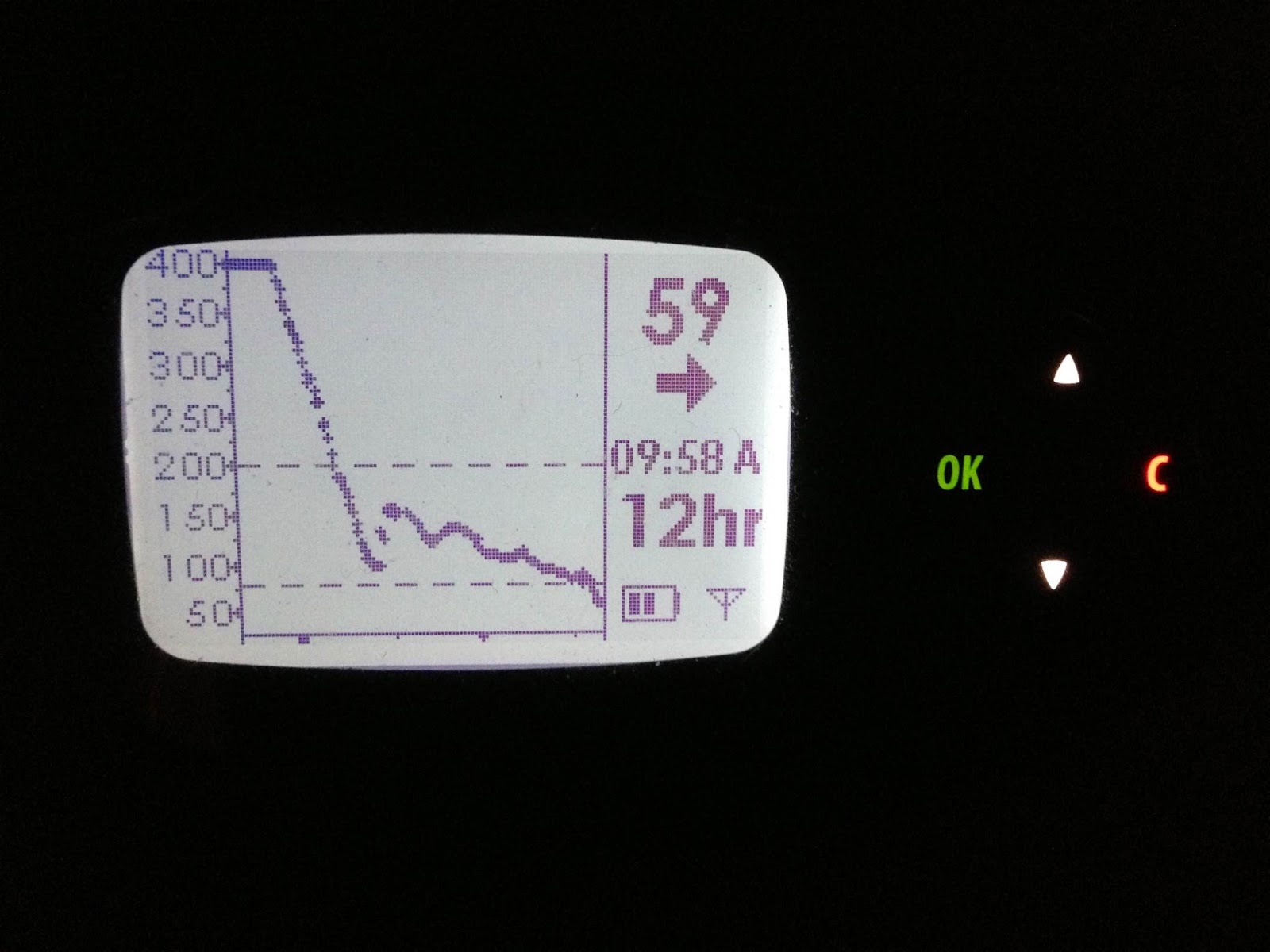
This story begins at about 10 pm, December 31, 2012. My friends and I were standing in a very long line to get in to the bar that we had bought a New Year’s Eve ticket for. Before we had left our hotel for the bar, I had tested my blood sugar and saw that it was far too high, somewhere in the 300’s. I had given insulin and assumed that it would at least be on its way down. While we stood freezing outside in this long line, I took out my dexcom and saw that my blood sugar was riding along the top of the CGM. I tested my blood sugar again and sure enough it was now in the 400s! (it should be around 110). This hasn’t happened in a very long time and I honestly couldn’t figure out why it was so high, I had given insulin for my dinner so it didn’t make any sense. Not only that, it had only continued to rise since I had given the insulin in the hotel, not a good sign.

I started to get concerned. Maybe my infusion set wasn’t working. Was I even getting any insulin? I was incredibly thirsty and now I really had to pee, two common symptoms of high blood sugar. We were still a far way from the front of the line. I felt around in my clutch. That’s when I realized that I had forgotten to put an emergency syringe in my clutch when I switched purses earlier that night. I also couldn’t access my insulin pump to quickly give more insulin. That night I decided to wear a tight skirt so my insulin pump was secured around my upper thigh, not somewhere I could easily get to while in public. I had some decisions to make and I had to make them quickly.
It was a huge hassle to get a cab from our hotel to the bar, with cab companies saying that wait times were over 2 hours. It was now past 10 and the bar only guaranteed our entry until 10:30. My friends would do anything for me so I knew they would go back to the hotel with me if it was absolutely necessary, but I hated the thought that we might not be able to get in by the time we got back. I thought about walking up to the bouncer and pulling the diabetes card so I could cut the line, telling him that I was having an emergency and needed to go to the bathroom to give myself insulin. Even though it was the truth, I still never really like to use my diabetes in situations like that. Plus the line had begun to move and now we were only a couple minutes from being inside.
My friends were getting concerned, asking what they could do to help. Unfortunately at this point, there wasn’t much anyone could do. Within a couple minutes we made our way into the bar and I headed straight for the bathroom. My only choice was to give some more insulin through my pump and hope that it worked. I figured that if in a couple hours, it hadn’t gone down, I would then take a cab back to the hotel to change my infusion set. I made my way to the bar where my friends asked if I wanted a drink. “Just a glass of water” was my reply. I was so thirsty and downed the water almost as fast as my friend’s took their shots. 
I continued to curse myself for not remembering to bring extra insulin and syringes and hoped that the insulin would begin to work. After about an hour, I saw my first sign of hope. The arrows on my CGM had started to point downward, meaning my blood sugar was starting to drop! What a huge relief!! Knowing that the insulin was starting to work meant that I could stay and enjoy the rest of the night with my friends.
Just as we counted down to the new year, I watched my blood sugar go down over the course of the night. It wasn’t until close to 2 am that it was once again stable in the normal range, 4 hours later! I woke up the next morning to low blood sugar, due to my attempts to lower it the night before.
The whole experience was kind of a slap in the face. I had gotten caught up in celebrating the New Year with my best friends and my diabetes has taken a back seat. I still don’t know what exactly caused my blood sugar to skyrocket, but my lack of initial vigilance and forgetfulness had almost cost me my New Year’s plans, besides its effects on my health. It was as if my diabetes was yelling, “I’m still here! Don’t you dare forget about me!” I ended up having a fantastic night with my friends and am so thankful that I was able to get my blood sugar back under control without having to leave, but the whole night was definitely a reminder of how much of a central role my diabetes plays in my life and how it can never be ignored, not even for one night.

New Year, New You

During my time in college, I used to dread Januarys at the gym. As someone who regularly frequented the gym between and after classes, I had figured out the best times to go when it was relatively empty and I could use the machines I wanted without having to wait for them. I developed a schedule and could usually count on completing my workout routine without interruption or delays.

That is until January came around.

Suddenly the gym became filled with people whose New Year’s resolution was to get in shape, lose weight, and work out more often. Instead of being able to jump on my usual machine, I now had to wait in line for the first available one. Don’t get me wrong, I love that people had suddenly decided to become healthier, I just wished that they didn’t all decide at the same time. By mid March however, the gym had mostly returned to its previous occupancy.

What happened? Pretty simple to figure out. By March, most of the people who were driven by their New Year’s resolutions to become healthier had begun to lose their motivation and eventually returned to their typical schedules. This phenomenon happens every year for all sorts of behaviors. Perhaps you begin the year with the intention to eat healthier, to cut back on smoking or drinking, to gamble less, save more money, to exercise more, the list goes on and on. But as each of us can probably attest to, many New Year’s resolutions go unfulfilled. I know many of mine have.

With the New Year right around the corner, I started to think about why. Why do so many of us fail at keeping our resolutions, especially when we are so motivated in the beginning? There are many reasons why this may happen, but I identified 3 major areas that I believe are critical components to any successful New Year’s resolution.

1. Scope
One of the biggest problems is that people set goals that are too lofty. Perhaps ideally you want to lose 20 pounds in the New Year, but that task can be daunting and overwhelming, especially if in the first few months you’ve only lost a few pounds. With such a large goal, it is easy to become discouraged in the beginning and not follow through. It’s important that your resolution is realistic. Saying that you want to lose 2 pounds a month may seem more surmountable than to lose 20 pounds. Even though you are setting a goal for the whole year, it becomes more manageable if you can break it into smaller monthly or even weekly goals. If you want to quit smoking or dipping this year, perhaps you begin by picking a number to cut back by each week. Setting these smaller goals can help make your overall resolution more attainable.

2. Concreteness
This brings us to the second problem. Resolutions need to be specific. What does it mean to exercise more or to eat healthier? The more specific and concrete a resolution is, the easier it is to follow through. Perhaps exercising more means doing at least 30 minutes of moderate cardio, 4 days a week. Eating healthier may mean incorporating at least one serving of fruits or vegetables into every meal. You want to save more money this year? How? Does that mean cutting back on the number of times you go out to eat? Does it mean spending less on clothes or electronics? Saying to yourself that you will only go out to eat twice a week gives you a concrete task to adhere to rather than an abstract objective.

3. Preparation
Without this third aspect, your resolution is doomed from the beginning, however many people do not spend enough, or any, time at this stage. This involves the planning and practicing of the new behavior. It involves identifying potential obstacles that you may encounter and planning for how you will overcome them. If you want to exercise more, do you have the right equipment? Do you have gym shoes, a gym membership, or routine for working out on your own? If you want to cut back on smoking or drinking, have you thought about what behavior will replace it? This may involve rearranging the environment you live in, removing triggers of a negative behavior and putting in things to remind you of your new positive behavior. Throw away old alcohol bottles, lighters, and junk food. Put your running shoes in a place that you will be sure to see them, leave motivational sticky notes around your house, keep healthy snacks in your car. Tell people about your resolution and find people that support you. Anticipate slips in your journey, but don’t let them become falls. Even with preparation and motivation, you may still resort back to old behaviors from time to time, but persevere! Behavior change takes time and the occasional detour is okay, just try not to stray too far off course.

During my public health education, we would talk a lot about how objectives to any program should be SMART. The same applies for your resolutions. Any resolution should be:

S: specific
M: measurable, meaningful, motivational
A: attainable, achievable
R: realistic, relevant, results-oriented
T: time bound

So time to take my own advice. What is my New Year’s resolution? I want to lower my A1c. Well that’s pretty abstract. I want to lower it by 0.5 in the next 6 months. Okay, that’s better, but how exactly will I do that? I suppose there are lots of things I could try, but based on my past behaviors there are 2 main areas that I want to improve on:

  • The first is that I want to be better at bolusing right after I finish eating, instead of occasionally having 15-30 minutes pass before I remember. How can I be better at remembering? Perhaps I can set reminders on my phone or move my missed bolus reminder closer to when I typically eat my meals. 
  • The second behavior is that I want to be better about sending in my glucose numbers to my endocrinologist when I notice that my numbers may need adjusting. For me this means finally putting the CGM software on a computer so that I can download all the data and then email it to my doctor. It also means remembering to do this every few weeks. Perhaps I can also set a reminder on my phone every 2-3 weeks to email my doctor my glucose numbers. 
Hopefully by accomplishing the above 2 behaviors, it will help to bring my blood sugars under tighter control which will ultimately lower my A1c. By coming up with concrete steps that I can do to accomplish this goal, I feel more confident that this year’s New Year’s resolution will not go unfulfilled.

What about you? Have you thought about what your resolution is going to be? Whatever it is, just remember to be SMART. 
Good luck and Happy New Year!

Happy Holidays!

I love the holiday season. I love waking up to a fresh layer of snow blanketing the grass and trees in a sparkling white. I love seeing the trees, streets, and buildings twinkling with colored lights. I even love braving the crowded malls and stores in search of the perfect gift. For me, the holidays mean spending time with family, getting together with friends, and enjoying delicious food. Despite my affection for this time of year, winter and the holidays are also a challenging time. This may be true for a lot of people, but I find it especially hard at times as a diabetic.
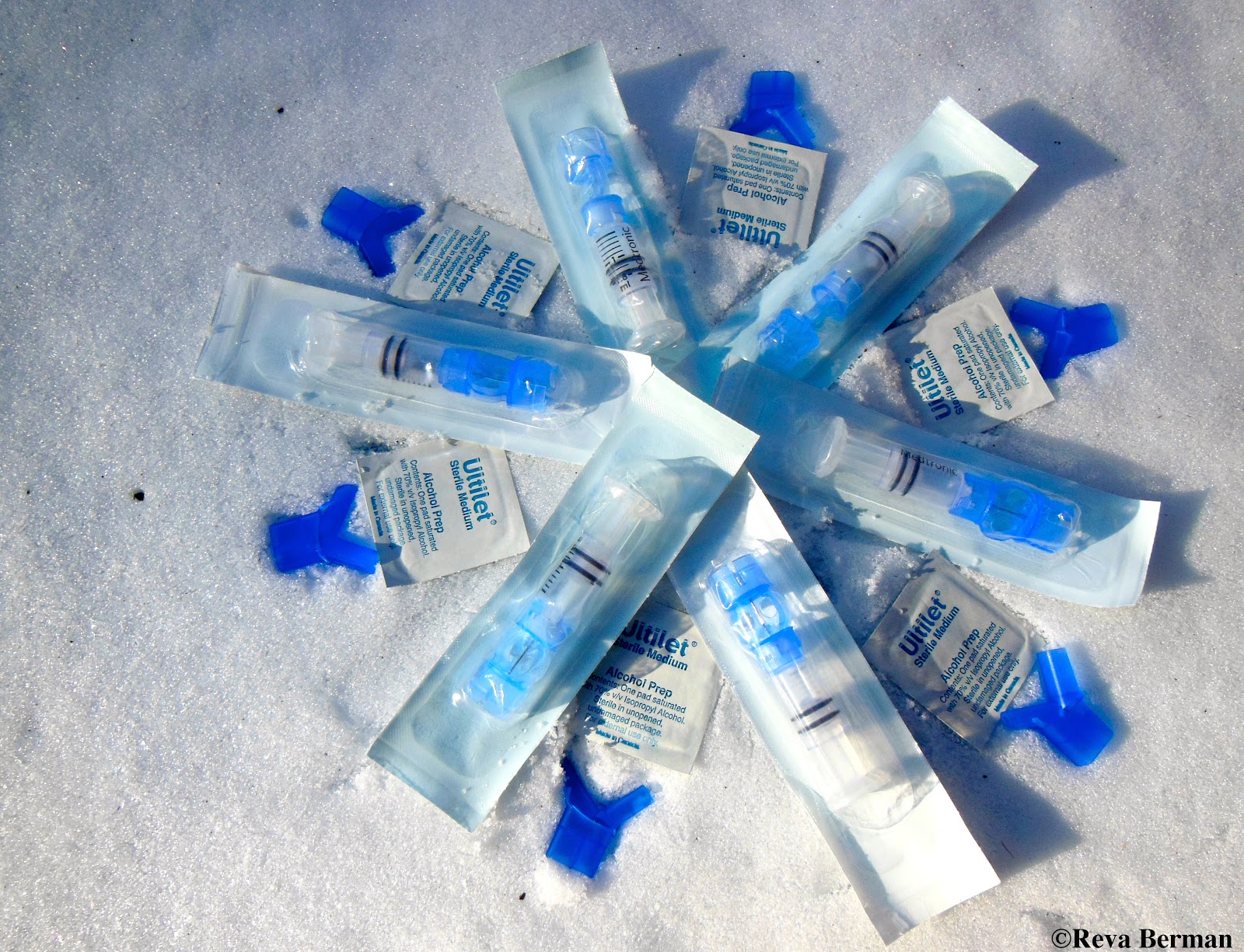
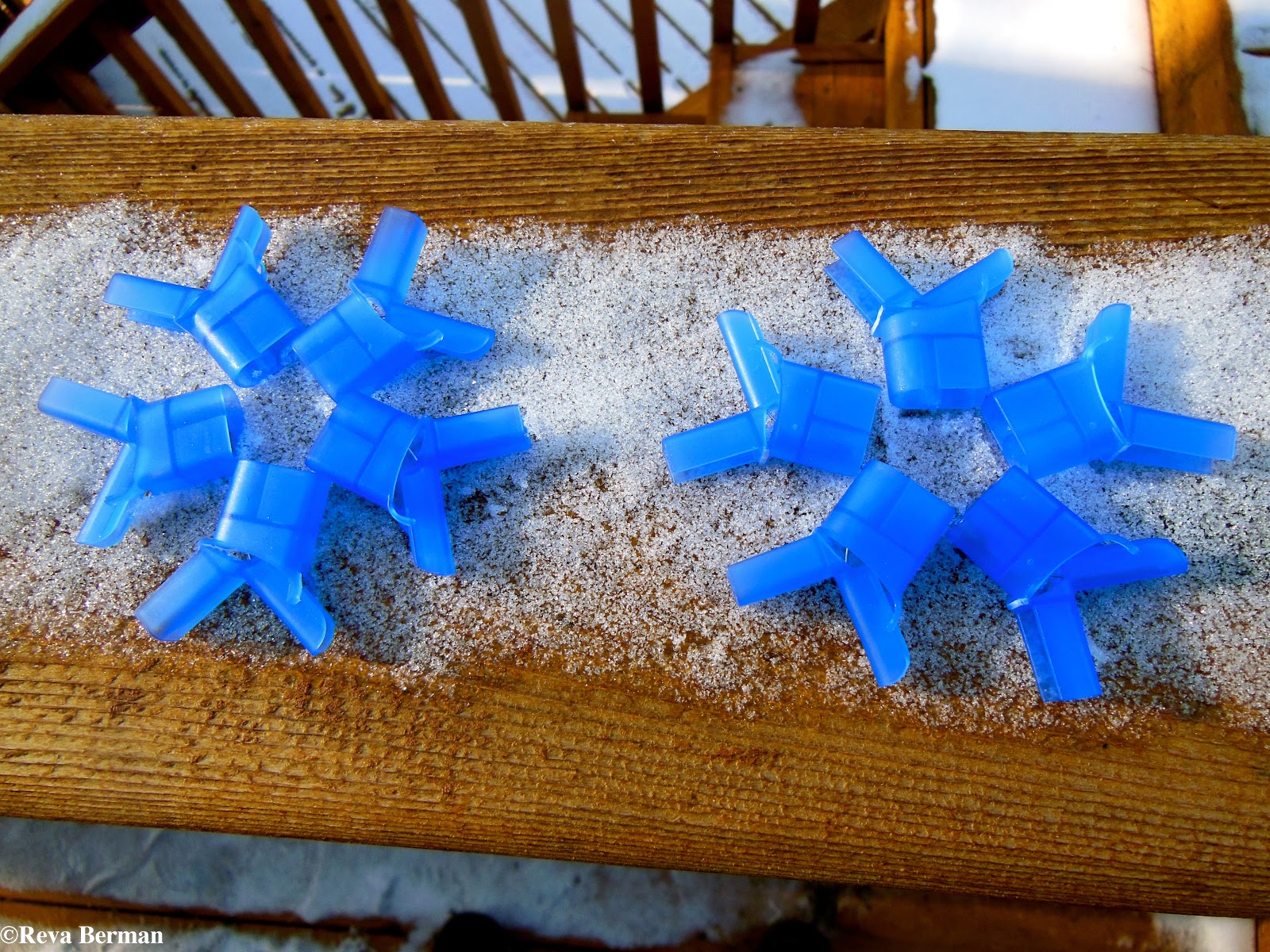
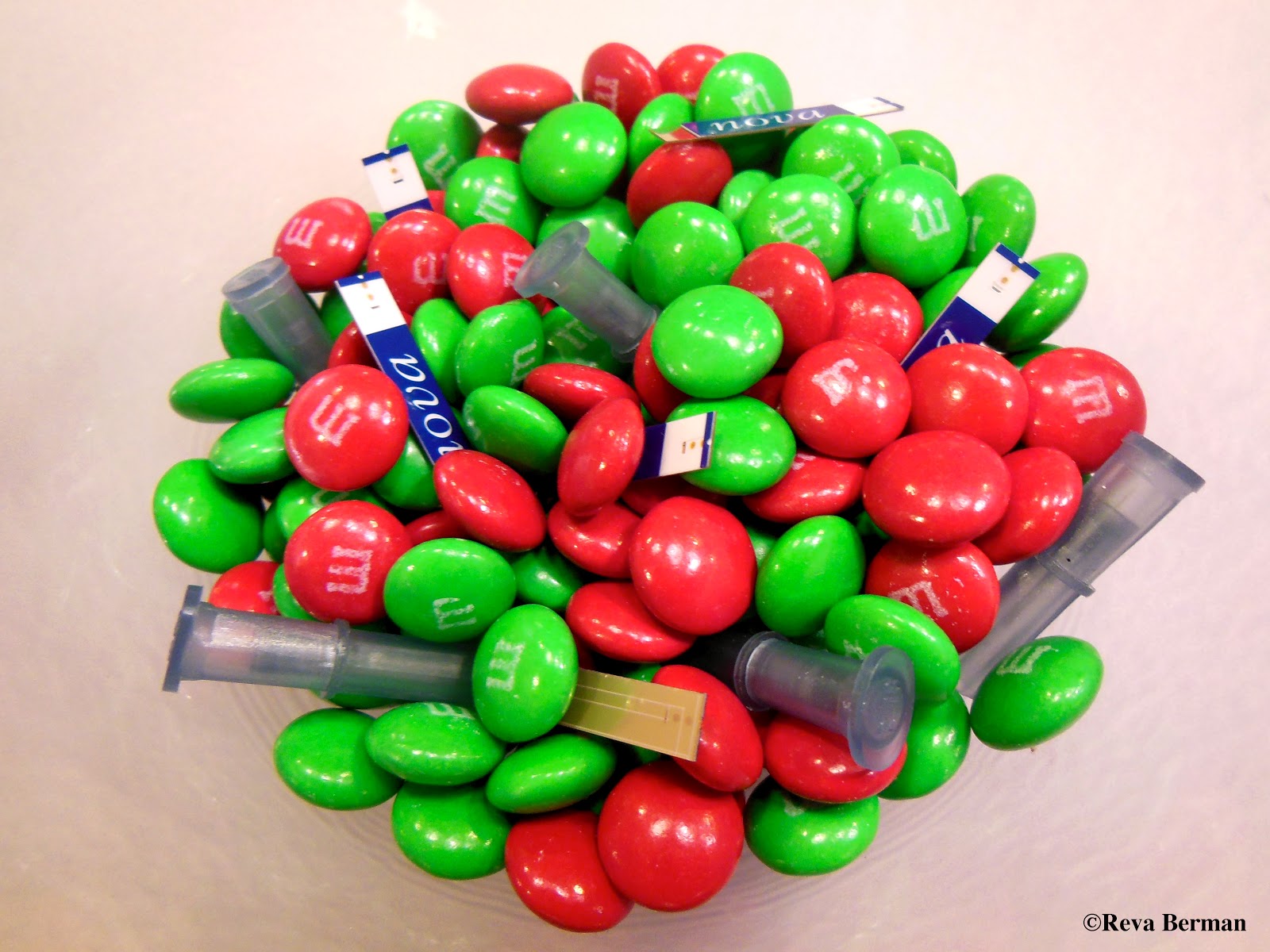
Being a visual person, I decided to create a series of photographs, my interpretation of the holidays through the eyes of a type 1 diabetic. Inherent in these photos is the juxtaposition of beauty and pleasure with disease and discomfort. Sweetness and enjoyment isn’t without careful deliberation and vigilance.
Cold weather brings challenges with blood sugar testing. When the temperature drops and your fingers get cold, it becomes even more difficult to get enough blood to take a reading. Sometimes I think my fingers might as well be covered in snow with how little circulation there is in the winter cold.
I love sweets. I’ll admit it. Being diabetic doesn’t necessarily mean that I can’t enjoy these treats, it just means knowing exactly how many carbs I’m having, giving enough insulin to cover it, and anticipating spikes in my blood sugar. That being said, it’s hard for me to look at candy, alcohol, or baked goods without thinking about calculating insulin, counting carbohydrates, and testing blood sugars.
The holidays are about remembering and appreciating what is truly important in your life. That may mean ignoring those questioning looks when you grab a brownie or excuse yourself to check your blood sugar. It’s about remembering everything you have to be grateful for instead of focusing on the inconveniences.
 
Warmest thoughts and best wishes for a wonderful holiday and a very happy, healthy, and prosperous New Year to you all! 

Let’s give this a shot

The first insulin shot that I gave myself was motivated out of anger. It wasn’t anger at my diagnosis or even my diabetes, at least not on the surface; it was anger towards my mother. I was just over 12 years old, a pre-teen caught up in the drama of middle school. I can’t even tell you what I was so mad at my mom about, but that fury led me away from our heated discussion, down the hall and into my room, slamming the door behind me. I lay there brooding in my bed, watching the fan above me spin in slow circles. I knew my mom would try to come talk to me, but in that moment, I was determined not to see her.

Unlike most moody teenagers, I now found myself in an even bigger predicament. I needed my mom in order to eat, a loss of independence I was still grappling with. Having only been diagnosed with Type 1 Diabetes a few months earlier, I still relied on my parents to give me my insulin shots before my meals. Suddenly I went from slowly gaining my independence and more responsibility to having my every move micromanaged and being treated like a child.
In that moment, all I knew was that I was going to be stubborn. I was not going to see my mom, not even so she could give me my shot.
I was angry. But now it wasn’t just at my mom. I was angry at my loss of control, my loss of my independence, and in a way, the loss of my freedom. I had had enough; I was determined to take back control of my life.
I was going to give myself my insulin shot.
I had always hated needles, closing my eyes whenever receiving a shot. The unease still remained even after dealing with needles on a daily basis. I got up from my bed and opened the dresser drawer. With the boxes of syringes, test strips, needles, alcohol swabs, and other supplies, the drawer looked like something out of a hospital room. Sometimes I still couldn’t believe this drawer was for me.

I pulled out the insulin vial, alcohol swab, and a syringe. After watching my parents perform this task hundreds of times, I knew exactly what I needed to do. The rubbing alcohol felt cool against my skin as my heart began to race. This was really happening. I stood there pinching my skin with one hand, holding the needle with the other. I can still remember the conversation in my head as I attempted to coach myself through the endeavor.

 “Come on, you can do this! It probably won’t even hurt. Well, it might hurt, but if it does, it’s only for a couple seconds. Do you really want to have someone give you a shot every time you need one? Of course not! They aren’t the ones with diabetes, you are. This is your responsibility. Okay ready? One, two, three…now. Now. Now…”
Fifteen minutes passed as I just stared at the needle. Nothing ever looked as sharp and menacing as that needle poised against the skin of my stomach. My hands were shaking and I was light headed from holding my breath in anticipation. I could practically hear my heart beating outside of my chest. But I knew I was too close to quit; I knew I had to do this.
The first insulin shot that I gave myself was motivated out of anger. But anger was the last thing on my mind when I raced from my room, down the hall, and into my mother’s arms, hugging her in triumph. 

The Travel Bug

I love to travel. As I write this, I’m sitting on a plane on my way to Boston. Whether it’s to a new city or different country, I love the experience of visiting a different place. There is so much to absorb when you go somewhere new; food, fashion, language, culture, art, music, architecture, and scenery, just to name a few. I’ve traveled far distances (Australia, New Zealand, Nepal), for long amounts of time (6 months in England) and on many different forms of transportation (planes, trains, buses, boats, cars). While there are inherent challenges to any type of traveling, traveling with diabetes does present some additional obstacles.
The first is packing. Between my meters, insulin pump, and CGM, I need to travel with a lot of supplies. I always take more than I think I need. For instance, if I will need to change my infusion set twice while I’m gone, I’ll bring at least 2 extra sets with me, if not more. You never know if there will be something wrong with the supplies so it’s always better to have extra. I also always bring extra test strips, batteries, syringes, tape, insulin, and of course fruit snacks. I try to fit most of my supplies in my carry on bag, and not a checked bag. If I can’t fit it all, I at least have enough to last a week. I’ve had luggage get lost and not be returned for days, if I didn’t have my supplies with me, I don’t know what I would have done.
Most of the time I don’t have any trouble going through airport security. I usually disconnect my pump and keep it in the bin when I go through, but I’ve also left it attached and just explained what it was and that it was connected to me, and everything was fine. The only time I was ever questioned was when I was flying to Nepal. I had to explain why I had syringes in my bag. Once I explained that it was for my diabetes, there wasn’t any problem.
The last part about traveling is one that I often forget about, changes in time zones. For places where the time difference is 3, 6, 12, or even 14 hours, it’s very important to change the time on my meters and pump. Since I get different amounts of insulin throughout the day and have different carb ratios, left unchanged, things can get very off schedule and mess with my blood sugar levels. I made the mistake of not changing the time on my meter while I was on vacation in Australia and New Zealand. It wasn’t until I had my appointment with my endocrinologist when I got back a week later that I realized that all my readings would be useless since it was completely off schedule. What was a reading taken at 2 in the afternoon showed up as 4 am. It was hard to make any adjustments when everything was so off.
Traveling can be stressful, exhausting, frustrating and overwhelming. That alone is enough to disrupt my blood sugar levels. Even with as much traveling as I’ve done, I still get anxious from time to time with figuring out logistics. One thing that I think every traveler learns is to be flexible. Things happen unexpectedly when you travel, there are delays, cancellations, miscommunication, wrong directions, etc. I’ve learned to become flexible with my diabetes as well, sometimes having to change my infusion set in bathroom stalls or treating a low while rushing through a busy terminal.
When you need your supplies to survive, you learn to make them a priority. They are at the top of every packing list, first into any bag, and always on my mind. Whether I am leaving my house, hotel, or walking through airport security, I always do that awkward pat down, except I’m not checking for my wallet or phone, I’m making sure I have my insulin pump and meters.
I don’t have the option to leave my diabetes at home, but I refuse to stay home with it. I’m going places, and you better believe that it’s coming along for the ride!