A Little Perspective

I had a different post for today, but I couldn’t go through with posting it. In light of current events, it just seemed so trivial. This past week I was informed about the tragic and untimely death of two people that I went to high school with. I can’t even fathom the grief and shock that their family and friends must be going through. That kind of pain and loss is unimaginable and my thoughts and prayers are with them during this difficult time. After hearing this devastating news, it seemed that everything else I heard was just more sad and horrible news. A brain tumor scare, a cancer diagnosis, the slow decline of a family member’s friend, relationship drama, car accidents, the list goes on. Perhaps I was just more acutely aware of these events because of the news of the first, perhaps every week has this much bad news, but it seemed so overwhelmingly negative. It’s all so hard for me to process, I don’t even think I can put into words how I’m feeling, only that I am so sorry that there is so much suffering in this world and I wish it didn’t have to be this way.

The one thing this week truly gave me though, is perspective. Yes, I may have a chronic disease, but it’s manageable and it’s not a death sentence. I’m still in good health, I have friends and family that love me, and I have so much to be grateful for. The events of this week made my own daily struggles and frustrations seem so small, and rightly so. It’s important to have that kind of perspective. It reminds you to not take anything for granted, to truly live each day to the fullest, to live in the moment, and to cherish the people in your life. It didn’t feel right to spend today’s post talking about low blood sugar or other inconveniences. Today is about taking a step back from your own life, stepping outside of your own daily hassles, frustrations, and problems and acknowledging the bigger picture. It’s about realizing that although your worries may seem great, there is someone else with far greater worries. It’s about recognizing the struggles and suffering of those around you and being there for them, even just in thought.

It’s so easy to get caught up in your own little bubble, but I’m learning that it can be beneficial to take some time to step back and to put your life and the problems you may be facing in perspective. Perhaps for a moment, they won’t seem quite so bad.

“I was angry, for I had no shoes. Then I met a man who had no feet.” ~ Chinese Proverb

The Shift

This week, four seemingly disconnected events aligned to cause a shift in consciousness. You may be thinking, “Reva, what the heck are you talking about?!” Well, allow me to elaborate.

Event 1: The Conversation

This past weekend, I had a conversation that clearly had a more profound effect on me than I initially realized. We were conversing about a raw food diet and all the benefits of adopting such a diet. While you will never be able to convince me that a raw foods diet is a cure for type 1 diabetes (no matter what some documentary says), I absolutely see the benefits of that lifestyle. It is very true that a raw foods diet would require much less insulin and would drastically reduce spikes in blood sugar. Not eating breads and processed foods that immediately get turned into sugar in the body is very beneficial for controlling blood sugars. When the conversation ended, I was left with the thought that perhaps I could benefit from a less carbohydrate heavy diet, although I still don’t think a raw food diet is quite for me. While I tend to eat pretty healthy, I still use a lot of insulin for the food I eat or to chase high blood sugars. Maybe it is time to see what happens when I cut down on the carbs.

Event 2: The Documentary

My mom and I sat on the couch, surfing through movies to watch. We found ourselves in the documentary section and settled on a movie called Hungry for Change. The documentary “exposes secrets that diet, weight loss and food industries don’t want consumers to know about: deceptive strategies designed to keep you coming back for more.”

While I think some of the claims in the movie are overstated and a bit sensationalized, the general idea of the documentary is quite compelling. Essentially, we are “overfed yet undernourished”. We are getting plenty of calories from the foods we eat, but the calories are empty and leave our body unfulfilled and still craving nutrients. But the thing that struck me the most in the documentary was the talk about the “low-fat”, “fat-free”and “sugar-free” foods. Basically that these foods may have zero fat, but they are full of sugar and as soon as you eat them, they turn into sugar in your body that later gets stored as fat. They also are full of artificial sweeteners that are not easily processed by your body and can leave you craving for more. The thing is, I thought that I was being healthier by buying the low-fat version of foods and being diabetic, sugar-free seemed like a good option. If you were to open my fridge you would find: low fat sour cream and cottage cheese, light laughing cow cheese, light greek yogurt, light dressings, sugar free jello and puddings, 100 calorie english muffins and 35 calorie light wheat bread, light lemonade, fat-free half and half, and even low fat wheat thins and granola. Basically my fridge and pantry are filled with the low-fat, sugar-free options! When the documentary was over, I walked to the fridge and pulled out some of these foods and began reading off the ingredients. Half of them I have no idea what they are. It was then that I decided that perhaps eaten in moderation, it may be worth the extra calories to not be putting all the artificial ingredients into my body. Ingredients that my body was not made to be able to process, ingredients that are probably doing more harm than good, and ingredients that are essentially making me more unhealthy when that is the complete opposite of my goal.

Event 3: The Scale

I consider myself a healthy person. I am a healthy weight, I eat well, and I exercise often (5-6 days a week). However like most people, I have a few extra pounds that I would love to lose. In an effort to achieve this, I upped the intensity of my workouts and began tracking my foods and making a conscious effort to eat healthier and cut down on the extra calories. However, in the last 3 weeks, I’ve watched as my weight increased, rather than decreased. It’s true that this may be attributed to gaining muscle, which weighs more than fat, but it seemed like something else. Over the past year, even though I am a consistent exerciser, my weight has remained relatively constant. I realized that if I really wanted to see a change, I would need to change my diet.

Event 4: The Holiday

In the back of my head, these events were telling me “eat less carbohydrate heavy and processed foods, eat more vegetables and naturally low fat and low sugar foods”. What better time to cut down on carbohydrate than the week of Passover?? It was perfect timing. This week, to celebrate the Jewish holiday of Passover, Jews refrain from eating unleavened foods, this includes wheat, barley, oats, rye and spelt. This means no breads, pasta, cereals, cookies/cakes, rice, oatmeal, basically all the foods high in carbohydrates. Bread is replaced with matzah and matzah meal can be used to cook various foods, but honestly, I’m not a huge fan of matzah anyway. Here is the perfect opportunity to see how my body feels when I’m not eating those high carb foods.

The Shift in Consciousness

I’m not about to completely change my diet. I’m not only going to eat raw foods, I’m not cutting out all carbohydrates, and I’m not switching to all full fat, full sugar foods. I’m also not going on a “diet”. I’m not restricting the foods that I’m eating. But here is what I am doing. Instead of taking away foods or restricting them, I’m adding foods to my diet. However, I’m adding healthy, natural, nutrient-rich foods. I’m adding more green vegetables, more fruits, more nuts, and more foods with natural fats like avocados. As I add these healthy foods that my body craves, I’m hoping that I will become less hungry for processed, artificial, and high calorie/fat foods. I’m drinking more water and making vegetable juices and drinking less diet pop and artificially sweetened juices. While I’m not replacing all my low-fat or fat-free foods, I’m making sure that the yogurts and cheeses and breads that I do buy are not filled with artificial ingredients and sweeteners. I’m giving my body the foods that it needs to function properly in a way that it can easily digest and use. And I’m working to lower the amount of insulin that I need in hopes that I can help to further stabilize my blood sugars.

None of this health information is new to me, I’ve been hearing it for years in my classes, in the news, from studies and even from other people. However it was the coming together of these 4 events that was the tipping point to motivate another healthy change in my life. I know it won’t be easy, and I know I’ll still have that piece of pizza or ice cream from time to time, but I also know that I am on a path to a healthier me.

Join me?

Why is Diabetes so Funny?

It’s taken me a while to complete this post, as I figured out a way to express what I think without sounding hypocritical. Humor to me is really important, I use humor all the time in relation to my diabetes (as evidenced here, here, and here). However, to me there is a fundamental difference when someone who has diabetes makes a joke or uses humor versus when someone who doesn’t have diabetes does. Where one is socially acceptable and is a benefit of the in-group status, the other can be viewed as insensitive. So this post is not talking about humor as used by a PWD (person with diabetes) or those close to them as a coping mechanism, way to show ownership of their disease, or as a means to live a normal life. Instead, it is addressing the way that humor and diabetes is used by society at large, and the negative implications of these portrayals and statements. 

There are a lot of ignorant, misinformed and insensitive people out there. Jokes and comments are made about everything and everyone, it’s just part of life and you learn to roll with the punches. However, I’ve noticed that compared to other illnesses and diseases, diabetes often ends up as the butt of many jokes or is used to get a good laugh. We don’t hear many jokes about cancer, HIV, lupus, heart disease, or MS, so why is diabetes so funny? No seriously, why is it?

Me at a Cadbury chocolate
factory in England

On more than one occasion I’ve heard people say comments similar to “I’m going to have diabetes when I finish eating this” or something like “I feel like a diabetic in a candy shop”. I’ll admit, I’ve made my fair share of jokes at my own expense. A diabetic in a candy factory? I can understand why people think it’s funny. Diabetes has become synonymous with too much sugar. But let me tell you a little secret, I did not get type 1 diabetes from having too much sugar and sugar is not my enemy. Even type 2 diabetes isn’t caused by simply eating too much sugar. Obesity or being overweight is a risk factor, but other risk factors such as family history, ethnicity, and age also play a role. 

Too often people make comments that they think are funny without considering the effect it might have on others. A few days ago, I saw a status on facebook illustrating this point. The status was about a particular college basketball team making it to the “Sweet Sixteen” for March Madness. The status read, “(school’s name)’s so SWEET it just gave me diabetes”. I suppose the person was trying to be clever, but referencing a chronic disease shouldn’t be funny. I know no one is trying to be malicious, but those kinds of comments can still be offensive and not to mention are inaccurate.

And that’s not the only time I’ve encountered a situation like that. I was at the bar when a guy ordered a round of shots for us and some friends:

Me: Wow that shot was really sweet.
Guy: Yea, too many of those and you’ll end up with diabetes.
Me: It’s okay, I already have it so we don’t need to worry about that.

The look on the guy’s face was priceless as he attempted to back track and sputter out an apology. I let him squirm for a little before telling him that I have type 1 and it was fine. But I seriously hope he thinks twice next time he makes a comment like that.

I’m not saying that everyone needs to be an expert on diabetes, but with a total of 8% of the population of the US having either type 1 or type 2 diabetes, it doesn’t hurt to be a little knowledgable about a condition that unfortunately is only continuing to rise in the United States (if current trends continue, 1 of 3 adults will have diabetes by 2050). At the very least, we can try to stop the spread of misinformation and myths, many that seem to abound in the media and popular television (that in itself is a post for another day).

No, Billy probably just has a stomach ache,
a sugar rush, and maybe a cavity.

So again I ask, why is diabetes so funny? Is it because people downplay the seriousness of the disease? (It’s among the top 10 leading causes of death in the US according to the CDC, sounds pretty serious to me). Is it because so many people have it themselves or know someone who does? Is it because it’s often associated with being overweight? Is it because type 2 is often preventable? (Type 1 unfortunately is not). I don’t have an answer. Perhaps humor is an acceptable mechanism or motivator to help people prevent type 2 diabetes, although I seriously doubt it.

But here is what I ask from you. Please think twice before you add the hashtag #diabetes under that picture of the chocolate cake or of you eating the giant ice cream sundae or pile of candy. Take a minute and consider the unintended consequences of what you say before you make statuses or statements like the ones mentioned earlier. Jokes about diabetes can be funny, but just be aware that they may not always be viewed that way by everyone, they also may be hurtful or even victim blaming.

All I’m saying is that to me diabetes isn’t a joke, it’s my life. I think a lot more education and awareness is necessary for people to truly understand what it means to live with diabetes, type 1 and 2. That way perhaps people will be a bit more conscious about the comments they make about diabetes and what effect these comments may have on others.

What Explains You?

What do you do?

Four simple words that I never thought I would come to dread as much as I do. A harmless question when you have a job, but when you are unemployed looking for full time work, this question takes on a whole new dimension.

So what do you do, Reva?

Well, I have an MPH in Health Behavior and Health Education, but I’m currently looking for full time employment. I’m interested in health communication, innovative approaches to health promotion programs and campaigns, chronic disease management, worksite wellness, etc.

I always answer this question in a similar manner because every encounter becomes a networking opportunity. And this is what people are really interested in when they ask that question, right? Even though the question itself is so vague, don’t they want to know what you do for a living? It’s implied. But why?

What do you do?

When we ask someone what they do, it’s in part to make small talk, but I think we also assume a person’s job says a lot about who they are. In many cases this is in fact true. My friend is an adoption worker. This says that she is a very altruistic, caring, and persistent person. My lawyer friends? Driven, confident, articulate, and critical thinkers. But what a person does for a living does not necessarily define or describe who they are or who they aspire to be, something that is especially true as people begin their careers. My lack of full time employment does not mean that I don’t do other things. I blog, I volunteer, I job search, I have part time work, I exercise…and I manage a chronic condition. Our identities are based on so much more than our jobs.

My identity? I am American. I am Jewish. I am a woman. I am a Public Health Professional. I am a young adult. I am a Wolverine (Go Blue!). I am a daughter, sister, and friend. And I am a diabetic. None of these alone describe who I am. I am all of these things. Kerri Sparling of Six Until Me has a mantra that encapsulates this perfectly. She says, “Diabetes doesn’t define me, but it helps explain me.” All of these identities, as well as a person’s job, does not singularly define a person, but it does help explain who they are.

So I started thinking about alternatives to the question, What do you do? Although more to the point, they would be a bit awkward in a casual conversation or in a first encounter with a person.

So tell me, what defines you?
What do you do now, and what do you hope to do in your life?
If you could have any job, what would it be?
Nice to meet you. What makes you happy in life?
What are you doing in your life now that is helping you to become your ideal you?
Is the life you’re living the life you imagined?
What are you passionate about? Is the work you do related to your passion?
I know what you do. But what do you like to do?

Alternatively, I’ve thought about answering that question more broadly. What do I do? I work to inspire people to make positive health behavior changes in their lives and to live their lives to their fullest potential.

I’ve yet to ask any of these questions or to use the above response, but I’ve definitely thought about it. So far I’ve kept to social conventions and norms and have continued to use my standard response. However, this period of job searching has truly made me examine what does and doesn’t define and explain me.

What about you? What explains you?

My Diabetes Gave Me That

My rudeness? Contrary to what it looked like, I was not texting during the movie. I was giving myself life sustaining insulin for the popcorn I had just consumed.

My tardiness? I was on my way out, but then I realized that I didn’t have enough insulin left in my pump to get through the day so I had to stop and change my infusion set before I left.

My irritability? I’m sorry, that was not personal, that happens sometimes when my blood sugar drops so low that I can barely think straight.

My tiredness? It was a rough night, being continuously woken up by my CGM vibrating on my nightstand for a high blood sugar, and then low, and then high again.

My cautiousness? I want to be as spontaneous as you, but I have a lot of considerations when it comes to my health.

My frustration? It’s hard not to be some days when despite your best efforts, your blood sugar just doesn’t want to cooperate.

My fears? There are so many unknowns, the potential for complications, and the worry that your best effort may not be enough.

My anger? You try living with this disease 24/7. Some times it gets to you. You think “why me?”, “it’s not fair.” Life isn’t fair but you learn to make the best of it.

My annoyance? That happens when you talk about diabetes without bothering to differentiate which type you are talking about, contributing to the confusion and misunderstanding between Type 1 and Type 2.

My awareness? From detecting how my body feels to predicting future situations, diabetes brings a heightened sense of perception, vigilance, and alertness.

My sense of responsibility? I developed that young. I had to.

My persistence? No matter what happened the day before, you don’t give up, you keep going and keep trying. Today is a new day, but it’s still a day with diabetes.

My determination? I want a long and healthy life, so I will do what it takes to make sure that happens.

My empathy? I may not know you or even exactly what you are going through, but I know what it’s like to struggle, I want to be there for you the way others are for me.

My patience? Change takes time. Hard work pays off, but sometimes it can take months before you see any results, but it’s still worth the effort.

My discipline? You just have to be, there’s so much to do and remember. You need to have a high level of self-control.

My courage? When you have no other option, you learn to face your fears and you become stronger because of it.

My openness? We all have challenges and obstacles that we must face in our lives. By talking about it and being open, we can learn from and inspire one another.

My quick thinking, flexibility, strength, preparedness, understanding, perspective, knowledge, focus, advocacy, direction, and hope?

My diabetes gave me all of those too.

While there are many negatives and hardships living with diabetes, there are also many strengths. Sometimes you just have to look a little harder to see them.

“Diseases can be our spiritual flat tires – disruptions in our lives that seem to be disasters at the time but end by redirecting our lives in a meaningful way.”  ~Bernie S. Siegel, American writer and retired pediatric surgeon, who writes on the relationship between the patient and the healing process as it manifests throughout one’s life

Taking an Alternative Approach

I was raised somewhere between the Eastern and Western worlds. No, not physically. I’m talking about philosophically. My dad is a family dentist and forensic odontologist and is a firm believer in Western medicine. More than that, my dad’s approach to the world involves logic, science, and reason. Things are true because of rigorous testing, scientific proof, but still with a healthy amount of skepticism. For him, there is a logical and scientific answer to most happenings in the world.

My dad’s view of the world contrasts that of my mom’s. My mom takes a more spiritual approach to life. She practices and teaches yoga and meditates twice a day. She believes in karma, chakras and energy flows, and the power of the universe. While my mom does not reject Western medicine, she takes a more holistic approach to the body, following many of the teachings of Ayurvedic medicine. When my dad says to take an ibuprofin, my mom suggests natural herbs and foods or yoga positions.

I feel fortunate to have been exposed to and raised within this dichotomy of viewpoints and beliefs. It has led me to be open and accepting of alternative medicines and approaches to wellbeing. I accept that there isn’t always a logical explanation for everything, sometimes you have to suspend your disbelief, to not think in black and white terms. However, I still retain some skepticism, and an appreciation for Western medicine and all the advancements it has brought.

While accepting of the benefits of Eastern medicine, I have traditionally viewed my diabetes in strictly Western medical terms. My pancreas doesn’t work, therefore I give insulin to convert the sugar in my body into energy. I thought it was ridiculous when I would read that acupuncture or certain herbs could lower blood sugar or “cure” type 1 diabetes, there is no cure. However, I’ve recently started questioning how I can believe that alternative medicines can be helpful or beneficial in some contexts, but not in others. While I do not think that these alternative medicines are a valid cure for diabetes, I am becoming more open to the idea that certain herbs may play a role in how the body absorbs and responds to glucose. I have therefore decided to see if there is some value in the Ayurvedic approach to diabetes management.

Without going too much into it, in Ayurvedic philosophy, the five elements (earth, air, fire, water and space/ether) combine in pairs to form three forces or interactions called “doshas”. The doshas are constantly moving in dynamic balance, one with the others. Every living thing in nature is characterized by dosha. Basically illness or disease happens then when the doshas become out of balance in a person. There are three active doshas:

  • Vata (air and ether)
  • Pitta (fire and water)
  • Kapha (water and earth). 

In a book called, “The Complete Book of Ayurvedic Home Remedies” by Vasant Lad, I found this explanation of diabetes:

“Diabetes is a metabolic kapha type of disorder in which diminished functioning of agni (digestive fire) leads to a tendency toward high blood sugar.”

The description of remedies included diet modification, cleansing programs, and the ingestion of various different herbs, many which I have never heard of. After consulting my mom, we decided that taking Turmeric capsules would be the best method to try since it was said to lower blood sugar and increase glucose metabolism (among having a plethora of other beneficial properties).

So that’s what I’ve started to do, in addition to insulin therapy of course. I have to admit, I am still skeptical. It seems a little far fetched that this plant will be able to help stabilize my blood sugar, but I’m giving it a try and trying to be open to the beneficial possibilities, if not for my diabetes, for the many other benefits Turmeric is said to provide. I will keep you updated on what I find.

Has anyone else had success with alternative medicine or Ayurveda?

Here are a few links:

USDA Benefits of Compound in Turmeric Spice Studied
http://www.ars.usda.gov/is/pr/2009/090521.htm

National Center for Complimentary and Alternative Medicine- NIH
http://nccam.nih.gov/health/turmeric/ataglance.htm

California College of Ayurveda
http://www.ayurvedacollege.com/articles/students/turmeric

A1c Anticipation

Feb 26, 3:45 pm:

I started this blog almost 3 months ago to the day. It was the day of my last appointment with my endocrinologist. When my endo told me my A1c number (8.0), I was angry. I was tired of it being too high and not where I wanted it to be. I was scared, I don’t want to be putting myself at a higher risk for complications. This blog was in part started as a way to hold myself accountable, to keep myself focused and on task to reduce that number.

So how have those 3 months gone? I’ve been trying! I honestly have! I keep close tabs on my CGM, trying to catch my blood sugar before it rises or correcting as soon as I see that it’s high. I’ve been trying really hard to change a habit and have started bolusing before my meals instead of after. And although I didn’t think it was possible, my diabetes has been on my mind now more than ever. Is there more I could have been doing? Of course, there always is. But I’m hoping that what I have done will have a positive result.

With my appointment with my endo tomorrow, I’m nervous. I feel like I’ve been studying for an exam, but despite all my efforts, I still won’t get that A. I want something to show for all the effort I put in. I want that A1c number to go down, I need it to. I need to believe that all the time, work and trouble is worth it and that it makes a difference.

Feb 26, 9:45 pm:

I decided that I would upload my CGM data to the computer and print out a few graphs to take with me to my appointment. My doctor brings printouts with her, but she doesn’t typically look at the CGM graphs (which honestly makes no sense to me) so I wanted to have some with me that I could refer to. I uploaded the data and clicked through the different graphs and charts, however I did not like what I saw. Somewhere it said my average blood sugar over the past 3 months, 182. I looked it up online, an average bg of 182 corresponds with an A1c of about 8.0. I couldn’t believe it. That’s what I was at my last visit, how was it possible that with all my hard work, it didn’t go down at all?! I went to bed discouraged, fighting back tears of frustration.

Feb 27, 11:00 am:

I sat in the exam room, waiting for my doctor to come in. The anticipation building, all I wanted to know was what my A1c number is. The doctor sat down. She pulled out a piece of paper, showing trends in my blood sugar. “These numbers are looking really good, much better than our last visit. How do you feel?” I told her how hard I’ve been trying, the few trends that I’ve noticed (using the printout from my CGM that I brought with me) and how I felt that my blood sugars have been improving. “Hmm, it looks like you’re A1c isn’t showing up in the system yet.” Of course it wasn’t. We talked a little more and eventually she left the room to go check what it was. Finally! Here was the moment of truth.

She walked back in, a smile on her face. 7.2! Are you serious?! I was so happy! My doctor congratulated me. We’ve been aiming for 7.0 and this is by far the closest it’s been in years! YEARS!! And it’s the biggest drop I’ve had between appointments. Yes I know 7.2 is not ideal, I still have a ways to go to bring it closer to 6.0, but this is huge for me! I’ve been struggling for so long to get it below 7.5. One of my New Year’s resolutions was to lower my A1c by .5 in 6 months and here I have just lowered it by .8 in 3 months!

Every single day living with diabetes takes work. It’s the best feeling knowing that all the extra effort and attention that I’ve been paying to my diabetes paid off. Now I just need to continue this trend. Hopefully next time I can get it below 7.0. 🙂

CGM vs Meter, can’t we just all get along?

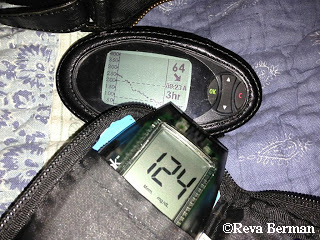
I woke up this morning to the sound of my continuous glucose monitor (CGM) vibrating on my nightstand. This means one of two things, either it is telling me that my blood sugar is too high or that it is too low. Sure enough, it showed that my blood sugar had dropped during the night and was now in the 60’s. However, I found this to be a little odd since I was feeling pretty normal. I took my glucose monitor (the one that uses a finger prick) and tested my blood sugar. 124. A perfectly fine number.

The issue here is not just that a reading of 64 and 124 are 60 points apart, although that is not ideal. It’s the fact that the 64 reading would normally require me to treat the low with some sugar while the other reading of 124 is right within range. So here I was staring at two medical devices, telling me conflicting information, not sure which to believe.

So let’s complicate this even further. If I were to listen to the medical advice that I had been given for the management of my diabetes, it would be to go off of my meter reading of 124, which would mean that I would neither eat sugar nor give insulin. At this point, however, I started to pay attention to how my body was actually feeling. I didn’t feel how I normally feel when my blood sugar is at 60, but I was feeling a bit “off”. Sometimes I feel this way from drinking coffee on an empty stomach or if I’m hungry. Since neither was the case, I started to think that maybe it was related to my blood sugar after all. My intuition was telling me that it might be a good idea to eat something.

Let’s recap:

  • device 1 says I’m low
  • device 2 says I’m normal
  • typical medical advice would be to do nothing
  • body feels like it could possibly be low
So what do you do in a situation like this??
Intuition is a powerful thing. I’ve learned to trust it in most cases, but usually they are non-medical. I get a gut feeling about things like people and situations. But how much of a role should intuition play in the management of a chronic condition? Like I’ve said before, I can usually feel when my blood sugar is high or low, but then this suspicion is confirmed by my medical devices. So here I was sitting in my bed, thinking to myself, “should I trust my body and my intuition or the medical devices and technology?”
 It was only when all the numbers and feelings didn’t match up that I realized just how many of my daily decisions are based on a number coming from a medical device. Should I eat? How much? When? Should I give insulin? How much? Over how long? All these questions answered by a single number. It’s all so calculated, with my carb to insulin ratios, blood glucose targets and sensitivity, and hours of active insulin. So robotic. However, while the forumla might be calculated, the results are certainly not. Blood sugar rises and falls from so many different things besides food and insulin: stress, adrenaline, exercise, colds, menstrual cycles, the list goes on. Although my glucose monitors might tell me one thing, I’m the only one that knows what my body is feeling. Intuition definitely has a place in diabetes management, but in combination with other forms of glucose monitoring.
So back to this morning. What did I end up doing? Sometimes diabetes management is your personal experiment. Try something, see what happens, and make adjustments. Too much insulin? Lower it the next time. Not enough carbs? Eat more. I decided to eat half of what I normally have to treat a low and to see what happens. It was a compromise between all the information that I was given. I also knew that I would be exercising in the morning, which usually makes my blood sugar drop naturally. Sure enough, when I tested after my workout, my blood sugar was within range and I was feeling fine. Although there are many devices and formulas for the management of type 1 diabetes, it isn’t always an exact science. I’ve found that sometimes you have to trust your instincts, stay vigilant, and make adjustments when necessary.

Anyone else have a similar experience?

Low is More Than a Number

My mouth is numb.
My blood sugar climbs steadily, but the tingle in my lips and tongue remains.
I can still taste the orange juice, the citrus stirring uneasily in my stomach. 
This is my second severe low today, my body recovering, shaken to the core.
Dizzy and unstable.
Foggy and forlorn. 
Lying in the dark waiting for the storm to pass.
My head throbs.
Refusing to budge, my limbs betray me.
Heavy with unwanted food, eaten in desperation.
Why isn’t it over?
100 and rising.
But I’m continuing to fall.
Clouded in darkness, I remain.
A normal number, but a feeling of anything but.
Why isn’t it over?
There is no end.

Valentine’s Day Diabetes Pick-Up Lines

This Valentine’s Day, I thought it would be fun to post some diabetes pick-up lines! They’re pretty clean…well most of them at least. If you have any more to contribute, please leave them in the comments, I’d love to hear them!


With you around Sweetie, who needs glucose tabs?”


“I’m sorry I didn’t get you a box of chocolates for Valentine’s Day, but if you want something sweet I’m right here.”


“Baby, I just followed my CGM arrows and they pointed me straight to you.”


“How about a kiss? I’m the only sugar you’ll need”


“Oh baby, your name should be Sugar because with you I’m always high!”


Is that a tube of glucose tabs in your pocket, or are you just really happy to see me?”


“I wish I was your insulin pump so that I could be next to you all day.”


“Is your blood sugar low? “No, why?” “Cause you’ve been running through my mind all night.” 


Your meter or mine?”


“Strip for me? Test strip that is, I’m all out.”


“What do you say you and I get tangled in my pump tubing tonight?”


I don’t need to check your blood sugar to know you’re a 10.”


“Baby, I’d never destroy your heart, the way your body destroyed your beta cells.”


“Hey girl, I bet you’re my type.” 


“Without you sweet thang, I’ll have a reaction!”


“Do you mind if I sit next to you? I just want to feel close to a working pancreas.”


“Did it hurt?” “What, my shot?” “No, when you fell from heaven.”


“My low blood sugar isn’t the only thing that’s making me sweat, you are HOT!”


“You’re a lot like my insulin syringes, super fine!”


“Hey girl, my blood sugar isn’t the only thing on the rise right now.”


“With you around, I never feel low”


“You’re like my insulin, I can’t live without you.”


“You must be diabetic, you are just too sweet.”

“How about we go back to my place, I know a way to make your blood sugar drop.”

“Hey girl, that blood sugar number is almost as pretty as you are.”

“Enough carb counting. The only thing I want to count are the minutes until I see you again.”

“Just like your fingers, my heart bleeds when we are apart.”

“Hey, I lost my (glucose) number, can I have yours?”

“You give me your heart, and I’ll give you my pancreas. Together we are complete.”

“That high blood sugar may be temporary, but baby, our love is forever.”


Happy Valentine’s Day everyone!! ❤


(although I made up most of these, I can’t take credit for them all. A few come from the Internet/pinterest and a friend contributed one)