InsomniAHHH!

It’s truly amazing what our bodies can get used to. And for once, I’m not talking about diabetes…well not yet at least.

For the past 6 weeks I’ve been struggling with insomnia. I know that in the scheme of life, there are much, much worse things to have to deal with- tragedies, deaths, fatal illnesses, etc. I’m grateful that it’s nothing of the sort, but putting aside these more horrific life events, insomnia is probably next on my list of things I hoped I would never have to deal with.
You see I love my sleep. And for the past 26 years, I’ve been an superb sleeper. Getting at least 8 hours of sleep has always been incredibly important to me. I often prioritize my sleep over fun. It was a running joke among my roommates back in undergrad that when I couldn’t remember a particular crazy story that they were recounting they would say, “Oh, you were probably sleeping.” And it was true. My sleep was and still is that important to me.
And when I didn’t get my 8 hours, I suffered. I would feel foggy, dizzy, sometimes even shaky. I would get headaches and just overall feel slow and out of it. And I would feel this way with 7 hours of sleep. I know it’s crazy since that’s more sleep than most people get normally. But I was just so used to getting high quality sleep that anything less was noticeable.
Six weeks ago, I had a string of a couple bad nights. I would wake up at 5 am and not be able to fall back asleep. I would become anxious that I wasn’t sleeping and worrying about how miserable I’d be the next day and my body would start to feel electric. Pretty soon I got caught in a vicious cycle where even thinking about sleeping made me anxious. My normal oasis of a bed became associated with restless sleep. Now it would sometimes take me hours to fall asleep, or I’d wake up at 3 and not be able to fall back asleep. My 8 hours of sleep became 4 hours of sleep, to sometimes no sleep at all.
I wish I could tell you that I’m better now, that things are back to normal, but they’re not. After talking with a sleep disorder expert who happens to be in my family and taking online sleep programs, I have a plan and have been making progress, but I still have nights that I just can’t sleep.
While my diabetes isn’t directly related to these sleep problems, it hasn’t been making it any easier. It’s truly awful to have finally calmed down enough to start to doze off only to be jarred awake by the buzzing of my CGM or by the symptoms of a low. And while I know this isn’t a good solution, I’ve been letting my blood sugars run on the higher side at night just to avoid an extra middle of the night wake up. However, this plan has backfired when I wake up having to go to the bathroom from the high blood sugars instead.
This insomnia experience, although probably one of the more exhausting things I’ve had to deal with (haha, get it?), has also reminded me a lot of when I was first diagnosed with diabetes. I remember this feeling of being so overwhelmed, of wondering how I’d get through each day. I remember being constantly anxious of the unknown and worrying if I would be able to handle the challenges of the new diagnosis. But I did it, I got through each day. And I’m doing it now. As the weeks have gone by, I know that I can get through my work day on minimal sleep. It’s not ideal, but my body can handle it. I can handle it.
I know my insomnia, unlike my diabetes, is temporary (although hopefully a cure changes that too). But my diabetes has shown me that I can handle life’s challenges. That a bad day of blood sugars doesn’t mean that tomorrow will be bad too. A bad night of sleep doesn’t mean that I won’t be functional tomorrow. Our bodies are made to be resilient. We must choose if our minds will follow the example.

Missing puzzle pieces

I’ve felt like Goldilocks lately. Although maybe a Goldilocks with brown curly hair and way less luck.

I’m starting to have issues with my new endo. Again, the issues that I am having are less about the specific doctors and more about my frustrations with doctor’s and the office not utilizing the technologies that are available to them to their full potential. And misusing the ones that are.

Like most T1Ds, I have a lot of devices that carry a lot of data. And those devices are able to download their information when connected to a computer. But you get slightly different information from my pump (finger prick glucose numbers and insulin delivery amounts) than from my CGM (glucose numbers from the sensor) and I don’t always think that the CGM is the most accurate, especially at the beginning or end of the cycle I wear it.

At my new endo office, my doctor downloads my CGM and pulls up a graph of the last week. She doesn’t take my pump or meter, in fact, I once asked why not and she wasn’t even sure she had the right equipment to download from the pump. I completely trust that my doctor knows what she is doing and her recommendations do make sense. But I’m often left wondering if the recommendations would be the same if we were looking at 2 or 3 weeks worth of data or even looking at glucose numbers from my meter (which are on my pump) in addition to my CGM.

On one hand, I’m grateful. I remember when I was first diagnosed being handed a little log book that I would have to manually write in my glucose numbers. But on the other hand, I’m frustrated with the way things are. I want integration. Maybe it’s time that I align my pump and CGM to compatible companies. Then at least all 3 of my devices would be talking to each other for a more complete picture. But I’m lazy and don’t want to learn a whole new pump or CGM system when I’m generally satisfied with both separately.

And while part of the responsibility is fully on me as the patient, another part is on the doctor and the offices to keep up with changing technologies so that they are effectively and accurately using the data that is available to them.

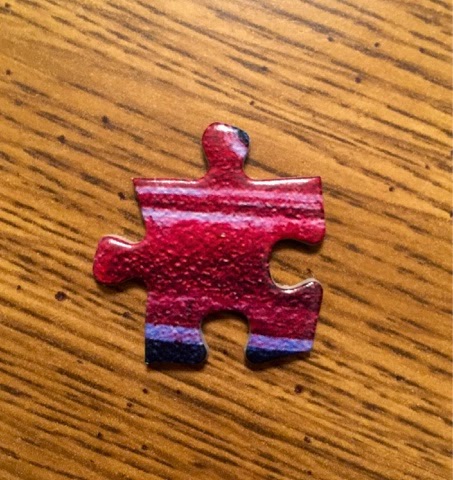
I feel like my diabetes is a puzzle and my doctor is only looking at a handful of pieces when telling me what to change. You’re looking at the trends in my blood sugars, but you’re not looking at my boluses throughout the day. You’re not looking at the foods I’m eating (which I have been tracking in a separate app for the past 6 weeks) or exactly when I eat them (besides asking me generally when I eat). You’re not looking at when I’m exercising and what kind of exercise I’m doing, when my cycle is, when I got sick, and even when I was feeling extra stressed. My numbers are all important, but alone, they lose some of their meaning. You’re looking at my blood sugars essentially in isolation because:

A) that’s the data that’s available to you
B) we only have a finite time together so you aren’t able to ask me about all these other factors
C) there is no universally used platform that can integrate this information easily for you

I’m frustrated. But I’m also hopeful. I know that today, my data is more available, accessible, and interpretable than it was 10 years ago. But I know we have a ways to go before every office has the equipment, the skill and the motivation to look at the whole puzzle for every one of their patients, and not just a few pieces.

I’m a cord tucker

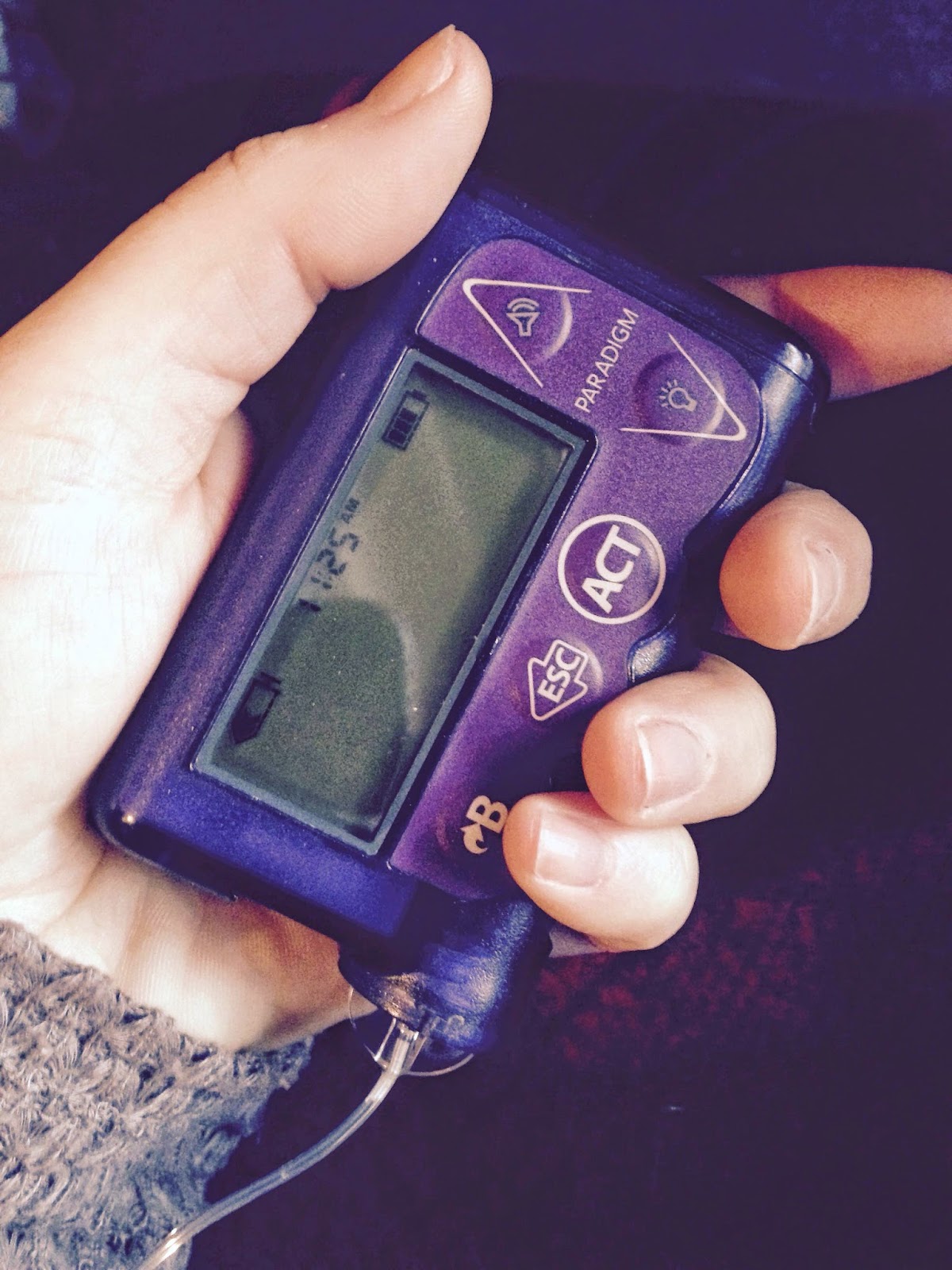
Ninety-five percent of the pants I own have pockets. When I wear a skirt, my pump is clipped somewhere that is not visible. My pump stays in my pocket, secure and hidden away.

In many ways, diabetes is an invisible disease, or visible only when you want it to be. I don’t think you could look at me and be like, “Oh yea, she has type 1 diabetes.” You might see me checking my blood glucose number, or take my pump out of my pocket to bolus for my lunch, maybe you see that I’m looking a little off from a low, but otherwise I don’t think I look any different than you do.

I’m a cord tucker.

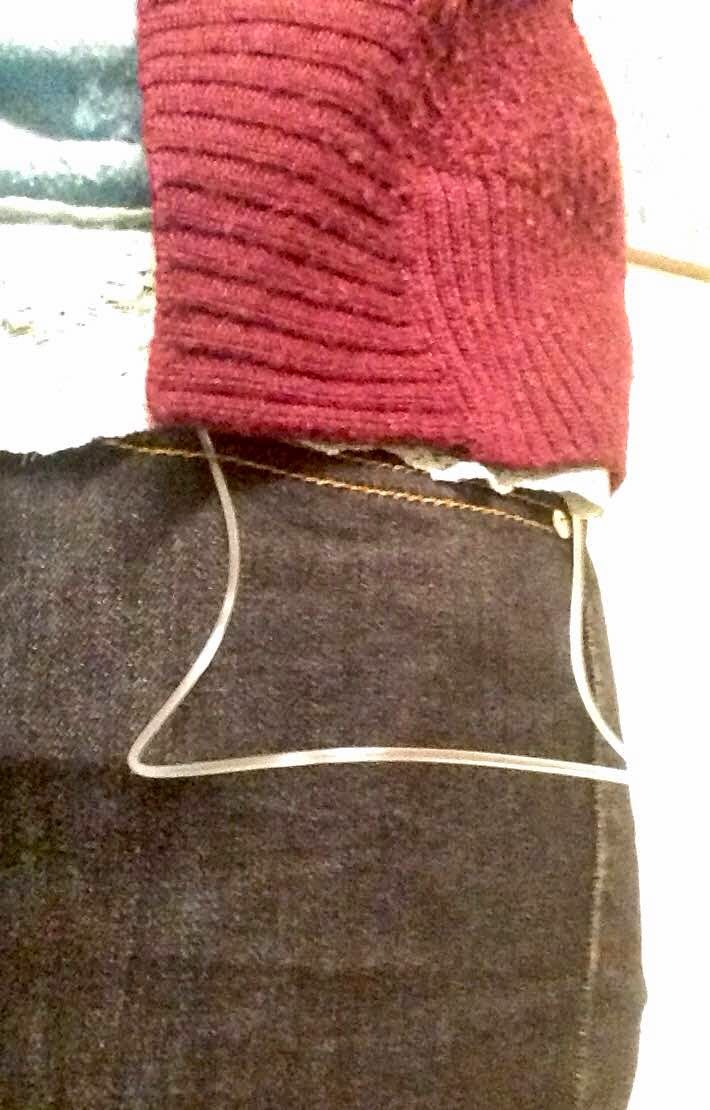
But do you have a cord constantly hanging below the hem of your shirt? A cord through which life sustaining insulin travels. I have a cord. And in some ways that cord is symbolic of the difference between me and you. That cord is a visual reminder of a disease that I live with and manage every single day. But other times that cord is a sign of solidarity. Like when in a random bakery in Detroit, I saw your cord and knew right away that we had something powerful in common. That cord ties us together.

I’m a cord tucker.

Sometimes it’s a safety issue. I don’t want the cord to get wrapped around a knob or something and yank my infusion set out. So I tuck it into my pants so that it doesn’t hang freely. But sometimes it’s not about safety. It’s about not having to talk about my diabetes or answer questions when I don’t feel like it. It’s about remaining invisible when I want to be.

Yesterday, I hung freely.

I let my cord show. Yesterday it didn’t matter to me. I didn’t care who saw it. But you stopped me in the office kitchen, “I don’t mean to touch you, but there’s something hanging off your shirt,” you said as you reached towards my cord, ready to break it off like a loose, dangling thread. I didn’t care if it showed or not. But you did when you told me that my “stuff was all over the place,” gesturing to my cord hanging on my chair. You weren’t being mean, or judgy. You were trying to be helpful and maybe even concerned. You weren’t used to seeing a cord, and now you did. But do you really care if my cord is showing? Do I care? Maybe. Maybe not.

Today, I’m a cord tucker.

Love and diabetes

It’s Valentine’s Day so I’m going to take this day as an opportunity to be a little mushy and talk about loooooove. More specifically, love and diabetes.

So what does love and diabetes look like?

Love is carrying my fruit snacks in your pockets when we go for a run and I have no place to put them.

Love is sitting next to me when I’m struggling to insert my CGM sensor because of a previous painful experience and telling me I can do it and everything will be okay.

Love is disrupting our date and driving me to my work at 10 pm because I can’t find my meters and I think I left them at my office.

Love is buying a box of gushers to keep at your place in case I drop low and don’t have anything with me.

Love is hearing my CGM vibrate and knowing just from the pattern of buzzing if I’m high or low.

Love is waiting for me to feel better. For being patient and understanding, always.

Love is ignoring my “No” and turning around and driving me home even when we’re running late because I’m out of test strips, my CGM is not working, and my blood sugar is high, but as you told me, “your health is more important.”

Love is learning, constantly, what type 1 diabetes is and how to manage it. “You’re high, that means you need more insulin, right?”

Love is holding me when I drop to 40 and don’t feel well. It’s bringing me water and laying down with me when I’m 350 and feeling sick. It’s being with me when I’m 90 and am not even thinking about my diabetes.

Love is getting up and grabbing something to help me treat a low without me even asking.

Love is being excited when I show you how good my numbers have been all day. Love is feeling my frustration when they haven’t been.

Love is putting up with me when I get snippy because I’m getting hangry and low.

Love is sitting down to a home cooked meal and you telling me how many carbs are in the couscous.

Love is worrying.

Love is caring.

Love is you.

Double check

It was a typical morning as I got ready to head to work. I ran through the checklist for the day:

Gym bag. Do I have my change of clothes? Shoes, socks? Water bottle.
Lunch box. Do I have my breakfast, lunch food, and snacks? Silverware?
Do I have my glucose monitor? Enough strips? Do I have my CGM? Is it charged? Do I need the cord?
Do I have extra supplies? Insulin, infusion set, inserter, reservoir, extra syringes?
Do I have enough fruit snacks if I go low? Maybe grab a couple more.
Phone. And charger.
I need my work badge.
Do I have my hat? And my gloves. Where’s the other glove?
Wallet.
Car keys. And apartment keys.

I think I’m ready.

Let’s go.

Twenty minutes later I walk into work, ready to take on the day. I reached into my pocket. Empty. The other? Empty as well.

Insulin pump?? Where’s my pump? Shit.

Back home I go. I’m so forgetful sometimes.

When life hands you lemons…

My sister recently found out that she may have Celiac Disease.

As directed, she has completely cut gluten from her diet. While more and more gluten-free options are becoming available both in restaurants and grocery stores, it’s still a diagnosis that comes with its own set of challenges. I’ve watched her as she’s adjusted to this major lifestyle change. I’ve watched her grapple with finding something she can eat on a menu, watched her reluctantly turn down food at an event, watched her patiently pace the aisles looking for the gluten-free options or alternatives to her favorite recipes. It hasn’t been easy, but she has risen to the challenge with tremendous strength, discipline, and optimism.

I truly admire how she has stayed so positive despite having to give up or modify so many of her favorite foods. How she’s taken on the added responsibility of checking every food label and having the discipline to turn down what she knows she can’t have. How she’s gone from having the freedom and ease of choosing essentially any food to having much more limited options. Through all this, she’s faced this change courageously, head on, and hasn’t let it get her down.

I admire what she’s had to do even more because I’ve been so reluctant to make my own dietary changes even though I know it would help me. While I know that she doesn’t really have a choice if she wants to avoid doing damage to her intestines, she still doesn’t complain. I know I should eat less carbs, I know I should cut back on sugar. I know it would help tremendously to stabilize my blood sugars, to lessen my insulin intake. I know it would benefit my overall health, but I haven’t made those changes to what I eat.

I look at what she’s doing and I find it inspiring and motivating. It hasn’t been easy for her, but she’s doing it and using it as an opportunity to grow. As she said to me, “I think of it as a challenge, as a way to stay healthy, learn new foods I might not be used to eating, and definitely learn to cook better with the foods I can eat.” In many ways she’s given me hope that when I finally decide to make (less significant) changes, that I too can do it. And with so many people with both type 1 diabetes and celiacs successfully balancing both, I know that when I’m ready, I will have plenty of resources and inspiration within the DOC too.

No one asks for these types of challenges. Whether it’s balancing blood sugars on a daily basis or completely eliminating a protein composite from your diet, life is full of obstacles. It’s how you approach them that makes the difference.

I’m lucky to have such motivating, positive, and strong role models in my life. People who when handed lemons, they make amazing gluten-free lemon bars with almond crust!

Feeling low

I buried my head in my pillow, the soft fabric muffling my frustrated screams. I hate it. I hate it, I hate it, I hate it.

I was low. AGAIN. It seems to be the trend lately. My efforts to keep my blood sugars from spiking has resulted in more lows. Lows that seem unexpected because I really thought everything I was doing seemed right. Lows that have been incredibly disruptive, making me stop whatever activity I’m doing. Stubborn lows, that a couple glucose tablets don’t seem to solve. Lows that wake me up at night, lows that won’t go away, lows that leave me feeling awful. And upset. And frustrated.

I don’t want to treat the low. I’m tired of stuffing my face with sugar, not because I want it, but because I need it. I’m tired of working so hard in my workouts, only to have to later eat everything I burned off or sit out because I can’t continue with a low. I’m especially tired of eating when I’m not hungry and feeling awful while I wait for my blood sugar to stabilize.

I can see the extra weight creeping on, and I hate it. I hate that I don’t have a choice when I’m low. I hate that those forced extra 80 calories of my fruit snacks add up. I hate that insulin makes it harder to lose weight. I hate that these lows are often then leading to later highs, sending me on a blood sugar roller coaster. I hate not feeling my best.

I’ll talk to my doctor, I’ll make adjustments. We’ll work to get rid of these lows. But for now I just want to scream into my pillow and wish for the day when all of this will disappear. When sugar will just be sugar and not a substance that often feels like its controlling my life.

Some days, weeks, months are better than others. I’ll make it through this rut, I know I will, but today, right now, I really hate my diabetes.

The sickness slow down

I love being busy. I didn’t think I would actually. Mostly because I also love my alone time and just relaxing. But I really like being active and well, doing things. Slowly my days, weeks, and months became filled with activities. Some days it is a boot camp or fitness class after work, other days it’s a committee meeting, volunteer opportunity, happy hour or dinner, or social event. It didn’t hit me how busy I was becoming until my friend asked if we could hang out and see a movie and after consulting my calendar, the next open day was 3 weeks away.

As winter approaches, things have started to slow down, but I’m still go, go, go. Don’t get me wrong, I still relax. Most of my week nights end with a quiet dinner and a couple hours of TV. But each day after work seems to have some additional event or activity. Rarely do I find that I’m truly bored. In fact, I’m probably guilty of trying to do too much, of wanting to do it all.

That is until I got sick.

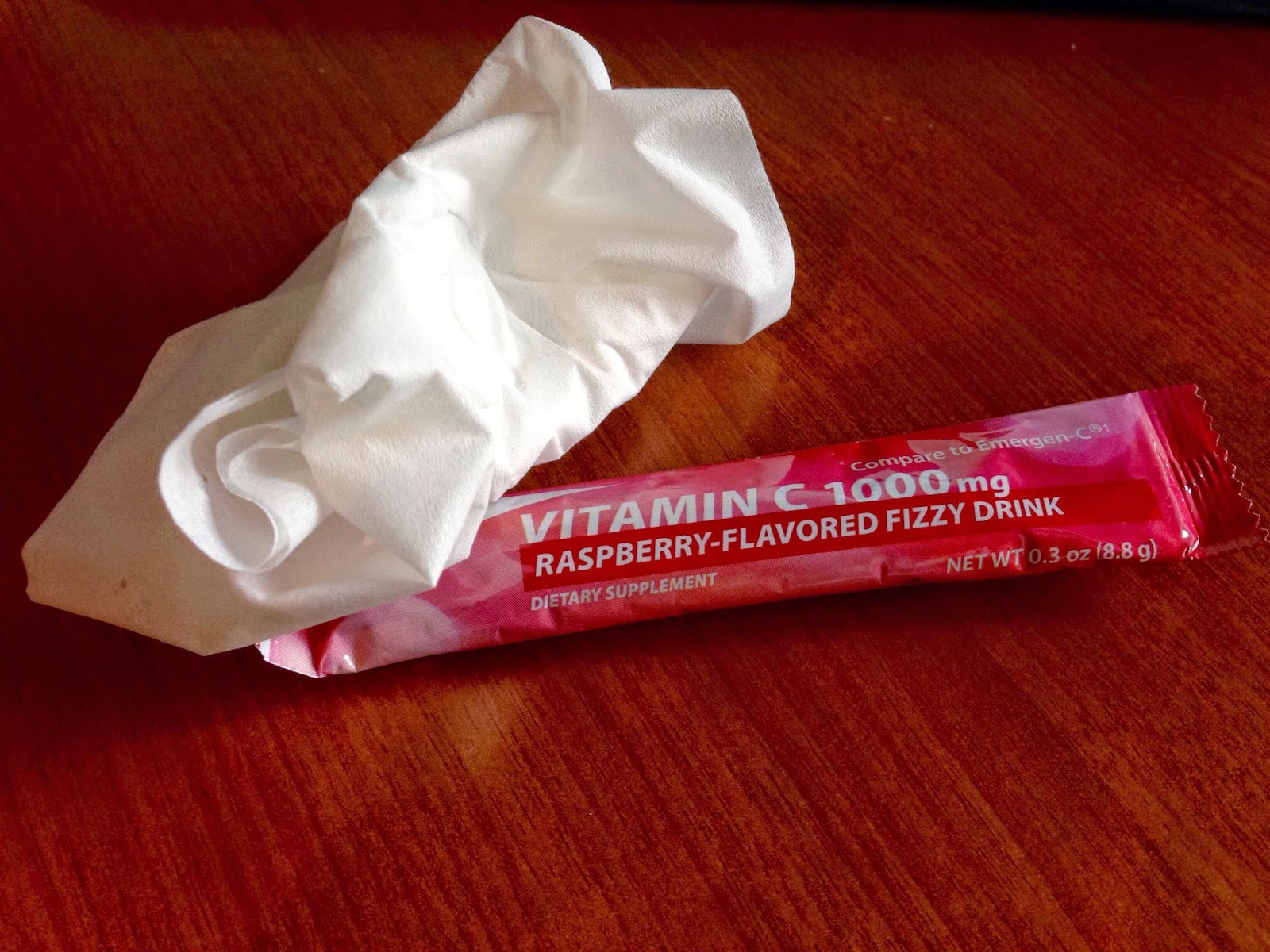
I’m pretty fortunate to say that I don’t get many colds. In fact, I think it’s been a few years since I got one bad enough to miss work or class or whatever I had going on. But this cold hit me pretty hard. It started in my head, moved to my chest and then a week later, moved to my stomach. I missed work. Harder for me, was missing my workouts. Mentally I was ready to be back working out, but physically my body wasn’t ready. Every day I would start the day by saying, I think today I can workout, but after wheezing after walking up a hill, I knew that my body needed to rest. Truly rest.

So for a week, I did nothing. I didn’t work out. I didn’t go out. I rested and relaxed. And it was hard and weird for me. But I came to some important realizations during my forced downtime.

1.  You can’t do everything, and that’s okay. It’s okay to say “no” to plans. There will be more opportunities in the future, and life goes on even if you aren’t at a particular event. FOMO (fear of missing out) can’t dictate your life. You will miss out. It’s inevitable. But it’s okay. Life goes on and you’ll be fine.

2. It’s good to have a schedule and stick to it, but sometimes schedules have to be broken. Especially when it comes to fitness. Monday is tabata, Tuesday is bootcamp, Wednesday is an off day or a morning half hour workout, Thursday is kenpo, Friday is rest. The weekend is some sort of active pursuit, a bike ride, tennis, a run. But you can’t be obsessive. It’s about being healthy, so when you’re sick, it’s healthy to rest and let your body recover. You aren’t being lazy. You’re being responsible.

3. Being sick can mess with your diabetes. Your numbers can go crazy, you can feel weird and not know why, you can need your inhaler and feel like you have low blood sugar, but really be fine. And it can be frustrating when blood sugars soar despite your best efforts. But sometimes things happen that are out of your control and you can’t beat yourself up about it. You just have to do your best moving forward.

No one likes being sick. And it’s a hard adjustment when you’re used to being so busy and high energy. But I guess it was my body’s way of making me slow down. Am I still going to fill my week with plans? Yes. But going forward, I’m going to listen to my body, prioritize my health, and know that no one can do everything, and you know what, that’s perfectly okay.

Mission: Secure Lost Meters

I sat in the car with that satiated, content feeling you get after a particularly satisfying meal. However, I was feeling extra thirsty, which was odd since the beer and multiple glasses of water should have been sufficient to quench my thirst. Tuning into my body, I realized it was the symptoms of a high blood sugar that I was experiencing.

I started digging around in my purse, looking for my CGM. I felt around in the endless abyss that is my work bag, but nothing was feeling familiar. My searching became more frantic. “Where is it?!” I thought. “It should be here!” Okay, well if I couldn’t find my CGM, I would at least test my finger so I could tell how high I was.

My hand went back into my bag, but again came up empty. Gigi AND my glucose monitor, both gone?! How could this be?? I started to panic slightly. I felt lost. Rarely am I without both my meters, no way to tell exactly how high I am and how much insulin to give. I could guess, but if I was way off, the consequences could be serious.

“I don’t know where my meters are, either of them. They should be here! I need them. What if I lost them?” Eyes wide, I dumped everything out of my purse, searching the surrounding area. But the search was futile.

“Relax,” said the voice of reason sitting next to me. “I’m sure they’re not lost. They probably fell out in your car.”

Yes. Yes, that would make sense. They’re probably in my car. But I don’t remember taking them out of my bag. But maybe they fell out without me noticing. I’m sure they’re there. Where else could they be?

“Yeah, you’re probably right.”

The 10 minute drive back to my car seemed to drag on forever. I tried to enjoy the music and the company, but my mind was focusing on only one thought: finding my meters.

We arrived back at my car. I wanted to run and fling the door open, but I kept my composure. Of course they’d be there, what was the rush?

I opened the passenger door and picked up the coat on the seat. They weren’t there, either of them. I looked on the floor, in the back seat, between the seats, nothing. Defeated, my mind pictured Gigi abandoned on the side of the road. Who would find her? How would she be returned to me? Was she gone forever??

“I’m going to go check my office. Maybe I left them there.”

It wouldn’t have been the first time that I would have left Gigi under a pile of papers, out of sight and out of mind. We loaded into my car and drove across town on a mission to return my meters home safely. We pulled up to my darkened office, it was 10:30 at night and the only light was from the cleaning people finishing up for the evening. I walked inside, making my way through the darkness to my office. I lifted the papers scattered across my desk. Gigi! My beautiful CGM! I was so relieved. But where was my other glucose meter? I looked in the drawers, on the floor, and all around. It wasn’t anywhere.

I returned to the car, perplexed. It’s happened before that I’ve forgotten my glucose meter at home on my nightstand, where it sits over night. And it’s happened before when I’ve left my CGM at the office. But both in the same day?? I suppose it was possible, I needed to believe it was.

At this point I was feeling mad. I was mad at myself for being so forgetful. I was mad that my diabetes was being so disruptive, and in this case, I was to blame. Rather than being able to relax and enjoy my evening, I instead spent it in an anxious, sour mood driving across town. I was feeling bad for the guy I was with who insisted on accompanying me and for inconveniencing him as well.

“I’m sorry, I know this isn’t how we imagined spending the rest of the evening. Thank you for coming with me.”

“You don’t need to apologize. We got to go on an adventure together. I know you’ll find the other meter too.”

I drove home, ran up the stairs, and went straight to my bedroom. Sitting on my nightstand where I left it was my other meter. Relieved, I alerted my mission comrade that it had been secured and that all was well (except for my blood sugar).

Looking back, I’m still upset that I managed to leave both meters separately in different places, but that’s not what I’m going to choose to focus on. Instead, it was the attitude of the person that I was with that has stuck with me.

There are lots of times when my diabetes has ruined or altered plans that I had. Maybe it was a low that made me stop what I was doing, maybe it was forgetting supplies and having to drive back and get them, maybe it was running around trying to find a battery because my pump had died, or maybe it was just having to make different arrangements to accommodate my schedule or needs. It can be annoying, frustrating, and upsetting. But as I was reminded, you can’t let it ruin your plans, or your mood. Every cloud has a silver lining, a forgotten meter is a chance to go on an impromptu adventure. I’m just glad this mission ends with a smile.

The Big Bang Theory Bust

I love the show, The Big Bang Theory- it’s one of my favorite. In fact, last year I even dressed as Amy Farrah Fowler for Halloween. But, for the first time ever I cringed while watching a recent episode. Penny was sitting in an interview to be a pharmaceutical rep. While talking about her previous job experience as a server at the Cheesecake Factory, she says that she once convinced a group of bigger customers to order cheesecake, ones that even had an insulin pump. Then the interviewer says to her, “I have an insulin pump.”

In my experience, it’s very rare that a television show accurately depicts diabetes, Type 1 or Type 2. Maybe the statement was just a way to communicate that the customers had diabetes. But to me, Penny’s statement seemed to imply that if you have an insulin pump, your diabetes must be really bad. But that’s not the only assumption that one could make from that statement. Someone could assume that having an insulin pump means that you must not be doing a good job taking care of yourself, that you’re to blame for your present state, that an insulin pump is something you get when all else has failed.

I was watching the show with someone who knows that I have an insulin pump, but not a ton more. We haven’t had a lot of discussions about my diabetes yet and what it means to live with Type 1. We haven’t talked about my pump and what it does and what my life was like before I had it. Rather than taking the opportunity to educate, I instead cringed on the inside, hoping that my friend was not silently making assumptions about me and my diabetes based on that statement. In that moment, I hated that show for making me feel self-conscious or ashamed even for those few seconds.

Because I’m not ashamed. Having an insulin pump is nothing to be ashamed about. I love my pump. It has given me tremendous freedom, control, and flexibility that I didn’t have before.

My insulin pump is the tool that helps me keep my blood sugar under tighter control. I didn’t go on it because my control was poor, I went on it so that I could have even better control. My pump is what helps me take care of myself and be healthy, not a symbol of the opposite.

Maybe not everyone interpreted Penny’s statement the way I did, Maybe I was extra sensitive to it. But, in my opinion, The Big Bang Theory has it wrong, Penny has it wrong. I am not ashamed.